
About Vernon Prichard
Lived 1892 – 1949 (aged 57). Vernon Prichard was an American american football player.
Major General Vernon Edwin Prichard (January 25, 1892 − July 10, 1949) was an American football quarterback and United States Army officer. He played college football with Army and was selected as a first-team All-American in 1914. He became a career officer in the U.S. Army and rose to the rank of major general. He was lifelong friends with West Point classmate Dwight D. "Ike" Eisenhower. He served overseas during both World War I and World War II, and during the latter he commanded the 14th Armored Division in the United States from 1942 to 1944 and the 1st Armored Division from 1944 to 1945 during the Italian campaign.
Early years A native of Onawa, Iowa, Prichard was the son of attorney J.A. Prichard. The younger Prichard began his education at Morningside College in Sioux City, Iowa, where he also played football and established a reputation as a passer. In November 1910, while he was a student at Morningside, Prichard received word that he had been appointed to the United States Military Academy (USMA) at West Point, New York. He enrolled at West Point on June 11, 1911.
U.S. Military Academy
While serving as a cadet at West Point, Prichard played for the Academy's football and baseball teams. He gained his greatest fame in football as the quarterback for the Army Black Knights football team from 1912 to 1914. Prichard's teammates on the Army football teams included two of the leading generals of World War II, Omar Bradley, who played at the end position, and Dwight Eisenhower, who played halfback until a knee injury sidelined him. James Van Fleet, commander of U.S. forces in the Korean War, also played on the 1914 West Point football team with Prichard. Although he weighed only 158 pounds, Prichard played every minute of every major game during his three years of varsity football at West Point.
Throughout his football career at West Point, Prichard's favorite receiver was Louis A. Merrilat from Chicago. The Prichard-Merrilat combination gained national fame after the 1913 Army–Navy Game, played in New York before a crowd of 40,000 at the Polo Grounds. Army had not defeated Navy since 1905, and Navy was undefeated and favored to beat Army by odds of 6–1.
In 1914, Prichard led Army to an undefeated 9–0 season. In the final game of the season, Army defeated Navy, 20–0, as Prichard finished his college football career by throwing passes to Merrilat and Bob Neyland, who later became the football coach at the University of Tennessee.
Military career Early years Captain V. E. Prichard when he was serving as an aide-de-camp to Major General Omar Bundy, France, April 1918.
Major General Omar Bundy (center), commanding the 2nd Division, Captain V. E. Prichard, Bundy's aide-de-camp, and other members of the division staff, pictured here at Chaumont-en-Vexin, France, May 28, 1918.
Upon graduating, 134th in his class of 164, from the Academy in June 1915, Prichard received the rank of second lieutenant and was assigned to the 1st Infantry Regiment.
During World War II, Prichard served as the Commanding Officer (CO) of the 27th Field Artillery Regiment from 1940–41, and received a promotion to colonel in the Army of the United States (AUS) on April 26, 1941. From July 1944 until September 1945, after the end of World War II in Europe, he was the CG of the 1st "Old Ironsides" Armored Division during the Italian campaign, including the Battle of the Gothic Line, Po Valley and the Spring 1945 offensive in Italy.
Prichard and Eisenhower exchanged correspondence during the war. Shortly after the United States entered the war, in December 1941, Eisenhower wrote a letter to Prichard in which he confided, "this is a long tough road we have to travel." In an oft-quoted passage, Eisenhower continued his comments to Prichard, noting that, "men that can do things are going to be sought out just as surely as the sun rises in the morning," and, "fake reputations, habits of glib and clever speech, and glittering surface performances are going to be discovered."
During the Battle of the Bulge in late December 1944, Prichard wrote to Eisenhower, reminding him of what their football coach had taught them: "If things break badly or go against you -- stay with it all the harder." Eisenhower's biographer, Matthew Holland, later wrote that Eisenhower had learned important lessons on the football playing field at West Point, and concluded: "World War II was won on the playing fields of West Point, and Ike would prove to be the quarterback of the winning team."
After World War II, Prichard became the Chief of the Army Public Information Division. In February 1949, President Harry S. Truman promoted Prichard from the permanent rank of brigadier general to major general.
Prichard's funeral was held at the chapel of Fort Myer, adjacent to Arlington National Cemetery. The Army's chief of chaplains officiated at the funeral, and the honorary pallbearers included Secretary of the Army, Gordon Gray, and classmates from the West Point class of 1915, including Dwight Eisenhower.
Decorations Below is the ribbon bar of Major General Vernon Prichard:
Don’t just read it —
keep it.
Full-length biographies made to live with: read them, listen on the way to work, watch them tonight.
- E-book
- Audio
- Video
Instant download · yours to keep · every purchase keeps this site free
Important facts
People in Vernon Prichard's life
Named in this biography and alive at the same time
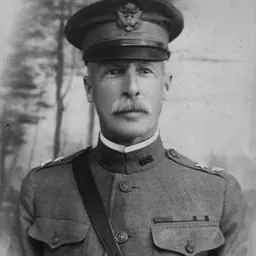

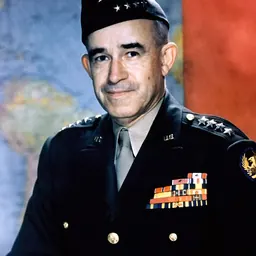
Related people
Same field, nearest in time


Contemporaries
People whose lives overlapped Vernon Prichard's

Frequently asked questions
Who was Vernon Prichard?
American football player (1892-1949)
When was Vernon Prichard born?
Vernon Prichard was born on 25 January 1892 in Onawa.
When did Vernon Prichard die?
Vernon Prichard died on 10 July 1949 in Washington, D.C..
What was Vernon Prichard's occupation?
Vernon Prichard was an american football player.
What nationality was Vernon Prichard?
Vernon Prichard was American.
Sources & further reading
Cite this page
APA: Biography.guide. (2026). Vernon Prichard. https://biography.guide/vernon-prichard/
MLA: "Vernon Prichard." Biography.guide, https://biography.guide/vernon-prichard/.
Chicago: "Vernon Prichard." Biography.guide. https://biography.guide/vernon-prichard/.
Data last updated: 2026-09-20 · Spot an error? Report a correction.
Page generated 2026-09-27 05:27 UTC