
About Vernon Hughes
Lived 1921 – 2003 (aged 81). Vernon Hughes was an American physicist.
Vernon Willard Hughes (May 28, 1921 – March 25, 2003) was an American physicist specializing in research of subatomic particles.
Hughes was born in Kankakee, Illinois. During World War II, he worked at the M.I.T. Radiation Lab. He earned his PhD under I. I. Rabi at Columbia University in 1950. Hughes was notable for his research of muons which showed the existence of previously undetected matter. He was also noted for research that showed that protons have gluons and quarks. Hughes was a member of the National Academy of Sciences, Sterling Professor at Yale University, and a recipient of Rumford Prize, and a recipient of Davisson-Germer Prize in Atomic Physics and the Tom W. Bonner Prize in Nuclear Physics, both from the American Physical Society.
Don’t just read it —
keep it.
Full-length biographies made to live with: read them, listen on the way to work, watch them tonight.
- E-book
- Audio
- Video
Instant download · yours to keep · every purchase keeps this site free
Important facts
Related people
Same field, nearest in time
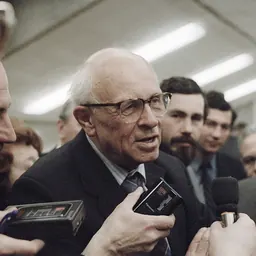

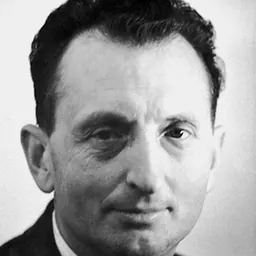
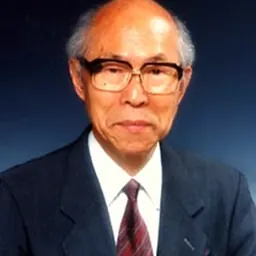


Contemporaries
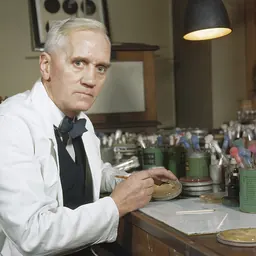
People whose lives overlapped Vernon Hughes's


Frequently asked questions
Who was Vernon Hughes?
American physicist (1921-2003)
When was Vernon Hughes born?
Vernon Hughes was born on 28 May 1921 in Kankakee.
When did Vernon Hughes die?
Vernon Hughes died on 25 March 2003 in New Haven.
What was Vernon Hughes's occupation?
Vernon Hughes was a physicist.
What nationality was Vernon Hughes?
Vernon Hughes was American.
Sources & further reading
Cite this page
APA: Biography.guide. (2026). Vernon Hughes. https://biography.guide/vernon-hughes/
MLA: "Vernon Hughes." Biography.guide, https://biography.guide/vernon-hughes/.
Chicago: "Vernon Hughes." Biography.guide. https://biography.guide/vernon-hughes/.
Data last updated: 2026-09-20 · Spot an error? Report a correction.
Page generated 2026-09-27 05:31 UTC