
About Verner E. Suomi
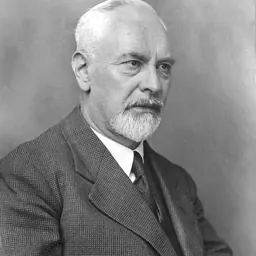
Lived 1915 – 1995 (aged 79). Verner E. Suomi was an American meteorologist and university teacher, known for Satellite meteorology.
Verner Edward Suomi (December 6, 1915 – 30 July 1995 ) was a Finnish-American educator, inventor, and scientist. He is considered the father of satellite meteorology. He invented the Spin Scan Radiometer, which for many years was the instrument on the GOES weather satellites that generated the time sequences of cloud images seen on television weather shows. The Suomi NPP polar orbiting satellite, launched in 2011, was named in his honor.
Early life Suomi was born in Eveleth, Minnesota, to Swedish-speaking Finns John and Anna Suomi. (The family surname, Suomi, is of Finnish origin and means Finland in Finnish.) He was the sixth of seven children; He taught high school science. Later, he attended the University of Chicago, Together with Robert Parent, in 1965, Suomi founded the Space Science and Engineering Center (SSEC) there.
Suomi led the development of McIDAS (Man-computer Interactive Data Access System) in 1972, displaying the images produced by his satellites such as SMS-1 in 1974.
A very popular professor, he formally retired from teaching in 1986.
Honors and awards Suomi was elected to the National Academy of Engineering in 1966, elected to the American Philosophical Society in 1976, awarded the National Medal of Science and elected to the American Academy of Arts and Sciences in 1977, awarded the Franklin Medal in 1984, the Charles Franklin Brooks Award from the American Meteorological Society in 1980; a lifetime achievement award from the International Meteorological Organization, and numerous other awards and honors It is granted to individuals in recognition of highly significant technological achievement in the atmospheric or related oceanic and hydrologic sciences. The term "technological" is used here in the broadest sense; it encompasses the entire spectrum of instrumentation, as well as observational, measurement, data transmission, and data analysis and synthesis methodologies.
On January 24, 2012, NASA renamed a recently launched NPP Earth monitoring satellite after Dr. Suomi. On that occasion, John Grunsfeld, associate administrator of NASA's Science Mission Directorate, said that "Verner Suomi's many scientific and engineering contributions were fundamental to our current ability to learn about Earth's weather and climate from space." The Suomi NPP houses the VIIRS instrument that provided the images which were combined to make the 2012 The Blue Marble photo.
Personal life Suomi died in Madison, Wisconsin at age 79. He was survived by his wife Paula and his children Eric, Stephen, and Lois; two sisters, Edith and Esther; two granddaughters; and many nieces and nephews.
Don’t just read it —
keep it.
Full-length biographies made to live with: read them, listen on the way to work, watch them tonight.
- E-book
- Audio
- Video
Instant download · yours to keep · every purchase keeps this site free
Important facts
People in Verner E. Suomi's life
Named in this biography and alive at the same time




Related people
Same field, nearest in time


Contemporaries
People whose lives overlapped Verner E. Suomi's




Frequently asked questions
Who was Verner E. Suomi?
American meteorologist (1915–1995)
When was Verner E. Suomi born?
Verner E. Suomi was born on 6 December 1915 in Eveleth.
When did Verner E. Suomi die?
Verner E. Suomi died on 30 July 1995 in Madison.
What was Verner E. Suomi's occupation?
Verner E. Suomi was a meteorologist and university teacher.
What was Verner E. Suomi known for?
Verner E. Suomi was known for Satellite meteorology.
What nationality was Verner E. Suomi?
Verner E. Suomi was American.
Sources & further reading
Cite this page
APA: Biography.guide. (2026). Verner E. Suomi. https://biography.guide/verner-e-suomi/
MLA: "Verner E. Suomi." Biography.guide, https://biography.guide/verner-e-suomi/.
Chicago: "Verner E. Suomi." Biography.guide. https://biography.guide/verner-e-suomi/.
Data last updated: 2026-09-20 · Spot an error? Report a correction.
Page generated 2026-09-27 04:57 UTC