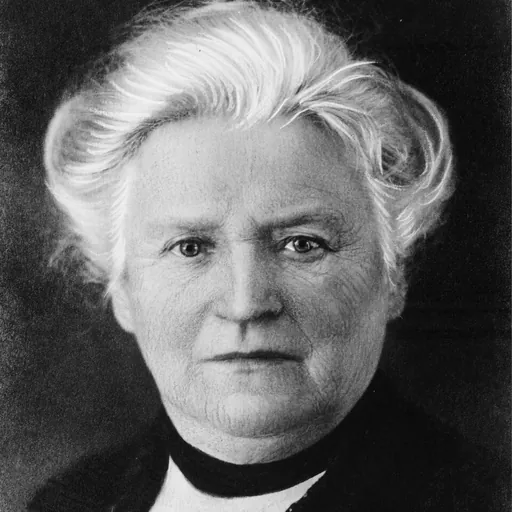
Verena Conzett
Swiss publisher, feminist and labor activist
About Verena Conzett
Lived 1861 – 1947 (aged 85). Verena Conzett was a Swiss editor, printer, autobiographer, trade unionist, women's rights activist and entrepreneur.
Verena Conzett (28 November 1861 – 14 November 1947) was a Swiss magazine publisher, labor activist, and women's rights activist. She became the first president of the Swiss Women Workers' Union in 1890. Her own experience as a child factory worker led to her lifelong advocacy for insurance protection and shorter working hours. A decade later, she acquired a Linotype typesetting machine and expanded the business into the Conzett & Huber publishing house. In 1908, Conzett launched the illustrated magazine In freien Stunden, and established herself as a successful entrepreneur. Her autobiography, Erstrebtes und Erlebtes, was first published in 1929. it has been called "the longest and most literate" of the autobiographies of late 19th-century working-class women written in German. Verena-Conzett-Strasse in Zürich is named after her.
Early life and education She was born Verena Knecht on 28 November 1861 in Zürich. She was the third of four sisters. Her mother sewed men's shirts at home. Her father was a supervisor in a paper factory, but became unable to work due to the onset of blindness. While working, she attended part-time classes (Ergänzungsunterricht) two mornings a week. One of her teachers encouraged her to apply for a scholarship to attend secondary school, In the spring of 1874, she worked at the Meier dye works, where she assisted with reeling and dying wool. As one of the youngest workers, she was the first to be laid off in winter, when the supply of wool dropped. One evening, as she was leaving the factory, she encountered Johanna Greulich, wife of Hermann Greulich, an early leader among Swiss socialists. She then moved to a large tailor, where dozens of seamstresses were overcrowded in a hot attic. Eventually, the younger workers including Knecht were told to stop working until the fall. For over five years, she worked as a sales assistant, most nights until after the store had closed at nine-thirty. She then sewed silk ribbons and ties into the early morning hours, also with help from her mother. During the first winter, the large salesroom was unheated, and Knecht became severely ill. Conrad was the printer and publisher of Sozialdemokrat, the weekly newspaper of the Social Democratic Party of Germany, which was "in exile" while the Anti-Socialist Laws introduced by German Chancellor Otto von Bismarck were in effect. The newspaper Sozialdemokrat was regularly smuggled from Zürich over the border into Germany, leading to intense interest from the police and informants. In addition, Conrad was the owner and editor of Arbeiterstimme (The Worker's Voice), and was active in reviving the workers' party in Switzerland.
Verena Conzett joined the Social Democratic Party (SP) of Switzerland, as well as the Zürich women workers' association (Arbeiterinnenverein). She was also concerned for the welfare of children from working families. She got to know early leaders of the German Social Democratic Party including Wilhelm Liebknecht and August Bebel, Other visitors included Swiss political leaders such as Hermann Greulich and Paul Pflüger. His idea was to start a book printing business, as well as a new "family" newspaper that would be less explicitly tied to Social Democratic Party politics. The newspaper was also successful in recruiting new members – both men and women – to the Social Democratic Party in Switzerland. In 1890, Conrad sold the book printing business to the Grütli Union and handed over Arbeiterstimme to a new editor, Robert Seidel. The Conzetts continued to edit and publish Zürcher Anzeiger, but outsourced printing of the newspaper to the new Grütli print house. Verena Conzett became the first president of the Swiss Women Workers' Union (SAV) (Schweizerischer Arbeiterinnenverband) in 1890. Conzett was tasked with gathering evidence on worker exploitation across different professions.
Verena Conzett was one of 101 Swiss delegates to the International Socialist Workers Congress, which took place in Zürich in August 1893. One of the main items discussed was protection for women workers, child workers, and pregnant workers, which varied significantly across countries. Later that year, she delivered a speech in Basel which received a positive review in Basler Vorwärts, and went on to become a notable public speaker.
In September 1896, Conzett attended the first Swiss Women's Congress in Geneva. That year, she was also elected to the federal board of the Swiss Workers' Association.
Business challenges In 1894, Conrad Conzett had resigned from the central committee of the Swiss Trade Union Federation (SGB), due to his frustration with infighting. Starting that year, the Zürcher Anzeiger also faced increasing competition from Tagesanzeiger, a daily newspaper which was unaffiliated politically and was initially distributed for free. To attract new subscribers – and help protect workers and their families – Verena proposed selling subscriptions to Zürcher Anzeiger bundled together with accident insurance. On 28 November 1897, Conrad finally agreed, and Verena arranged for the new program to start on 1 January 1898.
Business recovery and success Due to depression and financial problems, Conrad Conzett committed suicide on 8 December 1897. Meanwhile, Verena Conzett took over the print shop in Aussersihl. Her competitors argued that a print shop led by a woman was likely to go out of business. Although there had been an uptake in subscriptions to Zürcher Anzeiger, Conzett had neglected to raise the price to help cover the cost of adding accident insurance. The cost of acquiring new subscribers had become unsustainable, and she needed new printing orders to keep the business afloat. When she responded that there was no way she could comply with the notice, the debt collection officer offered to give her a large printing order instead.
Investment in linotype machine
In 1906, Conzett bid for the printing contract for a new edition of the Swiss local directory. She won the contract after meeting at the Federal Palace of Switzerland in Bern with Ludwig Forrer, a member of the Federal Council. In 1908, she invested in a linotype typesetting machine. Others in the industry questioned whether a business of her size would have enough print orders to justify the cost.
Conzett decided to start a new magazine that would provide a steady stream of income, and persuaded Dr. Emil Huber to join her as her business associate. He became a "silent shareholder" of the newly established Conzett & Huber. In response to numerous requests from the French-speaking part of Switzerland, Conzett & Huber started a similar French language magazine called Lectures du foyer. With a circulation of 40,000, In freien Stunden had become the most widely read family magazine in Switzerland. In meetings, Conzett herself was suddenly treated as a representative of the "industrialists".
Conzett finally retired in 1926, at the age of 65. Her niece Berti Blattman succeeded her as editor of In freien Stunden, while Emil Huber took over management of the printing shop, in addition to publishing the magazines.
Personal life The grave of Conzett and many of her family members, amongst them her son Hans and her grandson Hans. Verena married Conrad Conzett in 1883, when she was nearly 22 years old. Conrad was divorced with two sons: Conrad, age eight, and Adolf, age six. Verena agreed to take responsibility for the children as their young stepmother. The Conzetts lost their infant daughter Margrit to typhus in 1885. Another son, Simon, was born in 1891. Verena said she was motivated to continue working, so that her grandchildren could take over the family business someday. Verena Conzett died in Kilchberg on 14 November 1947,
The Verena-Conzett-Strasse in District 4 in Zürich is named after her. According to Conzett, she had promised her sons, Hans and Simon, that she would write a book about her life, two weeks before they died. The autobiography was also intended to educate future generations of Social Democrats about the "selflessness and self-sacrifice" of the early leaders in the movement.
Don’t just read it —
keep it.
Full-length biographies made to live with: read them, listen on the way to work, watch them tonight.
- E-book
- Audio
- Video
Instant download · yours to keep · every purchase keeps this site free
Important facts
People in Verena Conzett's life
Named in this biography and alive at the same time


Related people
Same field, nearest in time


Contemporaries
People whose lives overlapped Verena Conzett's


Frequently asked questions
Who was Verena Conzett?
Swiss publisher, feminist and labor activist (1861-1947)
When was Verena Conzett born?
Verena Conzett was born on 28 November 1861 in Zurich.
When did Verena Conzett die?
Verena Conzett died on 14 November 1947 in Kilchberg.
What was Verena Conzett's occupation?
Verena Conzett was an editor, printer, autobiographer, trade unionist, women's rights activist and entrepreneur.
What nationality was Verena Conzett?
Verena Conzett was Swiss.
Sources & further reading
Cite this page
APA: Biography.guide. (2026). Verena Conzett. https://biography.guide/verena-conzett/
MLA: "Verena Conzett." Biography.guide, https://biography.guide/verena-conzett/.
Chicago: "Verena Conzett." Biography.guide. https://biography.guide/verena-conzett/.
Data last updated: 2026-09-23 · Spot an error? Report a correction.
Portrait: Wikimedia Commons · author & licence
Page generated 2026-09-27 05:06 UTC