
About Veno Taufer
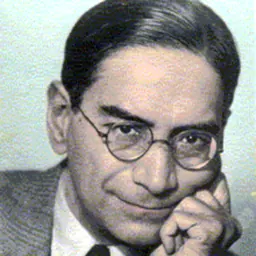
Lived 1933 – 2023 (aged 90). Veno Taufer was a Slovenian and Yugoslav poet, playwright, essayist, editor, translator and theatrologist.
Venčeslav "Veno" Taufer (19 February 1933 – 20 May 2023) was a Slovenian poet, essayist, translator and playwright. Under the Communist regime, he was a driving force behind alternative cultural and intellectual projects in Socialist Slovenia, which challenged the cultural policies of the Titoist system. During the Slovenian Spring (1988–1990), he actively participated in the efforts for the democratization and independence of Slovenia.
Biography Taufer was born Venčeslav Taufer in Ljubljana, Slovenia, then part of the Kingdom of Yugoslavia. His father was a left liberal activist, and prominent member of the Sokol athletic movement. Due to his political activities, he was transferred by the Yugoslav conservative regime to the heavily industrialized Central Sava Valley in central Slovenia, where Veno spent his childhood. In 1943, during the German occupation of Yugoslavia in World War II, his father was killed by the Nazis as one of the leaders of the local partisan resistance.
In 1944, he moved to Ljubljana, where he attended high school. He enrolled at the University of Ljubljana, where he studied comparative literature and graduated in history and literary theory in 1960.
Work Taufer began his public literary career in 1956 and 1957, when he published poems in the student journal Tribuna. During the period of 1958–72, he established himself as a poet. Other notable Slovenian poets of the time include, Gregor Strniša, Dane Zajc, Tomaž Šalamun, and Jože Snoj.
Taufer published a collection titled Lead Stars (Svinčene zvezde) in 1958. His second collection of poems, published in 1963, dealt mostly with love themes. His third collection, titled Exercises and Tasks (Vaje in naloge) and published in 1969, is considered to be Taufer's most daring poetic achievement. Taufer used extracts and collages in an accumulation of allusions to political reality, using parody in order to convey his message. In his later poetry in the 1970s, his literary experimentation went even further, marking the way to a complete transformation of poetic language, which would be then picked up by younger poets, especially by Tomaž Šalamun and Niko Grafenauer.
Taufer's poetry of the 1970s and 1980s has entered the canon of modern Slovenian literature. His Songbook of Used Words (Pesmarica rabljenih besed), published 1975, was conceived as a collection of contemporary variations on Slovene folk songs (especially ballads), and was declared by the philosopher and critic Tine Hribar as the first post-modern work in Slovenian literature. Taufer's next collection, The Management of Nails (Ravnanje žebljev), published 1979, was partly an exercise in linguistic experimentation.
The poems in the collection Water Marks (Vodenjaki), published 1986, record a story of chaos, and a decline of civilization, cultures, beliefs, ideas and values. The collection Crocks of Songs (Črepinje pesmi), published 1989, shows clear influences by Ezra Pound. The poems contained in this collection use fragments from ancient Greek myths, archaic images and visions of disasters, mobilized as an instrument of post-modern reality.
During the 1990s, his most important collection of poetry was Still Odes (Še ode), published 1996, which marks a return to classical poetic forms, mostly sonnets. The collection is opened by two poems containing a violent condemnation of the destruction of Vukovar and Sarajevo during the Yugoslav wars.
Taufer also wrote several plays. His best-known play is called Odysseus & Son or on the World and Home (1990), in which he renews the story of Odysseus and Telemachus, including whole passages from Homer's text, supplemented by fragments from diverse genres.
Don’t just read it —
keep it.
Full-length biographies made to live with: read them, listen on the way to work, watch them tonight.
- E-book
- Audio
- Video
Instant download · yours to keep · every purchase keeps this site free
Important facts
People in Veno Taufer's life
Named in this biography and alive at the same time




Related people
Same field, nearest in time





Contemporaries
People whose lives overlapped Veno Taufer's


Frequently asked questions
Who was Veno Taufer?
Slovenian poet (1933–2023)
When was Veno Taufer born?
Veno Taufer was born on 19 February 1933 in Ljubljana.
When did Veno Taufer die?
Veno Taufer died on 20 May 2023 in Topolšica.
What was Veno Taufer's occupation?
Veno Taufer was a poet, playwright, essayist, editor, translator and theatrologist.
What nationality was Veno Taufer?
Veno Taufer was Slovenian and Yugoslav.
Sources & further reading
Cite this page
APA: Biography.guide. (2026). Veno Taufer. https://biography.guide/veno-taufer/
MLA: "Veno Taufer." Biography.guide, https://biography.guide/veno-taufer/.
Chicago: "Veno Taufer." Biography.guide. https://biography.guide/veno-taufer/.
Data last updated: 2026-09-25 · Spot an error? Report a correction.
Page generated 2026-09-27 05:12 UTC