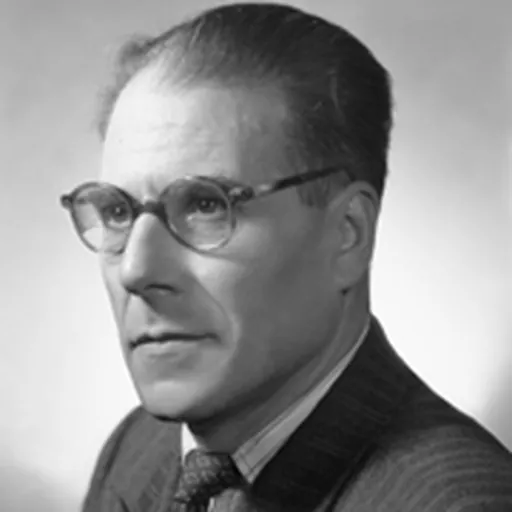
Velio Spano
Anti-fascist Italian politician and journalist
About Velio Spano
Lived 1905 – 1964 (aged 59). Velio Spano was an Italian politician, journalist and anti-fascism.
Velio Spano (15 January 1905 – 7 October 1964) was a Sardinian-born antifascist activist and, at times, fighter through the Mussolini years. He is also remembered for his (mainly political) writings: he later came to be identified, increasingly, as a journalist. After the leader fell from power in 1943 and Italy was liberated in 1945, he became an increasingly mainstream politician, serving as a member of the senate between 1948 and 1963, and playing an increasingly prominent leadership role in the Communist Party.
Life Provenance and early years Velio Spano was born at Teulada, a little town close to the southern tip of Sardinia, which had been part of Italy since unification. Attilio Spano, his father, worked for the government. Antonietta Contini, his mother, was a school teacher. When Velio was just 5 the family relocated some fifty kilometers to the north, to Guspini, a slightly larger and more dynamic small town in which the local economy was, at that time, dominated by lead and zinc mining. Over the next 13 years he grew up among the mining community in Guspini, which was widely regarded as a hotbed of socialism. He was exposed to the prevailing left-wing ideas of the time, and to the potential power of effective political organisation. After he passed his eleventh birthday he became based, for most of the year, in Cagliari where he attended the Giovanni Siotto Pintor Middle School for two years. He then transferred to the Giovanni Maria Dettori High School, where he successfully completed the “classical” curriculum in 1922 which opened the way to a university-level education. It was also In October 1922 that Mussolini took power across the water in Rome, although it would be some years before the full implications of this development became widely apparent. For a teenager with Spano's political background and instincts, however, there was little chance of giving the leader the benefit of the doubt, and in 1923 he reacted by joining the popular anti-Mussolini street protests in Cagliari that had been unleashed by the coup and then, in 1923, by joining the Cagliari Young Communists (FCCI).
In December 1923 his father secured an important promotion which involved the family relocating to Rhodes, which had been ruled as an Italian colony since 1912. Velio was almost 19 by this point, however, and did not accompany his parents. Instead he moved to Rome and in Summer 1924 enrolled at the university there to study for a degree in Jurisprudence. At around the same time, almost certainly in another part of Rome, the socialist parliamentarian Giacomo Matteotti was kidnapped and murdered by fascist paramilitaries giving rise to widespread revulsion and a rapidly intensifying appreciation of the true nature of Mussolini's fascism. Following his disappearance, almost no one expected he would ever be found alive. His body was found just outside the city a couple of months later. Almost at once Spano joined the Lazio region Young Communists. It was at about the same time that he came across the brilliant philosopher-journalist Antonio Gramsci. They would engage together in long discussions about “The Sardinian question”. Spano would later recall he owed his life-long commitment to communism, at least in part, to these discussions with Gramsci.
Young militant Early in 1925 Spano took on the leadership of the University Communist Group at Rome, jointly with Altiero Spinelli. His activism did not go unnoticed by the security services on the group and in 1926, at the invitation of the party there, he moved to Turin, and industrial city with a long-embedded tradition of liberalism and socialism to take on the leadership of the University Communist Group there. He enrolled at the university to continue his studies, but by 1927 had abandoned these. That year he joined the organisational apparatus of the Young Communists (FCCI), which had been an illegal organisation shortly after the Fascist take-over in 1922. Operating, as far as possible, below the radar of officialdom, he identified himself at this time using the code name “Mariano”. By this time he had become, in the words of at least one commentator, a “professional revolutionary” in response to the government's systematic construction of the institutional underpinnings for an authoritarian tyranny including, notably, the so-called ”exceptional laws” (‘’” leggi eccezionali del fascismo"’’) of 1925/26. He was arrested in Turin and sentence to a two month prison term and recommended, at the same time, for some more systematic form of “confinement” that would remove him from antifascist activist. During his two-month imprisonment his case was referred to the government's special court ("Tribunale speciale per la difesa dello Stato") in Rome, which was invited to consider his role in the (illegal) reconstitution of the ”Communist Party of Italy”. The special court delivered the outcome of their deliberations on 12 April 1928 and imposed on him a sentence amounting to a further five years and five months for “communist association and propaganda”. The total sentence handed down was set at six years. Spano's prison experiences are known primarily through what he himself said and wrote of them. He tried to grasp the opportunities for personal and political development presented, writing of the experience to his family in 1930, “I have not lost a single centimeter of my stature”.
French exile, Egyptian assignment In 1932, as part of a more general amnesty announced the previous month to celebrate the first ten years of fascism in Italy, 639 of the 1,056 prisoners formally classified as political prisoners were released. Velio Spano was one of those released. In January 1933 he became aware that the authorities again searching for him with a warrant for his capture, however, and decided to emigrate to France.
By November 1935 Spano was in Egypt, having been sent by in the party to undertake a propaganda assignment among the Italian troops advancing across Libya towards Suez to discourage British intervention in the intensifying Abyssinian War. For this mission he used the francophone cover name “Paul Conibet”.
Towards the end of 1937 Spano returned to Paris where a focus of his energies was on political j0urnalism through the print media. He took on co-directorship, with the Torinese Mario Montagnana, for l'Unità, the party's mass-circulation daily newspaper which had been banned by the Italian government in 1926, but of which clandestine copies were nevertheless produced, not always with the same frequency, in Milan, Turin, Rome and Paris between 1927 and 1944 (when regular daily publication resumed).
Through most of 1938 he was also intensively engaged in political work in support of popular front activities. During the summer of 1938 he organised a “party school” near Longwy, in the mining region of northern Lorraine, with Luigi Vitobello.
Nadia Gallico For much of Europe war broke out during September 1939, although Italian military involvement was deferred until June 1940. The Tunisian Communist Party went underground. Many of Spano's political comrades returned to Italy, seeking to avoid discovery by the authorities there by living “underground”, without registering any place of domicile with a municipality, and never staying in the same place for very long. Spano was keen to do the same, but was persuaded by the party leadership that he could be more helpful to the cause by remaining in Tunisia. Meanwhile, shortly after arriving in Tunisia in 1938 he had met Nadia Gallico, a lawyer's daughter who had grown up in Tunisia as a member of the Italian community and as part of a family that was avowedly pro-communist and anti-fascist. They married in May 1939: Nadia Gallico Spano played a leading role in Spano's task of organising antifascist resistance in Tunisia and subsequently proved a powerful source of life-long personal and political support. I due course Nadia also gave birth to the couple's three recorded daughters.
Sbeitla Early during 1940 Spano was arrested and detained, together with other Italian communists, in the “concentration camp” at Sbeitla. He was held there until Paris fell to the Germans in June 1940, which generated delight among some of the more vocal Tunisian nationalist but also, in political terms, ushered in a period of increased uncertainty for the territory. Nadia Gallico Spano also spent time confined at the Sbeitla camp which later, she memorably described. Security did not depend on high fences and guard dogs: it was “a location on the edge of the desert. Not so much a concentration camp as a vast stretch of abandoned ground, without even one building, and defined by a line which it was prohibited to cross. Anyone who did so, even without meaning to, risked being shot without warning”.
Tunisian Communist Party During 1941 Velio Spano reorganised the Tunisian Communist Party to take account of the changed circumstances. With many comrades having quietly slipped across to Italy he emerged, de facto, in a leadership role within what remained of the party. He established links with the Gollisti, with French socialists, and with the Neo Destour nationalists under Habib Bourguiba. There was a shared enemy: the collaborationist French puppet government at Vichy in central France. (Palmiro Togliatti, the party's longstanding leader between, by some criteria, 1927 and 1964, would not return from Moscow until 1944, but contacts were maintained between Spano and Togliatti through French Communist Party channels. In January 1944 he participated at Bari in the congress of the “Comitato di Liberazione Nazionale” (National Liberation Committee / CLN) at which, together with Reale, he aligned the Communist Party with the socialists and the ”actionists” in refusing to participate in any provisional government unless and until the king abdicated. Others present took a yet more radical position, insisting not merely that the king should abdicate, but that the monarchy should be abolished. As far as the Communist Party was concerned, the demand in support of immediate abdication was softened abruptly with the arrival in Naples of Palmiro Togliatti on 27 March 1944.
In April 1944 Spano participated prominently in Sicily at the first post-liberation party congress, intervening forcefully to confront separatist currents within the party. He was similarly uncompromising in confronting separatism in the party in Sardinia and in Calabria.
After the liberation In July 1944 Spano became part of the provisional directorate established for the so-called party “operativa” in anticipation of a liberated Italy It was also in July 1944, following the liberation of Rome the previous month, the Spano accepted the directorship of the newspaper l'Unità, responsible now for the Rome edition for the next two years. on the basis of an initiative from post-fascist political leadership groups that had emerged in Rome and Milan. Following the abolition of the monarchy in June/July 1946, Velio Spano served as an under-secretary at the Agriculture Ministry in the short-lived first government of the Italian Republic. Meanwhile in December 1945, at the fifth national congress of the Communist Party, Spano was elected to membership of the Party Central Committee and, within it, to the party directorate, remaining in post till the ninth national congress.
Following the elections of 18 April 1948 Spano was appointed to membership of the senate, the upper house of the bicameral legislature of the new Italian Republic. He remained a senator, selected for the “Guspini-Iglesias” electoral district in Sardinia and reconfirmed through successive elections, for the rest of his life.
In August 1949 Spano accepted a party request that he should visit the newly relaunched People's Republic of China following more than two decades of intermittent civil war. He arrived in September and stayed in the country until 1950, acting both as an envoy, selected for the task by Palmiro Togliatti, the leader of the Italian Communist Party and as a correspondent for the party newspaper, l'Unità. Starting in October 1949, he sent back a series of reports which were gathered together on his return and published in a single volume in March 1950.
The China trip presaged a more permanent development. In 1956 Spano was given a leading role in the party's foreign affairs section. This was the background to his appointment in 1958 as secretary to the “Italian Peace Movement” and thereby a vice-president at the World Peace Council . Nevertheless, after Stalin died, and as the contents of so-called “secret speech” spilled across from Moscow, to be followed by what optimists termed the Khrushchev Thaw in east–west relations, by 1961 Spano found himself in passionate and increasingly open disagreement with party leader Palmiro Togliatti on their respective attitude to the Soviet Union and on the extent to which Soviet-inspired communism could be considered compatible with Italian notions of parliamentary democracy. These differences left Spano increasingly sidelined when it came to in the party's foreign policy. The principle exception concerned the African continent, in which Spano, encouraged by his Tunisian-born wife, had taken a particular interest ever since his Tunisian exile during the later Mussolini years. He took a close interest in the decolonisation process which was accelerating in various parts of Africa during the later 1950s and early 1960s. His 1960 book “Risorgimento africano” reflected his close attention to these developments though his later years.
Velio Spano died from cancer at Rome on 7 October 1964.
Output (selection)
Don’t just read it —
keep it.
Full-length biographies made to live with: read them, listen on the way to work, watch them tonight.
- E-book
- Audio
- Video
Instant download · yours to keep · every purchase keeps this site free
Important facts
Family & relationships
People in Velio Spano's life
Named in this biography and alive at the same time



Related people
Same field, nearest in time




Contemporaries
People whose lives overlapped Velio Spano's


Frequently asked questions
Who was Velio Spano?
Anti-fascist Italian politician and journalist (1905-1964)
When was Velio Spano born?
Velio Spano was born on 15 January 1905 in Teulada.
When did Velio Spano die?
Velio Spano died on 7 October 1964 in Rome.
What was Velio Spano's occupation?
Velio Spano was a politician, journalist and anti-fascism.
What nationality was Velio Spano?
Velio Spano was Italian.
Sources & further reading
Cite this page
APA: Biography.guide. (2026). Velio Spano. https://biography.guide/velio-spano/
MLA: "Velio Spano." Biography.guide, https://biography.guide/velio-spano/.
Chicago: "Velio Spano." Biography.guide. https://biography.guide/velio-spano/.
Data last updated: 2026-09-22 · Spot an error? Report a correction.
Portrait: Wikimedia Commons · author & licence
Page generated 2026-09-27 05:00 UTC