
About Vasily Mishin
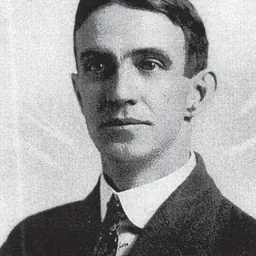
Lived 1917 – 2001 (aged 84). Vasily Mishin was a Russian scientist and design engineer.
Vasily Pavlovich Mishin (; 18 January 1917 – 10 October 2001) was a Russian engineer in the former Soviet Union, and a prominent rocket pioneer, best remembered for the failures in the Soviet space program that took place under his management.
Biography Mishin was born in Byvalino in the Bogorodsky Uyezd, and studied mathematics at the Moscow Aviation Institute.
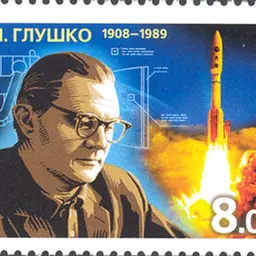
Mishin was one of the first Soviet specialists to see Nazi Germany's V-2 facilities at the end of World War II, along with others such as Sergei Korolev, who preceded him as the OKB-1 design bureau head, and Valentin Glushko, who succeeded him.
Mishin worked with Korolev as his deputy in the Experimental Design Bureau working on projects such as the development of the first Soviet ICBM as well in the Sputnik which required a design capable of putting ninety-five tons of cargo into orbit, up from fifty and later seventy-five ton requirements earlier in development. Under Korolev, a precedent of forgoing much of the usual ground testing had been begun. According to Korolev, this was because proper facilities would not be funded, and it would also allow for earlier test flights. Some of the failures Mishin faced during his leadership could have been avoided if further testing had been conducted at this stage. To handle engine failures, the KORD system was created under Mishin. To prevent the rocket from having uneven flight that would result from the unbalanced thrust caused by a malfunctioning motor, the faulty motor and the motor opposite it in the rocket base would be turned off. KORD would also make the calculations necessary to compensate for the missing motors, which would allow the same flight path to be maintained.
The N1, despite its necessity for planned missions, was never successfully flown. The first test flight, on 3 February 1969, had internal plumbing issues which led to a fire one minute in. It did, however, demonstrate the KORD system working successfully as well as proper deployment of the ejection safety system. The second launch, on July 3, experienced failure seconds after ignition, causing the rocket to fall back on the Launchpad and create significant damage. The third N1 launch occurred on 22 June 1971, after improvements were made to KORD, the cabling, and fuel pumps, and the addition of an extinguishment system and filters. Before the launch, the individual engines were further tested and the Launchpad was repaired. For the first time all thirty engines of the first stage fired successfully, which was the cause of the failure of the flight. When all engines fired together, it created unexpectedly high roll (rotation along the axis of thrust), which was beyond the strength of the compensating vernier engines, designed to keep stable flight. This was another failure that might have been prevented with proper ground testing.
For the fourth and what would become the final flight of the N1, further refinements were made, including four additional vernier engines, additional heat shielding for internal components, a new digital control system, and additional sensors paired with a high speed relay system. The Soviet Space program was now eyeing creating a base on the Moon, but first needed to finally succeed with this design. The launch was on 23 November 1972, with a Mishin approved flight plan to orbit the Moon forty-two times, with flight activities such as taking pictures of future landing sites, before returning to Earth on December 4. The rocket preceded farther than its predecessors, but shortly before the first stage was to separate one engine caught fire, causing the entire structure to explode, but not before the escape system activated.
Despite his skills in rocketry, Mishin was not known as an able administrator. He is often blamed for the failure of the program to put a man on the Moon, and faced criticisms for his alcohol consumption. He was described by Soviet Premier Nikita Khrushchev as "not [having] the slightest idea how to cope with the many thousands of people, the management of whom had been loaded onto his shoulders, nor make the huge irreversible government machine work for him." Leonov described Mishin as "hesitant, uninspiring, poor at making decisions, over-reluctant to take risks and bad at managing the cosmonaut corps" Other failures during his term of leadership were the deaths of the Soyuz 11 crew, the loss of three space stations, and computer failures in four probes sent to Mars.
He died in Moscow on 10 October 2001 at the age of 84.
His diaries, containing information on the program from 1960 to 1974, were purchased by the Perot Foundation in 1993. In 1997 a small part of the collection was donated to the National Air and Space Museum to be put on display, and in 2004 copies were donated to NASA.
Don’t just read it —
keep it.
Full-length biographies made to live with: read them, listen on the way to work, watch them tonight.
- E-book
- Audio
- Video
Instant download · yours to keep · every purchase keeps this site free
Important facts
People in Vasily Mishin's life
Named in this biography and alive at the same time


Related people
Same field, nearest in time


Contemporaries
People whose lives overlapped Vasily Mishin's

Frequently asked questions
Who was Vasily Mishin?
Soviet engineer (1917-2001)
When was Vasily Mishin born?
Vasily Mishin was born on 18 January 1917 in Byvalin.
When did Vasily Mishin die?
Vasily Mishin died on 10 October 2001 in Moscow.
What was Vasily Mishin's occupation?
Vasily Mishin was a scientist and design engineer.
What nationality was Vasily Mishin?
Vasily Mishin was Russian.
Sources & further reading
Cite this page
APA: Biography.guide. (2026). Vasily Mishin. https://biography.guide/vasily-mishin/
MLA: "Vasily Mishin." Biography.guide, https://biography.guide/vasily-mishin/.
Chicago: "Vasily Mishin." Biography.guide. https://biography.guide/vasily-mishin/.
Data last updated: 2026-09-20 · Spot an error? Report a correction.
Page generated 2026-09-27 05:00 UTC