
Vasily Ignatenko
Soviet firefighter who responded to the Chernobyl disaster
About Vasily Ignatenko
Lived 1961 – 1986 (aged 25). Vasily Ignatenko was a Russian firefighter and chernobyl liquidator.
Vasily Ivanovich Ignatenko (; ; ; 13 March 1961 – 13 May 1986) was a Soviet firefighter who was among the first responders to the Chernobyl disaster.
He worked as an electrician before being conscripted into the Soviet Armed Forces in 1980, where he completed his two years of service as a military firefighter. Afterwards, he took up employment as a paramilitary firefighter with Fire Brigade No. 6, based in Pripyat. On 26 April 1986, Ignatenko's fire brigade was involved in mitigating the immediate aftermath of the Chernobyl disaster, fighting the fires that broke out following the initial explosion of Reactor 4 at the Chernobyl Nuclear Power Plant. While on site, Ignatenko received a high dose of radiation, leading to his death at a radiological hospital in Moscow eighteen days later.
Early life
Vasily Ivanovich Ignatenko was born on 13 March 1961, on a collective farm in the Brahin District of the Gomel Region of the Byelorussian SSR. He was the third child of Tatiana Petrovna Ignatenko and Ivan Tarasovich Ignatenko. Tatiana Ignatenko was a collective farm fieldworker, and Ivan Ignatenko a tractor, and later truck, driver. They had been married in 1958. Ignatenko had an older sister, Lyudmilla, a younger brother, Nikolai, and a younger sister, Natasha. Lyudmilla trained in medicine and worked as an ambulance paramedic, Nikolai became a bus and truck driver, and Natasha, after working in a state-run kindergarten for a time, would follow Ignatenko into the fire service. Ignatenko also had an older brother named Vitya, who had died from fever at age two or three, before Ignatenko was born.
Military service (1980–1982) Ignatenko's firefighting career began during his time in military service. Following his call up in April 1980, he was assigned to the military fire department of Internal Troops of the Ministry of Internal Affairs (MVD), in Moscow. (The Moscow fire department, at this time, was staffed by conscripted military personnel.) It was here that he received his initial training in firefighting, and took the oath of service at the end of his training period. During his time in the Moscow fire department, Ignatenko became involved in fire-applied sports, contributing significantly to his fire brigade's success in competition.
During his time with Paramilitary Fire Brigade No.6 (СВПЧ-6), he was promoted to Senior Sergeant, becoming a squad leader. He also continued to be active as an applied-fire sport athlete, becoming known as the brigade's champion. As Ignatenko was on duty that night, he was among the first 9 duty-watch firefighters from Pripyat to depart for the power station, located a mere away from the city.
The high level of radioactivity present on the roof, however, quickly began to take its toll. Ignatenko and the others were inhaling irradiated smoke, and working amid piles of ejected nuclear material, and soon began to experience the initial effects of acute radiation syndrome. Firefighters ordered by Major Leonid Telyatnikov to ascend the fire escape and assist met them halfway up as they struggled to descend, vomiting uncontrollably and unable to fully support themselves without one another's help. Helped to the ground by fellow firefighters, Ignatenko was evacuated to the Pripyat Hospital, around 2:35 a.m.
Hospitalization and death Ignatenko was initially hospitalized in Pripyat, but as the extent of the disaster began to be understood, all of the firefighters and plant personnel suffering from radiation exposure were evacuated by road to the Boryspil Airport near Kyiv, and from there to Moscow by air. He and the others were then transported to Hospital No. 6, a hospital operated by The Ministry of Medium Machine Building (the Soviet state nuclear energy agency) and the All-Union Physics Institute which had a specialized radiological department. It was hoped the procedure would raise his white blood cell count, which had been lowered sharply by radiation exposure, leaving him extremely vulnerable to infection. Infection brought on by damage to his immune system eventually led to organ failure. Vasily Ignatenko died at 11:20 in the morning on 13 May 1986.
Vasily and Lyudmilla Ignatenko had one child following a previous unsuccessful pregnancy: Natasha Ignatenko. Reportedly born with congenital heart defects and cirrhosis of the liver, she died shortly after she was born and was buried with her father in Mitinskoe Cemetery, Moscow. However Ukrainian medical responder Alla Shapiro, in a 2019 interview with Vanity Fair, said such beliefs were false, and that once Ignatenko was showered and out of his contaminated clothing, he would not have been dangerous to others, precluding this possibility. Robert Peter Gale, an American hematologist who was directly involved in the treatment of Chernobyl radiation patients, also writes that victims were not radioactive themselves and therefore did not pose a danger of radiation exposure to others, although this was unknown at the time of the disaster.
Legacy
Vasily Ignatenko was awarded the Soviet Order of the Red Banner posthumously in 1986. In 2006, he was posthumously awarded the title of the Hero of Ukraine, the highest national award in the country, along with the Ukrainian Order for Courage. Several monuments have been erected in his honor, including in Berezino and his home district of Brahin, where a museum exhibit has also been dedicated to him. There are streets named in his honor in Minsk and Berezino.
Posthumous honours Hero of Ukraine (2006) Ukraine's Order for Courage Order of the Red Banner
In popular culture Ignatenko's wife, Lyudmilla Ignatenko, provided an account reflecting on her husband's death to Belarusian author Svetlana Alexievich for her 1997 book Voices From Chernobyl. This story was adapted for use in streaming service HBO's 2019 miniseries Chernobyl (where Ignatenko and his wife were portrayed by Adam Nagaitis and Jessie Buckley respectively) and the subject of Ljudmilas Röst, a 2001 documentary film by Gunnar Bergdahl.
Don’t just read it —
keep it.
Full-length biographies made to live with: read them, listen on the way to work, watch them tonight.
- E-book
- Audio
- Video
Instant download · yours to keep · every purchase keeps this site free
Important facts
more
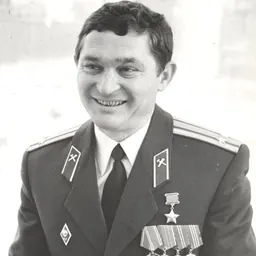
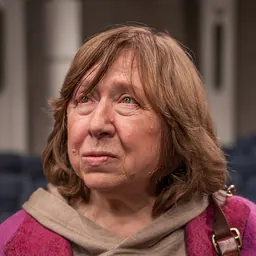
Vasil IhnatsenkaPeople in Vasily Ignatenko's life
Named in this biography and alive at the same time


Related people
Same field, nearest in time


Contemporaries
People whose lives overlapped Vasily Ignatenko's

Frequently asked questions
Who was Vasily Ignatenko?
Soviet firefighter who responded to the Chernobyl disaster (1961–1986)
When was Vasily Ignatenko born?
Vasily Ignatenko was born on 13 March 1961 in Spiaryžža.
When did Vasily Ignatenko die?
Vasily Ignatenko died on 13 May 1986 in Moscow.
What was Vasily Ignatenko's occupation?
Vasily Ignatenko was a firefighter and chernobyl liquidator.
What nationality was Vasily Ignatenko?
Vasily Ignatenko was Russian.
Sources & further reading
Cite this page
APA: Biography.guide. (2026). Vasily Ignatenko. https://biography.guide/vasily-ignatenko/
MLA: "Vasily Ignatenko." Biography.guide, https://biography.guide/vasily-ignatenko/.
Chicago: "Vasily Ignatenko." Biography.guide. https://biography.guide/vasily-ignatenko/.
Data last updated: 2026-09-20 · Spot an error? Report a correction.
Page generated 2026-09-27 05:19 UTC