
About Valve Pormeister
Lived 1922 – 2002 (aged 80). Valve Pormeister was a Russian and Estonian architect and landscape architect.
Valve Pormeister née Ulm (13 April 1922 – 27 October 2002) was an Estonian landscape architect who became an architect. She was one of the first women to influence the development of Estonian architecture, becoming one of the country's most inventive modernisers of rural architecture in the 1960s and 1970s. She is often known as the "Grand Old Lady" of Estonian architecture.
Biography
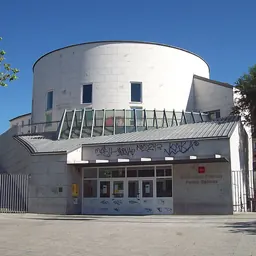
Pormeister was born in Tallinn, studied briefly agronomy at the University of Tartu and went on to study landscape architecture in Tallinn State Institute of Applied Art. After graduating, she first worked at the Estonian Agricultural Design Institute (1952) but soon moved from landscaping to designing buildings in Estonian Land Development Project of the National Design Institute where she worked until 1992. Despite the fact that she was a woman in a country where architecture had always been a man's profession, she gained wide recognition with her very first work, the Flower Pavilion in Tallinn (1960). Designed as an exhibition venue, the pavilion became a landmark of post-Stalinist architecture with its organic, light appearance, its transparency and its affinity to nature. Pormeister went on to design a gardening exhibition centres in Tallinn and one for a horticultural institute in Moscow (1964). In her Café Tuljak (1964), an extension to the Flower Pavilion, Pormeister was also inspired by Finnish trends, this time by rather heavier, right-angled style with dark wooden cornices.
Her early style in the 1960s was influenced by the soft Nordic modernistic trends developing in Finland, one of the few countries Estonians were permitted to visit at the time. In addition, Finnish television could be received in Estonia and specialised Finnish magazines were also available. This explains the advent of lighter materials such as wood and plaster creating a more user-friendly appeal.
Late 1960s and the 1970s buildings are characterized by daring and bold visions in layout and volumes, sloping surfaces and diagonal lines. She was liable to innovations in architecture and thus began exploring neo-functionalism.
In the late 1970s and during the 1980s her works blended in with the Estonian architectural scene. Her designs also went through post-modern movement. The sensitivity towards building environment and the exploitation of architectural heritage suited her principles well.
During the 1990s, Pormeister designed a number of reconstruction and renovation plans for her previously erected buildings. Towards the end of her life she planned several memorials.
Work
The Flower Pavilion (1960) Café Tuljak (1964) The Administrative and Research Centre for the Kurtna Experimental Poultry Farm (1966) The canteen-administration building of the Audru Collective Farm (1973) The Saku State Plant Protection Station (1974) The Technical School of Jäneda State farm (1974) The Maarjamäe memorial (together with Allan Murdmaa and Henno Sepmann, 1975) and landscape modeling The main building of the Livestock Breeding and Veterinary Scientific Research Institute near Tartu (1984) The Faculty of Forestry and Soil Improvement of the Estonian Academy of Agriculture (1984)
Awards
Soviet Estonian award for the Tallinn Song Festival Grounds and Choir Stand (1965) Soviet Estonian award for landscape architecture and the main building at the Kurtna Poultry Experimental Station (1967) Honoured Architect of Soviet Estonia (1967) State Award of the Soviet SSR for designing of the Saku, Kurtna and Vinni communities (1971) Estonian National Lifetime Achievement Award for Culture (2000) Order of the White Star, Fifth Class (2001)
Personal exhibitions
In the Flower Pavilion, 1972 for Valve Pormeister's 50th Anniversary Valve Pormeister. Moderniser of Estonian Countryside. Exhibition from March 8 to April 17, 2005 in the Museum of Estonian Architecture.
Personal life For a short period Valve Pormeister was married to interior architect Valter Pormeister. Her long-term partner was architect Henno Sepmann. The elder sister was Elgi Reemets, an applied artist.
Photos
Valve Pormeister The National Archives of Estonia photo database. Photo: Olav Tuulik, 1967 Valve Pormeister, architect of the Estonian Land Development Project The National Archives of Estonia photo database. Photo: Gunnar Loss, 1971
Literature
Jänes, Liina: Valve Pormeister - Eesti maa-arhitektuuri uuendaja, näitus (Estonian rural architecture innovator, an exhibition), 2005, Tallinn, Eesti Arhitektuurimuuseum, 96 pp. .
Don’t just read it —
keep it.
Full-length biographies made to live with: read them, listen on the way to work, watch them tonight.
- E-book
- Audio
- Video
Instant download · yours to keep · every purchase keeps this site free
Important facts
People in Valve Pormeister's life
Named in this biography and alive at the same time



Related people
Same field, nearest in time
Contemporaries
People whose lives overlapped Valve Pormeister's





Frequently asked questions
Who was Valve Pormeister?
Estonian architect (1922–2002)
When was Valve Pormeister born?
Valve Pormeister was born on 13 April 1922 in Tallinn.
When did Valve Pormeister die?
Valve Pormeister died on 27 October 2002 in Tallinn.
What was Valve Pormeister's occupation?
Valve Pormeister was an architect and landscape architect.
What nationality was Valve Pormeister?
Valve Pormeister was Russian and Estonian.
Sources & further reading
Cite this page
APA: Biography.guide. (2026). Valve Pormeister. https://biography.guide/valve-pormeister/
MLA: "Valve Pormeister." Biography.guide, https://biography.guide/valve-pormeister/.
Chicago: "Valve Pormeister." Biography.guide. https://biography.guide/valve-pormeister/.
Data last updated: 2026-09-20 · Spot an error? Report a correction.
Page generated 2026-09-27 05:20 UTC