
Valerio Ricetti
Australian Hermit
About Valerio Ricetti
Lived 1898 – 1952 (aged 53–54). Valerio Ricetti was an Italian hermit and artisan.
Valerio Ricetti (; 4 October 1898 – 1952) was an Italian-Australian hermit who lived mainly in a cave in the Griffith area for a period of 23 years. Working only at night and in the early morning hours so that he would not be seen, he turned the cave into his own private "utopia" complete with kitchen, chapel, landscaping, pathways, stone walls, stone stairs, paths, terraced gardens and cisterns for water supply.
Biography Early life in Italy Valerio Ricetti was born in Sondalo, a municipality in the Province of Sondrio in the Italian region of Lombardy which is a part of the Italian Alps, close to the border of Switzerland, and located about 130 km northeast of Milan and about 40 km northeast of Sondrio. Although Ricetti informed his lifelong friend Petronio Ceccato that he was born on 4 October 1898 he did at times adjust his date of birth so as to either get work, or receive adult pay rates.
As a young teenager he was apprenticed to become a stonemason and concrete worker, learning his trade in road and rail tunnel construction. Ricetti had always wanted to come to Australia and he was saving money for the trip. His uncle, who had noted the impending war (which became World War I), suggested he migrate to Australia before all passenger shipping was cancelled, and then lent him the money to travel.
Creating a Utopia in a cave
Deciding to stay on the hill and unaware that his old Italian colleagues, Ceccato and Bicego, had settled down nearby, Ricetti believed himself to be the only Italian in the area and so he kept entirely to himself, living in the cave as a home. His need for reclusiveness saw him keep a couple of places to hide in the event of people coming by and for one of these he built a stone walled circular cave around a large tree that had a peephole in it. This hideout was set amongst shrubs so that he could hide without being spotted but keep watch until the people had left.
His industrious nature assisted by his background in dry stone walling saw him clear the site and create massive stone galleries, pathways, cliff side gardens, and floral painted rock walls. By hand Ricetti moved hundreds of tons of rock over a number of years without anyone in the area ever becoming aware of his presence. During this time he lived off the land – no doubt by scavenging from the tip, as well as the vegetable and fruit gardens nearby.
In 1935, after he had been in the location for six years Ricetti had a fall breaking a leg and badly bruising his ribs. Luckily he was found by a passing swagman who notified an ambulance, and he was taken to the nearby Griffith hospital and treated by Dr E W Burrell.
It was this accident and the requirement to provide an address to the authorities that moved him from a state of reclusive obscurity to that of instant celebrity partly because of his hermit nature but particularly when the sheer size of his work at the cave was discovered.
Following his recuperation in hospital, he returned to his cave and Ricetti, without any money but anxious to pay Dr Burrell for his services sneaked into town at night and worked secretly in the Doctor's garden. Dr Burrell caught him after a few visits and informed Ricetti that he was Government Medical Officer and that payment was not required. Even so, the two became good friends with the doctor visiting him at his cave home regularly bringing gifts of things such as shoes and clothes.
Two years later, Ricetti learned through the visit of a Mr Agostini (another Italian in the community) that his old friends Ceccato and Bicego were in that same town and their friendship was renewed. They would pick him up on weekends to meet other people and while Ricetti became more sociable and they attempted to coax him from his reclusiveness he continued to live in his cave.
Complexity of Ricetti’s cave After he was found it was learned that Ricetti had used the traditional artisan skill of dry stone walling, which he had learned during his apprenticeship in his North Italian homeland, creating what he referred to as his Garden of Eden. Ricetti's work, completed totally on his own, covers 160,000 square metres of rocky ridge atop Scenic Hill, using the natural landscape and materials found in the area to create a hermitage that stretched for over a kilometre.
World War II internment With the arrival of World War II state authorities put in place the requirement for enemy aliens to register under the National Security (Aliens Control) Regulations, report to the local police station each week, and carry an identity card at all times. Ricetti was arrested on 4 March 1942 for failing to register and failing to report. His statement that he was unaware of the requirements was accepted by the local police, and the local police Officer-in-Charge reported that he did not have a concern with Ricetti, noting that he was a "harmless mental deficient who lives the life of a hermit".
Military Police Intelligence of Sydney had different views however and demanded a search be conducted by local police of his cave premises. However they found no "literature of subversive or disloyal nature" or any "prohibited possessions". Nevertheless, it was alleged that Ricetti had lined the walls of one of his caves with newspaper reports concerning Hitler which had a swastika prominently displayed. Ricetti was interviewed by Military Police who noted that he lived "in the highest and most secluded locality in the District ... about a mile from the various petrol depots, electricity substations and water channels in the Irrigation Area" and that he was "known to wander about at night" and it was decided that he should be interned. He was arrested on 3 May 1942 at his cave and moved to Liverpool Prisoners of War and Internment Camp and then transferred to Cowra Internment Camp and then transferred to Loveday Internment Camp, South Australia on 21 April 1943. Part of his internment duties included building roads in the area and with his skills he was able to assist guards with ways to improve their road-building methods.
Ricetti's cave home became known as Hermit's Cave and has now been preserved with a listing on the State Heritage Register.
Don’t just read it —
keep it.
Full-length biographies made to live with: read them, listen on the way to work, watch them tonight.
- E-book
- Audio
- Video
Instant download · yours to keep · every purchase keeps this site free
Important facts
Related people
Same field, nearest in time


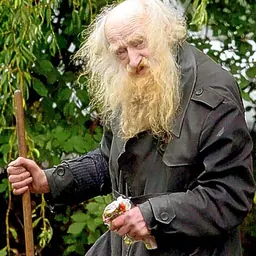


Contemporaries
People whose lives overlapped Valerio Ricetti's


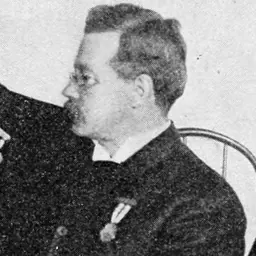



Frequently asked questions
Who was Valerio Ricetti?
Australian Hermit (1898-1952)
When was Valerio Ricetti born?
Valerio Ricetti was born on 4 October 1898 in Sondalo.
When did Valerio Ricetti die?
Valerio Ricetti died in 1952 in Sondalo.
What was Valerio Ricetti's occupation?
Valerio Ricetti was a hermit and artisan.
What nationality was Valerio Ricetti?
Valerio Ricetti was Italian.
Sources & further reading
Cite this page
APA: Biography.guide. (2026). Valerio Ricetti. https://biography.guide/valerio-ricetti/
MLA: "Valerio Ricetti." Biography.guide, https://biography.guide/valerio-ricetti/.
Chicago: "Valerio Ricetti." Biography.guide. https://biography.guide/valerio-ricetti/.
Data last updated: 2026-09-22 · Spot an error? Report a correction.
Page generated 2026-09-27 05:20 UTC