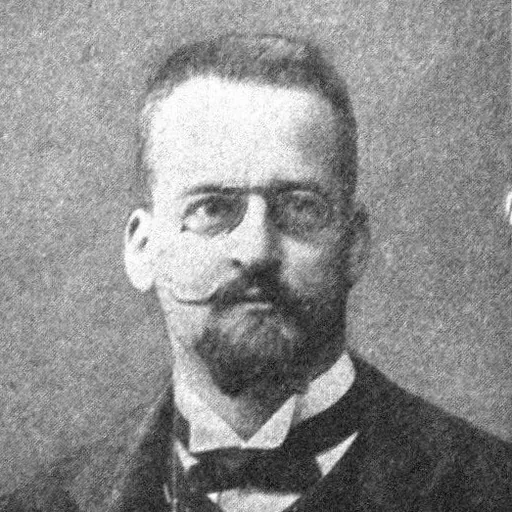
Valentino Pittoni
Socialist politician from Trieste, who was mainly active in Austria-Hungary.
About Valentino Pittoni
Lived 1872 – 1933 (aged 60). Valentino Pittoni was an Italian and Austrian writer, journalist and politician.
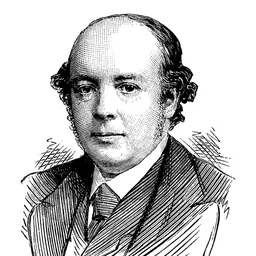
Valentino Pittoni (; 23 May 1872 – 11 April 1933) was a socialist politician from Trieste, who was mainly active in Austria-Hungary. As a follower of Austromarxism and militant of the Social Democratic Workers Party of Austria (SDAPÖ), he came to oppose both Italian irredentism and Slovenian nationalism. In the early 20th century he emerged as the key leader of the socialist movement in the Austrian Littoral region. Pittoni represented Trieste in the Imperial Council, where he became known as a proponent of electoral democracy, and was additionally a member of Trieste's Municipal Council. He set up a cooperative movement, as one of several ventures ensuring inter-ethnic solidarity in the Littoral.
Increasingly isolated after World War I, Pittoni was uncompromising in demanding Trieste's autonomy within Austria, and eventually its independence from the Kingdom of Italy. He was a noted adversary of Italian fascism, who lived his later life in exile in Vienna. His final contributions were as a newspaper editor and doctrinaire of interwar Austrian socialism.
Early life Pittoni was born on 23 May 1872, in Brazzano, part of the Cormons municipality. His father was a textile trader. During his childhood the family moved to Trieste. He studied at the Trade Academy (Accademia di Commercio e Nautica) in Trieste, In 1896 he befriended the Austrian socialist leader Victor Adler, who invited him to join SDAPÖ that same year. For the next twenty years, Pittoni was strongly influenced by Adler's Austromarxist ideological line. He lobbied for the transformation of the Austro-Hungarian empire into a Danubian Confederation of non-territorial nationalities. A staunch internationalist, he opposed any Italian irredentist moves. For Pittoni, irredentism was promoted by Italian capitalists to weaken unity of the working class. Nonetheless, he and his movement had only marginal contacts with the Slovene neighbours, as Pittoni resented Slovenian nationalism and opposed the Slavic claims over Trieste (or "urban Slavism").
Pittoni joined the Social Democratic League, a Triestine branch of the SDAPÖ, and, by 1902, was involved in mediating between the socialists and organised labour. That year, he helped the senior socialist leader Carlo Ucekar in directing the Österreichischer Lloyd stokers strike, but lost control of it to anarchist agitators. The strike ended in bloodshed. The authorities were lenient toward the socialists, and willing to blame the strike on anarchists, but made a point of warning Pittoni to comply in the future.
Later that year, Ucekar died; Pittoni vied for and won the post as leader of the Social Democratic League. With Pittoni at the helm, the Triestine socialists moved closer to the Austromarxist centre, holding the 1905 anti-war and anti-irredentist demonstration which coincided with the official launch of SMS Erzherzog Ferdinand Max. Although this was a major victory for his version of socialism, Pittoni noted that his League lacked cadres, and reached out to members of Italian Socialist Party (PSI), in the Kingdom of Italy, proposing that they should relocate their militancy to Trieste. He allowed a measure of nationalism to seep into his discourse, noting: "It is up to us to also deal with the national issue." In August, he represented his party at the Stuttgart Congress of the Second International. Together with Adler, Etbin Kristan, Engelbert Pernerstorfer and Josef Steiner, he presided over an SDAPÖ Conference which demanded "freedom in Hungary".
From 1907 onwards Cesare Battisti, a left-wing intellectual inside the party from Trentino, emerged as prominent leader of Trieste's League. Battisti and Pittoni clashed on political issues, especially following the 1908 Bosnian crisis. but Pittoni played it down, arguing that many Bosniaks were already subjects of the Austrian monarchy, in Croatia-Slavonia. Overall, Pittoni claimed, "the right of ethnic self-determination hinges on that state's democratization prospects" (implying that Bosniaks lacked such prospects outside the Austrian tutelage). He also noted that, contrary to the indignation in Italy, Italians had nothing to fear. Against Pittoni, Battisti maintained an anti-militarist and separatist position.
Pittoni was elected municipal councillor of Trieste in 1909, and promoted labour management initiatives. Chief editor of the party organ, Il Lavoratore, and a key figure in the Social Studies Circle, Pittoni also founded the Workers Cooperative of Trieste, Istria and Friulia. His participation in such causes increased the cultural and educational prestige of socialism, solving many of the movement's teething problems, and helping to spread the cooperative ideals among the Slovene population. He conditioned affiliation to these cooperatives on the desegregation and inter-ethnic solidarity of candidate unions. He also campaigned for the establishment of Workers Club and an Italian university in Trieste.
Like the rest of his party, Pittoni issued protests against Rudolf Montecuccoli's plan to modernize and increase the Austro-Hungarian Navy. Together with Adler and with members of the PSI, he co-founded an anti-war congress that would report on any rearmament on either side of the Italian–Austrian conflict.
World War
In 1914, just before the start of World War I, Pittoni began cooperating with the Yugoslav Social-Democratic Party (JSDS), which had recently relocated in Trieste, and set up a shared bureau to oversee common operations. However, he insisted that the common slogan was that of "national toleration [and] workers solidarity", and that the status of Trieste as an Austrian port could not expect to change.
In May 1915, Italy declared war on Austria-Hungary. The violence of the subsequent "Mountain War" demoralized Pittoni, who pleaded with his government for the fair treatment of Italian captives and refugees. It was to include Monfalcone, San Dorligo della Valle, Muggia and other rural localities, which were supposed to form an anti-irredentist cordon of Slovenes and Friulians. In mid 1916, they joined hands with other JSDS moderates, reestablishing the newspaper Zarja, which, against the SDAPÖ party line, advocated the end of war. The Pittoni–Tuma project was opposed by the Yugoslavist wing of the JSDS, whose leader Josip Ferfolja accused the internationalists of facilitating his people's "death as a nation".
Probably as a result of this nonconformism, Pittoni was again conscripted into the Austro-Hungarian Army and sent to the front, before returning to Trieste as cooperative leader, working to ensure the city's supply in food and basic goods. He regained his seat in the Imperial Council in summer 1917, when it reopened its sessions, and declared himself willing to represent the Austrian workers at an international peace conference that was planned by the International Socialist Commission (ISC) in Stockholm. At odds with Adler, who supported continuing the war, he moved closer to Karl Renner's faction, which stood by the old confederation programme, but he also issued messages of sympathy toward the revolutionary, Bolshevik and "maximalist", groups. He notably demanded freedom for Adler's son Friedrich, jailed for his assassination of Minister-President von Stürgkh.
Faced with the challenges of Yugoslavism and Austro-Hungarian dissolution, Pittoni called for the creation of an independent Istrian state or a "Republic of Venezia Giulia". It was to demand protection from the League of Nations, but Pittoni also spoke of other diplomatic alternatives, including an American or a Bolshevik occupation. In late 1918, as the Slovene National Council prepared to assume control of the region, he publicized the manifesto of Emperor Charles, which proposed an Austrian confederation and a special role for Trieste. However, he faced increased opposition within the Trieste socialist movement from the Giuseppe Tuntar–Ivan Regent faction (which favoured an Italo-Slavic Soviet Republic) However, he agreed to become a member of the Italian deputies' Permanent Commission, which was led by the fascio's spokesman, Enrico Conci. Although stranded in Vienna, he communicated with his Triestine faction: his second-in-command, Alfredo Callini, was a member of the Committee of Public Safety, formed after Governor Alfred von Fries-Skene abandoned Trieste. Pittoni had by then lost all footing inside the JSDS, with Ferfolja accusing him of being a covert irredentist.
Exile In early 1919, following the Armistice of Villa Giusti, Pittoni protested as the Arditi and the Fasci Italiani di Combattimento took over in Trieste. The city was soon placed under the governorship of Carlo Petitti di Roreto, who tried to talk Pittoni into accepting the national unification and the Trieste Social Democratic League's integration with the PSI. Pittoni was also opposed to the PSI's revolutionary socialism, and, in April 1919, stood in the minority of Trieste socialists who voted against joining the PSI and the Comintern; he also defended Adler, Camille Huysmans, and the ISC against Bolshevik criticism. By mid 1919 many of Pittoni's followers, Callini included, had deserted to the irredentist camp. Pittoni himself radicalised his opposition to Italian integration, and from 1920 argued that Trieste should form a state within the new Republic of Austria.
In 1922 Pittoni resigned from his posts in the party, complaining that the socialist movement had fallen prey to "the most arrogant and greedy kind of capitalism". By then, he had lost control of Il Lavoratore to a Bolshevik faction which was eventually absorbed into the Italian Communist Party. Pittoni moved to Milan, where he managed a Consorzio Italiano consumers' cooperative. He campaigned for the unification of Italian cooperatives into "a few hundred powerful organisms", which, as he explained in a February 1922 article for La Cooperazione Siciliana, were to form the basis of "a new society". His daughter Bianca (born in Trieste on March 20, 1904) also became politically active, joining Anna Kuliscioff's socialist circle in Milan.
Pittoni remained in Italy after the fascist coup of October 1922, but was eventually driven out by the increasingly violent regime in 1925. He moved back to Vienna, and lived the rest of his life in relative poverty. he became editor of the Arbeiter-Zeitung. Like other Italian emigrants, among them Angelica Balabanoff, he managed to influence SDAPÖ doctrines, contributing to its strong show of anti-fascism. In the conflict between Italian resistance groups, Pittoni raised funds for Filippo Turati's United Socialists. Bianca Pittoni, who also left Italy in 1927, became Turati's secretary and confidante, and then worked with Giuseppe Saragat in Vienna. As argued by researcher Gilbert Bosetti, Pittoni's death "put an end to all hopes of a reform-minded Triestine socialism that supported peace among peoples." and his niece Anita Pittoni, founder of Lo Zibaldone publishing house. Nerina's son, Luciano Manfredi, was Anita Pittoni's heir.
Don’t just read it —
keep it.
Full-length biographies made to live with: read them, listen on the way to work, watch them tonight.
- E-book
- Audio
- Video
Instant download · yours to keep · every purchase keeps this site free
Important facts
People in Valentino Pittoni's life
Named in this biography and alive at the same time




Related people
Same field, nearest in time



Contemporaries
People whose lives overlapped Valentino Pittoni's



Frequently asked questions
Who was Valentino Pittoni?
socialist politician from Trieste, who was mainly active in Austria-Hungary.
When was Valentino Pittoni born?
Valentino Pittoni was born on 28 May 1872 in Cormons.
When did Valentino Pittoni die?
Valentino Pittoni died on 11 April 1933 in Vienna.
What was Valentino Pittoni's occupation?
Valentino Pittoni was a writer, journalist and politician.
What nationality was Valentino Pittoni?
Valentino Pittoni was Italian and Austrian.
Sources & further reading
· Wikipedia: Valentino Pittoni
Cite this page
APA: Biography.guide. (2026). Valentino Pittoni. https://biography.guide/valentino-pittoni/
MLA: "Valentino Pittoni." Biography.guide, https://biography.guide/valentino-pittoni/.
Chicago: "Valentino Pittoni." Biography.guide. https://biography.guide/valentino-pittoni/.
Data last updated: 2026-09-21 · Spot an error? Report a correction.
Portrait: Wikimedia Commons · author & licence
Page generated 2026-09-27 05:01 UTC