
About Karl Renner
Lived 1870 – 1950 (aged 80). Karl Renner was an Austrian politician, librarian, diplomat, lawyer, jurist and author.
Karl Renner (14 December 1870 – 31 December 1950) was an Austrian politician and jurist of the Social Democratic Workers' Party of Austria. He is often referred to as the "Father of the Republics" because he led the first government of the Republic of German-Austria and the First Austrian Republic in 1919 and 1920, and was once again decisive in establishing the present Second Republic after the fall of Nazi Germany in 1945, becoming its first President after World War II (and fourth overall).
Early life Renner was born the 18th child of an ethnic German family of poor wine-growers in Unter-Tannowitz (present-day Dolní Dunajovice in the Czech Republic), then part of the Margraviate of Moravia, a crown land of the Austro-Hungarian Empire. Because of his intelligence, he was allowed to attend a selective gymnasium in nearby Nikolsburg (Mikulov), where one of his teachers was Wilhelm Jerusalem. From 1890 to 1896 he studied law at the University of Vienna. In 1895 he was one of the founding members of the Friends of Nature organisation and created their logo.
Political career In 1896, he joined the Social Democratic Workers' Party of Austria (SDAP), representing the party in the National Council from the 1907 elections until its dissolution in November 1918. During this period he founded and edited the party's journal, Der Kampf, together with Otto Bauer and Adolf Braun. Renner's interest in politics also led him to become a librarian for the Reichsrat. During these early years, he developed new perspectives on law — all the while cloaking his innovative ideas under a variety of pseudonyms (for example, Synopticus and Rudolf Springer) lest he lose his coveted post as parliamentary librarian. He was especially interested in the problems of the Austrian state, whose existence he justified on geographical, economic and political grounds. On the nationality question, he upheld the so-called "personal autonomy" on the basis of which the super-national state should develop, and thereby influenced the agenda and tactics of the Social Democratic Party in dealing with it. As a theorist he was reckoned as one of the leaders of Austro-Marxism.
First Republic In 1918, after the collapse of the Austro-Hungarian Empire, he was in the forefront of the Provisional and the Constitutional National Assemblies of those Cisleithanian "Lands Represented in the Reichsrat" (the formal description of the Austrian half of the Dual Monarchy) that predominantly spoke German and had decided to form a nation-state like the other nationalities had done. Renner became the first head of government ("State Chancellor") of that newly established small German-speaking republic which refused to be considered the heir of the Habsburg monarchy and wished to be known as the Republic of German-Austria . This name, however, was prohibited by The Entente. They also vetoed a resolution of the Constituent National Assembly in Vienna that "German-Austria" was to be part of the German Weimar Republic. Even before the collapse of the Austro-Hungarian Monarchy, Renner had proposed a future union of the German parts of Austria with Germany, even using the word "Anschluss". Like other Austrian socialists, Renner believed that the best course was to seek union with Germany.
He was the leader of the delegation that represented this new German-Austria in the negotiations of St. Germain where the "Republic of Austria" was acknowledged but was declared to be the responsible successor to Imperial Austria. There Renner had to accept that this new Austria was prohibited any political association with Germany and he had to accept the loss of German-speaking South Tyrol and the German-speaking parts of Bohemia and Moravia where he himself was born; this forced him to give up his share in the parental farm if he, "the peasant proprietor who turned Marxist", wanted to remain an Austrian government officer.
Renner was Chancellor of Austria of the first three coalition cabinets from 1918 until 1920 and at the same time Minister of Foreign Affairs, backed by a grand coalition of Social Democrats and Christian Social Party. A wide range of social reforms were introduced by Renner's government, including unemployment insurance, paid holidays, the eight-hour workday, and regulations on the working conditions of miners, bakers, women, and children. State aid was also provided for the disabled, together with health insurance for public employees. In addition, a law was passed that provided for collective bargaining and the mediation of disputes.
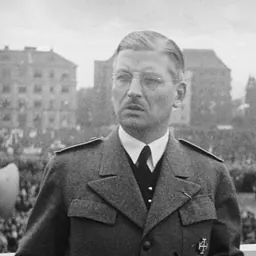
From 1931 to 1933, Renner was President of Parliament, the National Council of Austria. After the dictatorial Corporate State period from 1934, when his party was prohibited, he even welcomed the Anschluss in 1938. Having originally been a proponent of new German-Austria becoming a part of the democratic German Republic, he expected Nazism to be but a passing phenomenon not worse than the dictatorship of Engelbert Dollfuss's and Kurt Schuschnigg's authoritarian one-party system. During World War II, however, he distanced himself from politics completely.
Relationship with Nazism and Communism On 2 April 1938, Renner appealed to Austrians to vote yes in the 10 April plebiscite that sought to legitimize the Anschluss. After the Anschluss, Renner offered to serve in the Nazi government during the occupation, but his offer was declined. During the occupation, according to official Austrian figures, 51,500 Austrian Jews out of a total of 200,000 were killed in concentration camps, which, as documented during the Nuremberg war-crimes trials, had a disproportionately large number of Austrian guards.
On 29 March 1945, Soviet commander Fyodor Tolbukhin's troops crossed the former Austrian border at Klostermarienberg in Burgenland. On 3 April, at the beginning of the Vienna offensive, Renner, then living in southern Lower Austria, established contact with the Soviets. Joseph Stalin had already established a would-be future Austrian cabinet from the country's communists in exile, but Tolbukhin's telegram changed Stalin's mind in favour of Renner.
On 20 April 1945, the Soviets, without asking their Western allies,
Renner and his ministers were guarded and watched by NKVD bodyguards. One-third of State Chancellor Renner's cabinet, including the crucial seats of the Secretary of State of the Interior and the Secretary of State for Education, was staffed by Austrian Communists. The British were particularly hostile, denied him recognition. However, Renner had secured multi-party control of the government by designating two Under-Secretaries of State in each of the ministries, appointed by the two parties not designating the Secretary of State.
Post–World War II
Renner's government opted to restore the 1920 Constitution, as amended in 1929. However, following elections that November, the Federal Assembly temporarily suspended the provision calling for the president to be popularly elected, and elected Renner as president on 20 November. Karl Renner died in 1950 in Vienna and was buried in the Presidential Tomb at the Zentralfriedhof.
Antisemitism
Renner's use of anti-Jewish stereotypes during the First Austrian Republic, and his attitudes towards Jewish survivors, returning exiles and the restitution of property after the Holocaust, have been the subject of considerable historical debate. His speeches and postwar statements contain repeated anti-Jewish stereotypes, particularly the association of Jews with finance, speculation and large-scale capital. Historians nevertheless disagree over whether these statements justify describing Renner as an ideological or programmatic antisemite comparable with the Christian Social politicians Karl Lueger and Leopold Kunschak.
Rhetoric during the First Republic
The controversy over Renner's language during the 1920s was revived in 2012 by historian and former ÖVP politician Franz Schausberger, who argued that a series of parliamentary statements demonstrated antisemitism on Renner's part. Subsequent examination of the complete parliamentary speeches, however, showed that some of the passages quoted by Schausberger had originally formed part of sarcastic attacks on the antisemitic politics of the Christian Social Party. The broader relationship between Austrian Social Democracy and antisemitism was itself ambivalent: the party was continually attacked by the right as a supposedly Jewish party and officially opposed political antisemitism, but Social Democratic rhetoric could itself reproduce anti-Jewish stereotypes, particularly when attacking banks, finance and capitalism.
Jewish return and restitution after 1945
Renner's position towards Jewish victims after the Second World War has generated a separate and in some respects more serious controversy, because it concerned government policy after the Holocaust rather than parliamentary polemics. The Declaration of Independence of 27 April 1945, which bore a strong imprint from Renner and of which he was the first signatory, presented Austria primarily through the postwar conception of the country as a victim of Nazi aggression. Rathkolb's study notes that the declaration did not specifically identify Austrian Jews among the victims and associated Renner's approach with his determination to prevent the devastated Austrian economy from becoming liable for extensive reparations. The remark therefore occurred in an argument for restitution to the political parties rather than as an assertion that no Jewish property should ever be restored, but the comparison has been repeatedly cited in studies of the reluctance of the early Second Republic to compensate Jewish victims.
A further statement occurred in the cabinet council on 29 August 1945 during a discussion of denazification and the treatment of lower-ranking former Nazis. Renner argued that many ordinary civil servants, small businessmen and other people who had joined the Nazi movement had not intended to bring about a world war. In describing what he believed many of them had expected from National Socialism, he added the phrase "höchstens, daß man den Juden etwas tut" ("at most, that something would be done to the Jews"). The official editions of the cabinet protocols for Renner's provisional government are held and published through the Austrian State Archives.
Renner's attitude towards the future of the Austrian Jewish community was expressed particularly clearly after he became Federal President. In February 1946 he had a private conversation with British Labour politician Richard Crossman, a member of the Anglo-American Committee of Inquiry investigating the condition of displaced European Jews and the future of Palestine. According to Crossman's contemporary account, Renner spoke of the destruction of the old Jewish mercantile community and said that he did not believe postwar Austria would again allow Jews to establish what he called "family monopolies". He added that Austria would not permit new Jewish communities from Eastern Europe to establish themselves while Austrians themselves needed employment.
His position remained restrictive in public discussion of restitution. On 31 January 1947 the Jewish Telegraphic Agency reported an interview in which Renner opposed special restitution legislation specifically for Jewish victims, describing such legislation as "un-democratic" and warning that it might create renewed antisemitism. He argued that non-Jewish opponents of Nazism had also suffered confiscation and imprisonment and cited the fact that his own son-in-law was Jewish when rejecting the suggestion that he was personally antisemitic.
Renner's statements did not mean that no restitution took place in Austria. Between 1946 and 1949 a succession of restitution laws provided mechanisms for the recovery of various categories of property confiscated or "Aryanised" under National Socialism, although Jewish organisations and later historians criticised the limitations, delays and obstacles involved in the process. Historian Elizabeth Anthony has placed the difficulties faced by returning Viennese Jews within a broader postwar political and social environment in which Austria's self-presentation as the "first victim" of Nazi Germany complicated recognition of Austrian participation in persecution and the reconstruction of Jewish life.
Feingold returned to the subject in an interview conducted by the Kronen Zeitung in June 2018. He stated that Renner had long been regarded within the party as an antisemite, that Renner had not wanted concentration-camp survivors in Vienna after the war, and that he had opposed returning confiscated property to them. Feingold's allegation of a direct Renner order preventing his transport from entering Vienna is his recollection of the event; the other evidence for Renner's restrictive attitude towards Jewish return and restitution derives independently from Renner's own planning papers, cabinet statements and his conversation with Crossman. In interviews with ORF the same year, historian Stefan Karner also rejected the label while conceding that Renner repeatedly employed stereotypes that would now be recognised as unacceptable; historian Florian Wenninger similarly regarded it as unlikely that Renner was personally an antisemite, but characterised Renner and other figures of the period as participants in a political discourse strongly coloured by antisemitism.
In his large-scale history Austria 1867–1955, historian John W. Boyer likewise considered Schausberger's description of Renner as a personally practising antisemite unconvincing, while concluding that Renner was prepared to deploy anti-Jewish allusions opportunistically when they could be used against the Christian Socials.
The resulting distinction in the historiography is therefore between, on the one hand, the well-documented use of antisemitic stereotypes and Renner's restrictive postwar positions on Jewish return and restitution, and, on the other, the more contested claim that antisemitism constituted a central ideological commitment of his political career.
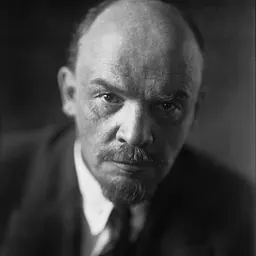
His and Otto Bauer's ideas about the legal protection of cultural minorities were taken up by the Jewish Bund, but fiercely denounced by Vladimir Lenin. Joseph Stalin devoted a whole chapter to criticising Cultural National Autonomy in Marxism and the National Question.
The 1977–1978 academic year at the College of Europe was named in his honour.
Publications Synopticus (pen name), (Vienna, 1899). Reprinted as "State and Nation" in Ephraim Nimni (ed.), National Cultural Autonomy and Its Contemporary Critics, London: Routledge, 2005 pp. 64 – 82 Rudolf Springer (pen name), (1902) Joseph Karner (pen name), "" (1904) in , vol. 1. , ("Foundations and development goals of the Austro-Hungarian monarchy: the crisis of dualism"; 1904) ("Austria's renewal"; 3 vols., 1916/17) (1918) ("The economy as an integrated process and the path to socialism"; 1924) ("The national economy, the world economy and socialism"; 1929) (1929); translated into English by Agnes Schwarzschild as The Institutions of Private Law and their Social Function, with an introduction by Otto Kahn-Freund, London: Routledge & Kegan Paul (1949); reprinted in International Library of Sociology (1976; 1996) ("The way to realization", 1929) ("At the turning points in two eras: life recollections"), 2 vols. Vienna: Braumüller 1946
Literary remains (unpublished works; ): ' ("Transformations of modern society," 1947) ("100 years of Karl Marx: Heritage and Agenda"; 1947) (1950) Vol. 3, Vienna: 1953, reprint European Sociology 1975 in , vol. 2, edited by Adolf Schärf, Vienna: , 1953.
Don’t just read it —
keep it.
Full-length biographies made to live with: read them, listen on the way to work, watch them tonight.
- E-book
- Audio
- Video
Instant download · yours to keep · every purchase keeps this site free
Important facts
Family & relationships
People in Karl Renner's life
Named in this biography and alive at the same time






Related people
Same field, nearest in time




Contemporaries
People whose lives overlapped Karl Renner's



Frequently asked questions
Who was Karl Renner?
first President of Austria (1870–1950)
When was Karl Renner born?
Karl Renner was born on 14 December 1870 in Dolní Dunajovice.
When did Karl Renner die?
Karl Renner died on 31 December 1950 in Vienna.
What was Karl Renner's occupation?
Karl Renner was a politician, librarian, diplomat, lawyer, jurist and author.
What nationality was Karl Renner?
Karl Renner was Austrian.
Sources & further reading
Cite this page
APA: Biography.guide. (2026). Karl Renner. https://biography.guide/karl-renner/
MLA: "Karl Renner." Biography.guide, https://biography.guide/karl-renner/.
Chicago: "Karl Renner." Biography.guide. https://biography.guide/karl-renner/.
Data last updated: 2026-09-20 · Spot an error? Report a correction.
Page generated 2026-09-27 05:26 UTC