
About Valentin Weigel
Lived 1533 – 1588 (aged 54). Valentin Weigel was a German philosopher, writer, theosophist, mystic, parson and protestant theologian.
Valentin Weigel (or Weichel; 7 August 1533 – 10 June 1588) was a German theologian, pastor, philosopher and mystical writer, from Saxony, and an important precursor of later theosophy. In English, he is often called Valentine Weigel.
Biography Weigel was born in Hayn, near Dresden, into a Catholic family. He studied at Meissen, Leipzig, and Wittenberg. In 1567, he became a Lutheran pastor in Zschopau, near Chemnitz. There, he lived out a quiet life, engaged in his writings.
He died in Zschopau.
Beliefs Weigel was best known for his belief that the Virgin Mary was herself the product of a virgin birth. He based his belief on the idea of the Immaculate Conception, which required that Mary must also be sinless in order to bear God in the flesh of a human that defecates daily. He kept his ideas secret, entrusting them only to personal friends (in contrast to Jakob Böhme). He carried out his parochial duties and kept a low profile. He left around 6000 pages in printed or manuscript works. His ideas on human nature were only gradually and posthumously published. Johann Arndt, Gottfried Arnold, and Gottfried Leibniz helped to spread Weigel's ideas. His teachings are known as Weigelianism.
His mysticism was marked by that of Johannes Tauler and by doctrines of Paracelsus; he was also a follower of Sebastian Franck and Caspar Schwenckfeldt. Like these two latter, he emphasized the inner life. He advocated a "spiritual church" in which one could know Christ without books or scripture.
Works Unterrichts-Predigt: Wie man christlich trauern und täglich solle im Herrn sterben, 1576 Libellus de vita beata, 1609 Ein schön Gebetsbüchlein, welches die Einfältigen unterrichtet, 1612 Der güldene Griff, alle Ding ohne Irrtum zu erkennen, 1613 Ein nützliches Traktätlein vom Ort der Welt, 1613 Dialogus de Christianismo, 1614 Erkenne dich selbst, 1615 Informatorium oder Kurzer Unterricht, 1616 (expanded: Soli deo gloria, 1618) Kirchen- oder Hauspostill, 1618 Libellus disputatorus, 1618 De bono et malo in homine, 1618 Zwei schöne Büchlein, 1618 Studium universale, 1618 Tractatus de opere mirabili, 1619
Don’t just read it —
keep it.
Full-length biographies made to live with: read them, listen on the way to work, watch them tonight.
- E-book
- Audio
- Video
Instant download · yours to keep · every purchase keeps this site free
Important facts
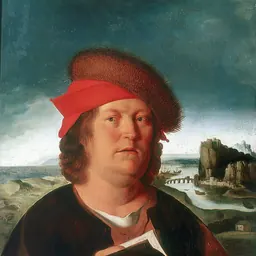
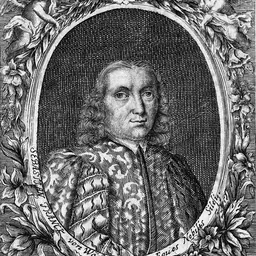
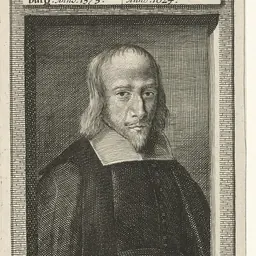
People in Valentin Weigel's life
Named in this biography and alive at the same time
Related people
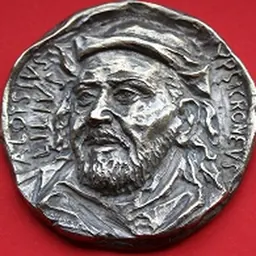
Same field, nearest in time



Contemporaries
People whose lives overlapped Valentin Weigel's


Frequently asked questions
Who was Valentin Weigel?
German theologian (1533-1588)
When was Valentin Weigel born?
Valentin Weigel was born on 17 August 1533 in Großenhain.
When did Valentin Weigel die?
Valentin Weigel died on 10 June 1588 in Zschopau.
What was Valentin Weigel's occupation?
Valentin Weigel was a philosopher, writer, theosophist, mystic, parson and protestant theologian.
What nationality was Valentin Weigel?
Valentin Weigel was German.
Sources & further reading
Cite this page
APA: Biography.guide. (2026). Valentin Weigel. https://biography.guide/valentin-weigel/
MLA: "Valentin Weigel." Biography.guide, https://biography.guide/valentin-weigel/.
Chicago: "Valentin Weigel." Biography.guide. https://biography.guide/valentin-weigel/.
Data last updated: 2026-09-20 · Spot an error? Report a correction.
Page generated 2026-09-27 05:25 UTC