
About Melchor Cano
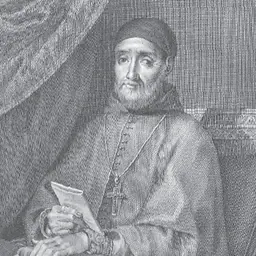
Lived 1509 – 1560 (aged 51). Melchor Cano was a Spanish philosopher, university teacher, catholic priest, catholic bishop and catholic theologian.
Melchor Cano (1509? – 30 September 1560) was a Spanish Scholastic theologian. Cano's most important theological work was his posthumously published De locis theologicis (Salamanca, 1563), a major contribution to the New Scholasticism of the Salamanca school. Parecer del M. fr. Melchor Cano dado al Señor Emperador Carlos V (1555) edition of 1736.
Clerical life Melchor Cano was born in Tarancón (New Castile); in 1523 he entered the Dominican order in Salamanca, where he was taught by Francisco de Vitoria. He taught at Valladolid (1534–43) and Alcalá (1543–6) before succeeding Vitoria as professor of theology at Salamanca. Cano was a man of deep learning and originality. His only rival was Bartolomé Carranza, also a Dominican and afterwards archbishop of Toledo. At the university the schools were divided between the partisans of the two professors; Cano pursued his rival with relentless virulence, and took part in the condemnation for heresy of his brother-friar. He attended the Council of Trent and participated in the debates on the eucharist and on penance (which dealt with the issue of indulgences). In 1552 Cano was appointed bishop of the Canary Islands at the behest of Jesuits who wanted him out of Spain because of his opposition to their Order; there was unease in Rome about the appointment, and the following year Cano renounced the see.
Consultatio theologica His personal influence with King Philip II of Spain soon brought about his recall, and he was made provincial of his order in Castile. In 1556 he wrote his famous Consultatio theologica, in which he advised the king to resist the temporal encroachments of the papacy and, as absolute monarch, to defend his rights by bringing about a radical change in the administration of ecclesiastical revenues, thus making Spain less dependent on Rome. With this in his mind Pope Paul IV styled him "a son of perdition." In 1557 Cano was elected Dominican provincial of Castile, but the Vatican declined to confirm the appointment; he was again elected in 1559, and after an initial refusal the Vatican acquiesced in the appointment.
De Locis theologicis
The reputation of Cano rests on a posthumous work, De Locis theologicis (Salamanca, 1562), unrivalled in its own line. In this, a genuine work of the Renaissance, Cano tried to free dogmatic theology from the vain subtleties of the schools; by clearing away the puerilities of the later scholastic theologians, to bring religion back to first principles; and, by giving rules, method, co-ordination and system, to build up a scientific treatment of theology. In discussing the credibility of sources, he was one of the first to inquire into the principles of the credibility of historical documents. He argues that if all serious historians agree about a fact, then we should believe it, even if it is unlikely. Otherwise "It would be as if the Mediterranean peoples were to deny the existence of the ocean ... or if, indeed, we should mock at him who speaks of elephants."
Don’t just read it —
keep it.
Full-length biographies made to live with: read them, listen on the way to work, watch them tonight.
- E-book
- Audio
- Video
Instant download · yours to keep · every purchase keeps this site free
Important facts
People in Melchor Cano's life
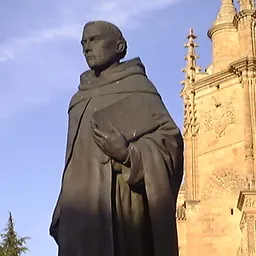
Named in this biography and alive at the same time
Related people
Same field, nearest in time


Contemporaries
People whose lives overlapped Melchor Cano's





Frequently asked questions
Who was Melchor Cano?
Spanish theologian (1509-1560)
When was Melchor Cano born?
Melchor Cano was born on 6 January 1509 in Tarancón.
When did Melchor Cano die?
Melchor Cano died on 30 September 1560 in Toledo.
What was Melchor Cano's occupation?
Melchor Cano was a philosopher, university teacher, catholic priest, catholic bishop and catholic theologian.
What nationality was Melchor Cano?
Melchor Cano was Spanish.
Sources & further reading
Cite this page
APA: Biography.guide. (2026). Melchor Cano. https://biography.guide/melchor-cano/
MLA: "Melchor Cano." Biography.guide, https://biography.guide/melchor-cano/.
Chicago: "Melchor Cano." Biography.guide. https://biography.guide/melchor-cano/.
Data last updated: 2026-09-20 · Spot an error? Report a correction.
Page generated 2026-09-27 05:25 UTC