
John Dee
16th-century English mathematician, astrologer, and alchemist
About John Dee
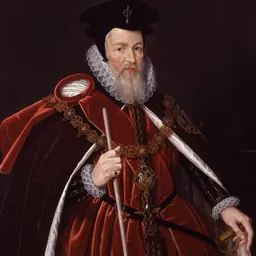
Lived 1527 – 1608 (aged 81). John Dee was an English philosopher, mathematician, astronomer, astrologer, geographer and cartographer, known for Elizabeth I.
John Dee (13 July 1527 – December 1608 or March 1609) was an English mathematician, astronomer, teacher, astrologer, occultist, and alchemist. He was the court astronomer for, and advisor to, Elizabeth I, and spent much of his time on alchemy, divination, and Hermetic philosophy. As an antiquarian, he had one of the largest libraries in England at the time. As a political advisor, he advocated the foundation of English colonies in the New World to form a "British Empire", a term he is credited with coining.
Dee eventually left Elizabeth's service and went on a quest for knowledge of the occult and supernatural. He aligned himself with several individuals who may have been charlatans, travelled through Europe, and was accused of spying for the English Crown. Upon his return to England, he found his home and library vandalised. He eventually returned to the Queen's service, but was turned away when she was succeeded by James I. He died in poverty in London, and his gravesite is unknown.
Biography Early life Dee was born in Tower Ward, London, to Rowland Dee, of Welsh descent, and Johanna, daughter of William Wild. His surname "Dee" is an anglicisation of Welsh du . His grandfather was Bedo Ddu of Nant-y-groes, Pilleth, Radnorshire; John retained his connection with the locality. His father, Roland, was a mercer (cloth merchant) and gentleman courtier to Henry VIII. Dee traced descent from Rhodri the Great, 9th-century ruler of the Kingdom of Gwynedd, and constructed a pedigree accordingly. His family had arrived in London around the time of Henry Tudor's coronation as Henry VII.
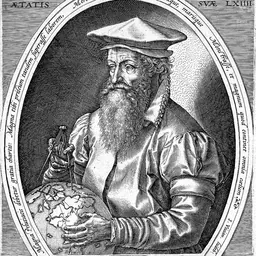
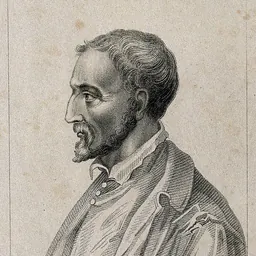
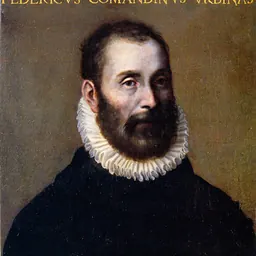
Dee attended Chelmsford Chantry School (now King Edward VI Grammar School, Chelmsford) from 1535 to 1542. He entered St John's College, Cambridge, in November 1542, aged 15, graduating with a BA in 1545 or early 1546. His abilities recognised, he became an original fellow of Trinity College, Cambridge, upon its foundation by Henry VIII in 1546. At Trinity, he designed stage effects for a production of Aristophanes's Peace. Using pulleys and mirrors, Dee created the illusion of "the Scarabeus flying up to Jupiter's palace" in a mechanical contrivance, possibly based on rediscovered classical techniques. Dee would later claim this to be the source of his reputation as a magician. In the late 1540s and early 1550s, he travelled around Europe, studying at the Old University of Leuven (1548). He studied under Gemma Frisius and became friends with the cartographers Gerardus Mercator and Abraham Ortelius. Dee also met, worked with and learnt from other continental mathematicians, such as Federico Commandino in Italy. He returned to England with a major collection of mathematical and astronomical instruments. In 1552, he met Gerolamo Cardano in London, with whom he investigated a purported perpetual motion machine and a gem supposed to have magical properties.
Working life Rector at Upton-upon-Severn from 1553, Dee was offered a readership in mathematics at Oxford University in 1554 but declined it, citing as offensive English universities' emphasis on rhetoric and grammar (which, together with logic, formed the academic trivium) over philosophy and science (the more advanced quadrivium, composed of arithmetic, geometry, music and astronomy). He was busy with writing and perhaps hoped for a better position at court. On 17 February 1554, Dee took Catholic orders in the midst of the Marian reaction. The Catholic bishop Edmund Bonner, likely already a close friend of Dee's at this point, gave him special permission to receive all of the holy orders from first tonsure to priesthood in only a single day.
In 1555, Dee joined the Worshipful Company of Mercers, as his father had, through its system of patrimony. In that same year, Dee was arrested and charged with "lewd and vain practices of calculating and conjuring" because he had cast horoscopes of Mary I of England and Princess Elizabeth. The charges were raised to treason against Mary. Dee appeared in the Star Chamber and exonerated himself, but he was turned over to Bonner for religious examination. His strong, lifelong penchant for secrecy may have worsened matters. The episode was the most dramatic in a series of attacks and slanders that dogged Dee throughout his life. At some point, possibly before his charges were officially dismissed, Dee became Bonner's chaplain. In some early editions of John Foxe's Acts and Monuments, Dee, as Bonner's chaplain, is recorded debating the real presence of Christ in the Eucharist with Protestant prisoner Robert Smith (who accused Dee of Marcionism because his argument in favor of transubstantiation rested on the idea that Jesus possessed only a spiritual body) and participating in the seventh examination of John Philpot.
Dee was married three times and had eight children. He married his first wife, Katherine Constable, in 1565. They had no children, and she died in 1574. He married his second wife, whose name is unknown, in 1575. She died in 1576, again with no children.
Dee referred to Thomas Jones, who is the likely loose inspiration for Welsh folkloric outlaw Twm Siôn Cati, as his cousin; the pair corresponded, and Jones visited Dee several times.
From 1577 to 1601, Dee kept a sporadic diary (also referred to as his almanac), from which most of what we know of his life in that time has been gleaned. In 1587, Kelley informed Dee of the angel's wish that they share wives. Theodore Dee, born nine months later, could have been fathered by Kelley, and not Dee.
Jane died in Manchester of bubonic plague and was buried in the Manchester Cathedral burial grounds in March 1604. He also claimed that the "007" moniker originated as a symbol used by Dee. Although there is evidence that Fleming read a memoir of Dee's about the time that he created the Bond character, scholar Teresa Burns has cast doubt on the claim that "007" originates from any symbol used by Dee.
Dee is portrayed as a magician in Derek Jarman's film Jubilee, who transports Queen Elizabeth I from the 16th century to the 20th.
Dee is a central character in Peter Ackroyd's 1993 novel The House of Doctor Dee.
21st century
John Dee is one of the main antagonists in the book series The Secrets of the Immortal Nicholas Flamel by Michael Scott. In the series, John Dee has gained immortality from the Dark Elders, his mentors.
The film Elizabeth: The Golden Age (2007) has two scenes in which Queen Elizabeth consults Dr. Dee, played by David Threlfall.
Phil Rickman casts Dee as the main detective, investigating the disappearance of the bones of King Arthur during the reign of Elizabeth I in the historical mystery The Bones of Avalon (2010). The play Burn Your Bookes (2010) by Richard Byrne examines the relations between Dee, Edward Kelley and Edward Dyer.
The opera Dr Dee: An English Opera (2011) by Damon Albarn, explores Dee's life and work. Being a respected historian of science and an expert in Elizabethan history, Harkness used her dissertation on John Dee as background for the book and as a minor character, his library being a focus of action taking place in the story.
American rapper Ghostemane has a track entitled "John Dee", with occult-themed lyrics.
Robert Eggers 2024 film Nosferatu makes reference to the Mysteriorum Libri Quinque (John Dee's Five Books of Mysteries), as being read by the character of Professor Albin Everhart Von Franz, played by Willem Defoe, when the character is introduced.
Dee (or a character based on him) appears in a number of video games, including Uncharted 3: Drake's Deception, Call of Duty: Black Ops III, and ZombiU.
Works Monas Hieroglyphica, 1564 Preface to Billingsley's Euclid (Billingsley's translation of Euclid's Elements), 1570
On the Mystical Rule of the Seven Planets, 1582–1583
from the collected works known as Mysteriorum libri quinque John Dee, The Mathematicall Praeface to the Elements of Geometrie of Euclid of Megara (1570). (Reprinted New York: Science History Publications (1975) ) John Dee, John Dee on Astronomy: Propaedeumata Aphoristica (1558 & 1568) edited by Wayne Shumaker, Berkeley: University of California Press John Dee, Autobiographical tracts of John Dee, Warden of the College of Manchester, ed. James Crossley. Chetham Society Publications, Vol XXIV. Manchester, 1851 John Dee, Diary for the years 1595–1601, ed. John E. Bailey. Privately printed, 1880
Don’t just read it —
keep it.
Full-length biographies made to live with: read them, listen on the way to work, watch them tonight.
- E-book
- Audio
- Video
Instant download · yours to keep · every purchase keeps this site free
Important facts
Family & relationships
People in John Dee's life
Named in this biography and alive at the same time


Related people
Same field, nearest in time

Contemporaries
People whose lives overlapped John Dee's


Frequently asked questions
Who was John Dee?
16th-century English mathematician, astrologer, and alchemist
When was John Dee born?
John Dee was born on 13 July 1527 in London.
When did John Dee die?
John Dee died on 1 December 1608 in Mortlake.
What was John Dee's occupation?
John Dee was a philosopher, mathematician, astronomer, astrologer, geographer and cartographer.
What was John Dee known for?
John Dee was known for Elizabeth I.
What nationality was John Dee?
John Dee was English.
Sources & further reading
Cite this page
APA: Biography.guide. (2026). John Dee. https://biography.guide/john-dee/
MLA: "John Dee." Biography.guide, https://biography.guide/john-dee/.
Chicago: "John Dee." Biography.guide. https://biography.guide/john-dee/.
Data last updated: 2026-09-20 · Spot an error? Report a correction.
Page generated 2026-09-27 05:29 UTC