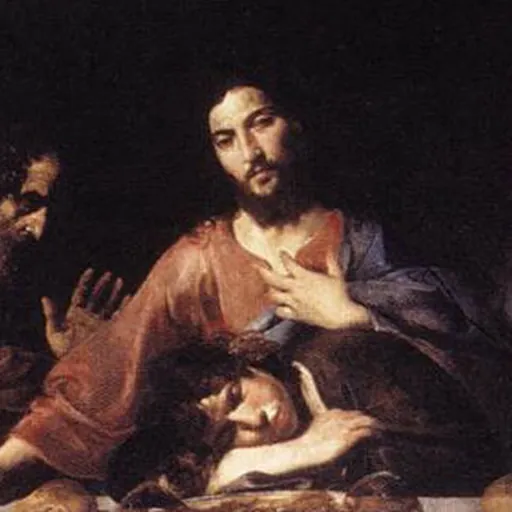
About Valentin de Boulogne
Lived 1591 – 1632 (aged 41). Valentin de Boulogne was a French painter.
Soldiers Playing Cards and Dice (The Cheats), c. 1618–1620, by Valentin de Boulogne.
Valentin de Boulogne (before 3 January 1591 – 19 August 1632), sometimes referred to as Le Valentin, was a French painter in the tenebrist style.
Origins Valentin was born in Coulommiers, France, where he was baptised in the parish of Saint-Denys on 3 January 1591, making 1590 his likely year of birth. The family name, also spelled Boullogne and Boulongne, appears to originate from Boulogne-sur-Mer, a city in northern France in the colony of Pas-de-Calais, though the family had dwelt at Coulommiers since at least 1489. His father, also named Valentin, and his uncle Jean were both painters.
In Italy
It can be presumed that Valentin would have first started painting in his father's studio prior to moving to Paris or Fontainebleau, and before leaving for Italy. Valentin is recorded in Italy in the stati d'anime for 1620, when he was living in the parish of Santa Maria del Popolo.
While studying in Italy under Simon Vouet, Valentin came under the influence of Caravaggio and Bartolomeo Manfredi. He also joined the Bentvueghels, a riotous unofficial group of expatriate, mostly Flemish, artists and was given the group nickname of "innamorato," no doubt in reference to his own name.
Caravaggio used a bold, naturalistic style, which emphasized the common humanity of the apostles and martyrs, flattered the aspirations of the Counter-Reformation Church, while his vivid chiaroscuro enhanced both three-dimensionality and drama, as well as evoking the mystery of the faith." Caravaggio "followed a militantly realist agenda, rejecting both Mannerism and the classicizing naturalism" and "in the first 30 years of the 17th century his naturalistic ambitions and revolutionary artistic procedures attracted a large following from all over Europe.
Manfredi, also an Italian painter, was known throughout Italy and beyond as Caravaggio's closest follower. In the dramatically lit canvases of his later period Manfredi adopted a common theme from Caravaggio—the tavern scene featuring ordinary people, even religious subjects, whose figures are depicted close to the surface of the picture to involve the viewer in the action.
While Caravaggio and Manfredi may have influenced the style and themes that became common in Valentin's work, Valentin studied as well under Simon Vouet, considered a leading French painter by contemporaries. Vouet's earliest works exhibit the influence of Caravaggio and deploy dramatic contrasts of light with a restricted palette of blacks, browns and whites.
Valentin had success with a type of composition invented by Caravaggio in which fortune tellers, drinkers, or gamblers are grouped around a table. Valentin himself was fond of carousing and fine wine. Approximately 75 of his works survive. Valentin's genius shows in the subtleness of psychological expression and interplay among his characters, as well as in the refinement and finesse of his painting technique.
Valentin's painting Fortune Teller with Soldiers depicts a group of young soldiers, one of whom is mesmerized by the fortune teller reading his palm. Behind the gypsy a shadowy figure looks at the viewer with his finger to his lips in a conspiratorial gesture as he steals the fortune teller's purse from her pocket. At the same time the thief is pickpocketed in turn by a small child. While one person's fortune is told, another's is being stolen; and one thief falls victim to another.
Valentin's pupils included Nicolas Tournier.
Death Valentin de Boulogne is said to have died after bathing in the freezing cold waters of the Fontana del Tritone on Piazza Barberini, after having drunk too much.
Gallery
Don’t just read it —
keep it.
Full-length biographies made to live with: read them, listen on the way to work, watch them tonight.
- E-book
- Audio
- Video
Instant download · yours to keep · every purchase keeps this site free
Important facts
more
Inamorato, Moise Valentin De Boullogne, Jean, Moïse Valentin, Monsu Valentin, Monsu Valentino, Jean de Boulogne, Mr. Valentino, Le Valintin, Valestin de Boulogne, Moise Boullongne, Valentini de Boulogne, Valentin, Moise Boulogne, Le Valentin Boulogne, Valentin de Boullogne, Valentino de Boulogne, Valentine de Boulogne, Moise Valentin, Monsieur Valentino, Valentijn de BoulognPeople in Valentin de Boulogne's life
Named in this biography and alive at the same time
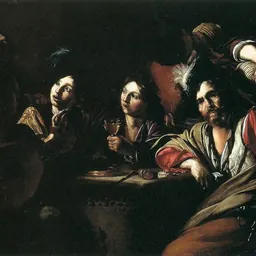

Related people
Same field, nearest in time


Contemporaries
People whose lives overlapped Valentin de Boulogne's



Frequently asked questions
Who was Valentin de Boulogne?
French painter (1591-1632)
When was Valentin de Boulogne born?
Valentin de Boulogne was born on 3 January 1591 in Coulommiers.
When did Valentin de Boulogne die?
Valentin de Boulogne died on 19 August 1632 in Rome.
What was Valentin de Boulogne's occupation?
Valentin de Boulogne was a painter.
What nationality was Valentin de Boulogne?
Valentin de Boulogne was French.
Sources & further reading
· Wikipedia: Valentin de Boulogne
· DBpedia: Valentin de Boulogne
Cite this page
APA: Biography.guide. (2026). Valentin de Boulogne. https://biography.guide/valentin-de-boulogne/
MLA: "Valentin de Boulogne." Biography.guide, https://biography.guide/valentin-de-boulogne/.
Chicago: "Valentin de Boulogne." Biography.guide. https://biography.guide/valentin-de-boulogne/.
Data last updated: 2026-09-22 · Spot an error? Report a correction.
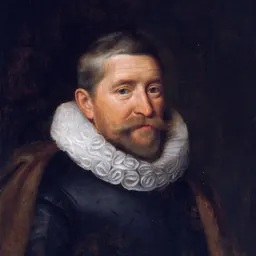
Portrait: Wikimedia Commons · author & licence
Page generated 2026-09-27 05:04 UTC