
About Val Rogin Lorwin
Lived 1907 – 1982 (aged 75). Val Rogin Lorwin was an American economist, historian, civil servant and university teacher, known for McCarthyism.
Val Rogin Lorwin (July 21, 1907 – December 8, 1982) was an American civil servant, economist, and historian. He supported socialism. From the late 1940s, he was repeatedly investigated while and after he worked for the United States State Department, harassed for alleged Communist activities, named by Senator Joe McCarthy as one of more than 50 Communists at the State Department, and was cleared every time. Restored to his position and given backpay, he soon left the government to complete his doctorate at Cornell University and had an academic career. Lorwin's case gained national attention as an extreme example of abuses possible under the federal government's system of security investigations.
Early years Lorwin was born in New York City, the son of Lewis Lorwin, a noted labor economist and Rose Strunsky Lorwin, socialist and translator. His mother had immigrated as a young child with her family from Belarus. Lorwin graduated from Cornell University and received a master's degree in history from Ohio State University. In the spring of 1932, he received an American Field Service fellowship for study in France during the 1932-33 academic year. Two decades later, he returned to Cornell and earned his doctorate.
Career In the employ of the Taft family, Lorwin helped to edit the Taft Presidential papers. Both groups were working to aid landless groups achieve better working conditions and pay, and extend their influence among the dispossessed. African Americans and many poor whites had been largely disenfranchised throughout the South since the turn of the century, when those states passed laws and constitutions creating barriers to voter registration.
Lorwin also challenged the Communists for control of the United Federal Workers of America and other organizations.
Lorwin left the Socialist Party in 1938.
Lorwin, now the chief of the European Section of the State Department's Division of International Labor, Social and Health Affairs, faced another investigation before the newly created State Department Loyalty Board. It exonerated him of any Communist ties. Lorwin guessed correctly that the charges against him were based on the testimony of a former college friend and Washington roommate, Harold W. Metz, though the State Department never identified his accuser. Lorwin believed that Metz's testimony reflected confusion between the Socialist Party, which he had supported, and the Communist Party, which he said he had always loathed. In February 1951, the State Department suspended him as a security risk, a move for which McCarthy took credit. Lorwin, then on leave from the State Department, replied:
Lorwin also said: "I happen to have years of rather cantankerous anti-Communist activity on my record long before it became fashionable to be anti-Communist." and Gallagher was dismissed. Attorney General Herbert Brownell said: "We have a duty over and above prosecution and convictions to see that justice is done." It later transpired that the two promised witnesses were FBI informants, one who was repeating hearsay and one who said the FBI had misrepresented the information he provided.
Time described Lorwin, then an associate professor, as "tired but unterrified."
Lorwin said: During the State Department investigations, Lorwin was not told the names of those who had furnished information against him. The government named its witnesses only when preparing for the trial.
In 1964, Lorwin was elected to the Council on Research in Economic History of the Economic History Association. He was awarded a Guggenheim Fellowship in economics in 1966.
Lorwin died of cancer at his home in Eugene, Oregon, on December 8, 1982. His wife survived him.
Works Val R. Lorwin, The French Labor Movement (Harvard University Press, 1954), in the series: Wertheim Publications in Industrial Relations Val R. Lorwin, Labour and Working Conditions in Modern Europe (Macmillan, 1967) Val R. Lorwin and Jacob M. Price, eds., Dimensions of the Past: Materials, Problems, and Opportunities for Quantitative Work in History (Yale University Press, 1972) Alice Hanson Cook, Val R. Lorwin, and Arlene Kaplan Daniels, eds., Women and Trade Unions in Eleven Industrialized Countries (Philadelphia: Temple University Press, 1984) Alice Hanson Cook, Val R. Lorwin, and Arlene Kaplan Daniels, eds., The Most Difficult Revolution: Women and Trade Unions (Cornell University Press, 1992)
Don’t just read it —
keep it.
Full-length biographies made to live with: read them, listen on the way to work, watch them tonight.
- E-book
- Audio
- Video
Instant download · yours to keep · every purchase keeps this site free
Important facts
People in Val Rogin Lorwin's life
Named in this biography and alive at the same time

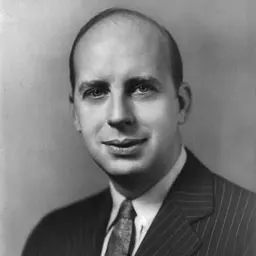

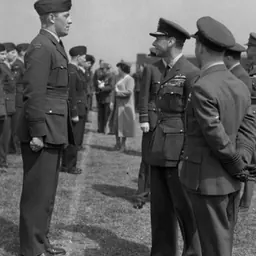
Related people
Same field, nearest in time


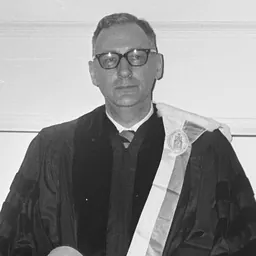
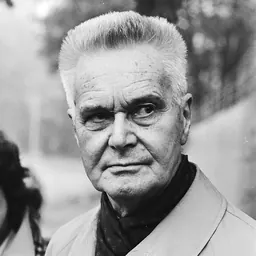
Contemporaries
People whose lives overlapped Val Rogin Lorwin's



Frequently asked questions
Who was Val Rogin Lorwin?
American politician (1907–1982)
When was Val Rogin Lorwin born?
Val Rogin Lorwin was born on 21 July 1907 in New York City.
When did Val Rogin Lorwin die?
Val Rogin Lorwin died on 8 December 1982 in Eugene.
What was Val Rogin Lorwin's occupation?
Val Rogin Lorwin was an economist, historian, civil servant and university teacher.
What was Val Rogin Lorwin known for?
Val Rogin Lorwin was known for McCarthyism.
What nationality was Val Rogin Lorwin?
Val Rogin Lorwin was American.
Sources & further reading
Cite this page
APA: Biography.guide. (2026). Val Rogin Lorwin. https://biography.guide/val-rogin-lorwin/
MLA: "Val Rogin Lorwin." Biography.guide, https://biography.guide/val-rogin-lorwin/.
Chicago: "Val Rogin Lorwin." Biography.guide. https://biography.guide/val-rogin-lorwin/.
Data last updated: 2026-09-20 · Spot an error? Report a correction.
Page generated 2026-09-27 05:27 UTC