
About Vadim Kirpitchenko
Lived 1922 – 2005 (aged 83). Vadim Kirpitchenko was a Russian intelligence officer, orientalist and spy.
Vadim Alekseyevich Kirpichenko (, 25 September 1922 – 3 December 2005) was a Russian officer of the First Chief Directorate of the KGB and its successor, the Foreign Intelligence Service. He served as resident in various countries and rose to First Deputy Head of the First Chief Directorate with the rank of Lieutenant general.
Born in 1922, Kirpichenko initially trained to be a pilot, but with the Axis invasion of the Soviet Union, he enlisted in the Red Army and served in Eastern and Central Europe during the closing stages of the war. Demobilised in 1946, he undertook studies at the Arab branch of the Moscow Institute of Oriental Studies, and was then recruited into intelligence work with the KGB's First Chief Directorate. He began his overseas postings with a period in Egypt as the KGB's deputy resident. This came during the early administration of Gamal Abdel Nasser, and Kirpichenko worked to gather information on its intentions. He passed information back to Moscow during the Suez Crisis in 1956, and worked to establish diplomatic relations with North Yemen, before being recalled to the USSR in 1960. He returned to overseas postings in 1962 as resident in Tunisia, with a further period in the USSR between 1964 and 1970, serving as head of the African Department of the First Chief Directorate from 1967. Kirpichenko returned to Egypt in 1970 as resident, and served during the Yom Kippur War. He warned Moscow that Egyptian President Anwar Sadat was planning to reorient his foreign policy away from the Soviet Union and towards the USA. His predictions were unwelcome to the Soviet leadership, but were ultimately proved accurate.
On Kirpichenko's return to the USSR in 1974 he was appointed deputy head of the First Chief Directorate and placed in charge of Department "S", , and in 1979 he became First Deputy Head of the First Chief Directorate, a post he would hold for the remainder of the existence of the Soviet Union. In late 1979 he was sent to Afghanistan to direct KGB operations surrounding Operation Storm-333, and the beginning of Soviet intervention in the country. With the dissolution of the Soviet Union in 1991, Kirpichenko became head of a group of consultants under the director of one of the KGB's successors, the Foreign Intelligence Service. After retiring in 1997, he worked with others on a six-volume history of Russian intelligence, wrote two books of his own, and lectured widely on intelligence matters. Over the course of his career he received 54 awards from the Soviet, Russian and foreign governments. He died in 2005, survived by his wife, Valeriya Nikolaevna, an academic specialising in Arabic literature. Their son, Sergei Vadimovich, was a prominent diplomat in the Arab world, serving as ambassador to several Middle Eastern countries, including to Egypt, where his father had served as KGB resident for a number of years.
Early life and wartime service Soviet troops approach Vienna during the closing stages of the war. Kirpichenko was involved in the Red Army's advances during 1945. Kirpichenko was born on 25 September 1922 in Kursk, Kursk Oblast, part of the Russian SFSR, in the USSR. He attended the No. 4 Air Force Special School, which provided primary flight training alongside the usual secondary education. He went on to attend the Zhukovsky Air Force Engineering Academy, but the Axis invasion of the Soviet Union in 1941 interrupted his studies. His unit remained in action until the surrender of Axis forces in Czechoslovakia on 12 May 1945.
Overseas postings Egyptian President Gamal Abdel Nasser. Kirpichenko was tasked on gathering information about his government's intentions. His first overseas posting was to Egypt in December 1954 as the KGB's deputy resident, where he was based until 1960. Despite not having informed Moscow of their intentions, Kirpichenko reported that the general feeling among Egyptians was that the Soviet Union should come to their aid once fighting began. "The first days passed and our situation became grim. Agitated Egyptians, waving their fists, cried "Russians, where are you! Where are your airplanes? Where are your weapons? Where are your soldiers? Why isn't Russia saving Egypt?" I didn't understand these demands back then, but later on, after experiencing two further wars in Egypt, I stopped being amazed at these outcries." Kirpichenko returned to the Soviet Union in 1960 and spent two years working with the KGB's central organisation, before moving to Tunisia as resident in February 1962. Here he was tasked with maintaining contacts with the Provisional Government of the Algerian Republic, the political arm of the National Liberation Front during the Algerian War. He was in post during the Yom Kippur War between Egypt and Israel in 1973, and subsequently warned Soviet leaders that Egyptian president Anwar Sadat was planning to reorient Egyptian foreign policy away from the Soviet Union and towards the United States, having learnt that Sadat had been in secret communication with US President Richard Nixon. He was promoted to major general in 1973, and to Lieutenant general in 1980. He took charge of the intelligence officials in the country in preparation for Operation Storm-333, the ousting of Amin and the installation of Babrak Karmal as Chairman of the Presidium of the Revolutionary Council.
Late and Post-Soviet period From 1 October 1988 to 6 February 1989 Kirpichenko served as chief of foreign intelligence. He was an honorary professor of the Academy of Foreign Intelligence. He was also an Honorary Citizen of Kursk. Their son, Sergei Vadimovich, was born in 1951, and like his parents specialised in Middle Eastern affairs. He became a diplomat, and served as ambassador to the United Arab Emirates, Libya, Syria and Egypt.
Don’t just read it —
keep it.
Full-length biographies made to live with: read them, listen on the way to work, watch them tonight.
- E-book
- Audio
- Video
Instant download · yours to keep · every purchase keeps this site free
Important facts
People in Vadim Kirpitchenko's life
Named in this biography and alive at the same time

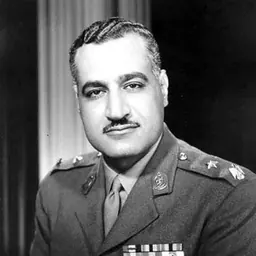
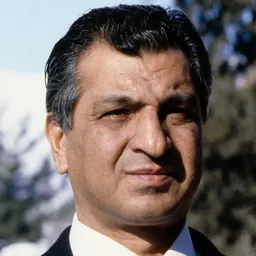
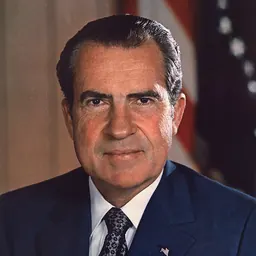
Related people
Same field, nearest in time




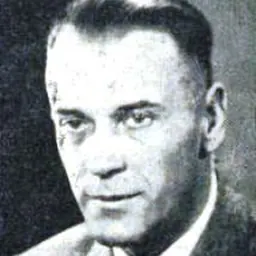
Contemporaries
People whose lives overlapped Vadim Kirpitchenko's


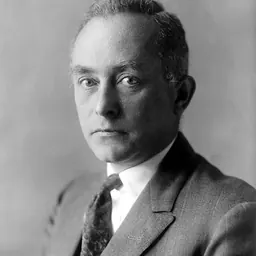



Frequently asked questions
Who was Vadim Kirpitchenko?
Russian writer (1922-2005)
When was Vadim Kirpitchenko born?
Vadim Kirpitchenko was born on 25 September 1922 in Kursk.
When did Vadim Kirpitchenko die?
Vadim Kirpitchenko died on 3 December 2005 in Moscow.
What was Vadim Kirpitchenko's occupation?
Vadim Kirpitchenko was an intelligence officer, orientalist and spy.
What nationality was Vadim Kirpitchenko?
Vadim Kirpitchenko was Russian.
Sources & further reading
· Wikipedia: Vadim Kirpitchenko
Cite this page
APA: Biography.guide. (2026). Vadim Kirpitchenko. https://biography.guide/vadim-kirpitchenko/
MLA: "Vadim Kirpitchenko." Biography.guide, https://biography.guide/vadim-kirpitchenko/.
Chicago: "Vadim Kirpitchenko." Biography.guide. https://biography.guide/vadim-kirpitchenko/.
Data last updated: 2026-09-20 · Spot an error? Report a correction.
Page generated 2026-09-27 05:12 UTC