
Václav Chvátal
Czech-Canadian mathematician
About Václav Chvátal
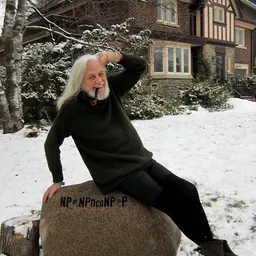
Born 1946. Václav Chvátal is a Canadian and Czech mathematician, university teacher and computer scientist, known for Chvátal graph, Chvátal–Sankoff constants and Crossing number inequality.
Václav (Vašek) Chvátal is a Professor Emeritus in the Department of Computer Science and Software Engineering at Concordia University in Montreal, Quebec, Canada, and a visiting professor at Charles University in Prague. He has published extensively on topics in graph theory, combinatorics, and combinatorial optimization.
Biography Chvátal was born in 1946 in Prague and educated in mathematics at Charles University in Prague, where he studied under the supervision of Zdeněk Hedrlín. He fled Czechoslovakia in 1968, three days after the Soviet invasion, Subsequently, he took positions at McGill University (1971 and 1978–1986), Stanford University (1972 and 1974–1977), the Université de Montréal (1972–1974 and 1977–1978), and Rutgers University (1986–2004) before returning to Montreal for the Canada Research Chair in Combinatorial Optimization at Concordia (2004–2011) and the Canada Research Chair in Discrete Mathematics (2011–2014) till his retirement.
Research
Chvátal first learned of graph theory in 1964, on finding a book by Claude Berge in a Plzeň bookstore and much of his research involves graph theory: His first mathematical publication, at the age of 19, concerned directed graphs that cannot be mapped to themselves by any nontrivial graph homomorphism Another graph-theoretic result of Chvátal was the 1970 construction of the smallest possible triangle-free graph that is both 4-chromatic and 4-regular, now known as the Chvátal graph. A 1972 paper relating Hamiltonian cycles to connectivity and maximum independent set size of a graph, earned Chvátal his Erdős number of 1. Specifically, if there exists an s such that a given graph is s-vertex-connected and has no (s + 1)-vertex independent set, the graph must be Hamiltonian. Avis et al. Chvátal introduced the concept of graph toughness, a measure of graph connectivity that is closely connected to the existence of Hamiltonian cycles. A graph is t-tough if, for every k greater than 1, the removal of fewer than tk vertices leaves fewer than k connected components in the remaining subgraph. For instance, in a graph with a Hamiltonian cycle, the removal of any nonempty set of vertices partitions the cycle into at most as many pieces as the number of removed vertices, so Hamiltonian graphs are 1-tough. Chvátal conjectured that 3/2-tough graphs, and later that 2-tough graphs, are always Hamiltonian; despite later researchers finding counterexamples to these conjectures, it still remains open whether some constant bound on the graph toughness is enough to guarantee Hamiltonicity.
Some of Chvátal's work concerns families of sets, or equivalently hypergraphs, a subject already occurring in his Ph.D. thesis, where he also studied Ramsey theory. In a 1972 conjecture that Erdős called "surprising" and "beautiful", and that remains open (with a $10 prize offered by Chvátal for its solution) he suggested that, in any family of sets closed under the operation of taking subsets, the largest pairwise-intersecting subfamily may always be found by choosing an element of one of the sets and keeping all sets containing that element. In 1979, he studied a weighted version of the set cover problem, and proved that a greedy algorithm provides good approximations to the optimal solution, generalizing previous unweighted results by David S. Johnson (J. Comp. Sys. Sci. 1974) and László Lovász (Discrete Math. 1975).
Chvátal first became interested in linear programming through the influence of Jack Edmonds while Chvátal was a student at Waterloo. At Stanford in the 1970s, he began writing his popular textbook, Linear Programming, which was published in 1983. The team was awarded The Beale-Orchard-Hays Prize for Excellence in Computational Mathematical Programming in 2000 for their ten-page paper enumerating some of Concorde's refinements of the branch and cut method that led to the solution of a 13,509-city instance and it was awarded the Frederick W. Lanchester Prize in 2007 for their book, The Traveling Salesman Problem: A Computational Study.
Chvátal is also known for proving the art gallery theorem, for researching a self-describing digital sequence, for his work with David Sankoff on the Chvátal–Sankoff constants controlling the behavior of the longest common subsequence problem on random inputs, and for his work with Endre Szemerédi on hard instances for resolution theorem proving.
Books . Japanese translation published by Keigaku Shuppan, Tokyo, 1986.
Don’t just read it —
keep it.
Full-length biographies made to live with: read them, listen on the way to work, watch them tonight.
- E-book
- Audio
- Video
Instant download · yours to keep · every purchase keeps this site free
Important facts
People in Václav Chvátal's life
Named in this biography and alive at the same time





Related people
Same field, nearest in time


Contemporaries
People whose lives overlapped Václav Chvátal's




Frequently asked questions
Who is Václav Chvátal?
Czech-Canadian mathematician
When was Václav Chvátal born?
Václav Chvátal was born on 20 July 1946 in Prague.
What is Václav Chvátal's occupation?
Václav Chvátal is a mathematician, university teacher and computer scientist.
What is Václav Chvátal known for?
Václav Chvátal is known for Chvátal graph, Chvátal–Sankoff constants, Crossing number inequality, Graph toughness and Hamiltonian path.
What nationality is Václav Chvátal?
Václav Chvátal is Canadian and Czech.
Sources & further reading
Cite this page
APA: Biography.guide. (2026). Václav Chvátal. https://biography.guide/vaclav-chvatal/
MLA: "Václav Chvátal." Biography.guide, https://biography.guide/vaclav-chvatal/.
Chicago: "Václav Chvátal." Biography.guide. https://biography.guide/vaclav-chvatal/.
Data last updated: 2026-09-20 · Spot an error? Report a correction.
Page generated 2026-09-27 05:32 UTC