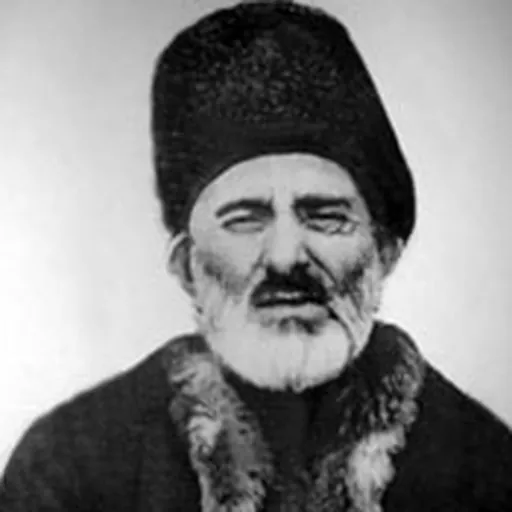
About Uzun-Hajji
Lived 1848 – 1920 (aged 71–72). Uzun-Hajji was a Turkish imam and cleric.
Uzun-Hajji of Salta (1848 – 30 March 1920) was a North Caucasian religious, military, and political leader who was Emir of the North Caucasian Emirate during the Russian Civil War. The sheikh of a Naqshbandi Sufi tariqa and a political exile prior to the Russian Revolution, he was one of the leaders of the in the Mountainous Republic of the Northern Caucasus, and he served as a member of parliament for the country.
Uzun-Hajji fought both the Bolsheviks and the White movement during the Civil War, seeking to establish an independent theocracy in the North Caucasus. His attempt to establish an emirate of his own lasted for seven months, with extensive support from the Democratic Republic of Georgia, before it successfully expelled White forces from the North Caucasus. He died shortly after, and the Soviet government took control of the region in the aftermath.
Early life and career Uzun was born in 1848 to a family in the ethnically-Avar village of Salta, Dagestan, to a family of peasants. From the age of seven, he studied under several local aalimath as a murid. Among his teachers was , the sheikh of a Naqshbandi tariqa from the village of Sogratl. After obtaining an ijazah from Abdurrahman-Hajji, Uzun travelled to the Ottoman Empire in order to further study Islam. During this time, he also undertook the hajj, becoming known as Uzun-Hajji.
Pre-revolutionary activities In 1877, amidst the Russo-Turkish War, Uzun-Hajji joined the on the side of the rebels. Following the uprising's defeat by the Russian government, he was arrested the next year and sentenced to seven years of internal exile in Samara Governorate. Uzun-Hajji was one of six Muslim religious leaders to be sent into internal exile, alongside , , Muhammad-Hajji Osmanov of Kikuni, Suleiman-Hajji of Apshi, and Musa-Hajji of Kukni. After four years in exile, Uzun-Hajji escaped and returned home, but in 1910 he was again arrested after constructing a mosque in his home village of Salta without requesting permission from the government. Prior to the Russian Revolution, he lived in the highlands of Chechnya, participating in protests against the rule of the Tsars and writing religious poetry.
Revolution Participation in the Union of Highlanders
Following the 1917 February Revolution, Uzun-Hajji was amnestied and allowed to return to Dagestan. Upon his return, he quickly joined the political life of the newly established Union of Highlanders of the Northern Caucasus as a supporter of Islamic theocracy and sharia.
On 9 January 1918, Uzun-Hajji and Najmuddin along with between six and ten thousand supporters, seeking to establish Najmuddin as imam. Najmuddin was appointed as imam by a local congregational mosque the next day, but three days after that, the Dagestan Congress annulled the appointment. After Najmuddin returned to his former status as Mufti of the North Caucasus, Uzun-Hajji gathered his forces and abandoned the mufti for the mountains, dissatisfied with his unwillingness to enforce his desire to become imam. After Uzun-Hajji left for the mountains, his troops began engaging in violence against ethnic Russians, such as Russian settlers and the Terek Cossacks.
During the Russian Civil War Against the Reds
The Red Army invaded Dagestan in March 1918, bringing the Russian Civil War to the North Caucasus. In May of the same year, detachments under Najmuddin, Uzun-Hajji, and other military commanders met in Gunib. Najmuddin was recognised as Imam of Dagestan and Chechnya, and it was decided that in order to recapture the occupied Temir-Khan-Shura it was necessary to launch a three-pronged offensive, targeting Arakani, Chir-Yurt, and both Kazi-Kumukh and Tsudakhar.
At Tsudakhar, Uzun-Hajji's detachment was blocked from entering the village by local sheikh and military commander Ali-Hajji of Akusha. Ali-Hajji sent a delegation to Uzun-Hajji's detachment attempting to convince him against entering the village on four occasions, with Uzun-Hajji refusing each time and threatening to fight Ali-Hajji's forces if he was forbidden from entering. After another sheikh sided with Ali-Hajji, Uzun-Hajji decided to return to Gunib rather than fighting.
Clashes between the Red Army and forces loyal to Najmuddin and Uzun-Hajji continued until August 1918, when Lazar Bicherakhov and his forces left the Battle of Baku and launched a campaign in Dagestan. By October, Bicherakhov's armies had completely forced the Red Army out of Dagestan, and they were themselves forced out by an Ottoman offensive a month later. The rule of the Mountainous Republic of the Northern Caucasus in Dagestan was fully restored on 7 November, when Ottoman forces captured Port-Petrovsk (today Makhachkala).
Following the end of World War I, Uzun-Hajji became a critic of the Mountainous Republic's efforts to establish relations with the Allies, and he called for the removal of British troops from Dagestan after they entered the region.
Against the Whites
In the winter of 1918–1919, the Volunteer Army of general Anton Denikin . The government of the Mountainous Republic convened a meeting, also including clerics such as Uzun-Hajji and Ali-Hajji. At the meeting, Uzun-Hajji stated
From this point, he began to work alongside Ali-Hajji. The two would cooperate on gathering soldiers, as well as war plans. The two of them, as well as Najmuddin, each took separate positions in regards to the Russian Civil War; Ali-Hajji believed it was necessary to cooperate with the Bolsheviks, while Najmuddin supported the White movement that included Denikin. Uzun-Hajji, for his part, opposed both the Reds and Whites, and Najmuddin's support of the Whites disappointed him immensely. Upon Najmuddin's refusal to join the conflict against the Volunteer Army, he reportedly said "I tried to make an imam out of him, but he turned out to be an Ivan." , a Dagestani historian and political dissident, has denied that Uzun-Hajji ever said such a thing. White sources estimated that in mid-summer 1919, 700 men were under Uzun-Hajji's command. After the uprising began in August, Denikin wrote that the sheikh now controlled 1,500 soldiers. Following a campaign to mobilise further troops in support of the uprising, this increased to an even greater 4,000–5,000, according to Denikin. An Azerbaijani diplomat described Uzun-Hajji's army as containing 3,000 insurgents in September 1919, while a report to Vladimir Lenin in 1920 claimed that as many as 8,500 people were fighting in the army. According to Chechen historian Mairbek Vatchagaev, the true number of Uzun-Hajji's army was never above 1,000.
Following the failure of an offensive in Dagestan, Uzun-Hajji determined to limit direct confrontations to the Whites to Chechnya. However, he maintained a large guerrilla force across most of the North Caucasus, from Dagestan to Circassia.
Declaration of the emirate
In the summer of 1919, Chechen insurgent commander delivered a firman, allegedly from Ottoman Sultan Mehmed VI, to Uzun-Hajji ordering the establishment of an Islamic theocracy. The letter is now believed to be a forgery, but on 19 September of that year, the establishment of the North Caucasian Emirate as a theocratic monarchy and Ottoman protectorate was announced.
Now officially titled emir, Uzun-Hajji quickly began establishing a formal state from rebel-controlled territories. The establishment of the emirate had a significant effect on the local populations of Ingushetia, Chechnya, and the Dagestani highlands, leading to further support for the uprising. By the autumn of 1919, Uzun-Hajji had managed to take control of all of the Chechen highlands, as well as partially in western Dagestan and the Ingush mountains. On 24 September, a group of pro-White Russian Chechens under the leadership of Ibragim Chulikov established a political committee in the Chechen plains with the stated goal of removing Uzun-Hajji and the Bolsheviks.
Uzun-Hajji also had poor relations with fellow insurgent Ali Mitayev, a Chechen sheikh who did not recognise his authority as emir. Mitayev later attempted to make amends with Uzun-Hajji by delivering weapons captured from White forces to Vedeno, but the gift was not accepted. On the other hand, Uzun-Hajji maintained connections to Ingush anti-Denikin leaders, such as sheikh and . He was also in contact with the Security Council of the Northern Caucasus and Dagestan, a group run by Ali-Hajji that was also fighting the Whites.
After a series of defeats inflicted upon Red Army units under the command of Nikolai Gikalo, they evacuated to the North Caucasian highlands, where they were sheltered by Uzun-Hajji and welcomed as having a shared enemy. He further allowed the Red Army soldiers to return to combat under his command, organising a detachment comprising the soldiers. While this occurred, the forces under Gikalo's leadership gathered intelligence on the Emirate and carried out espionage activities.
In September 1919, a combined Emirate-Red Army force attacked the Whites at the settlement of . In the ensuing battle, the settlement was captured despite the death of Chechen communist commander , thus giving the rebels access to the Chechen plains. The Whites soon retreated to Grozny. Another victory was inflicted by Uzun-Hajji's soldiers upon the Volunteer Army at the village of Shali. At both Vozdvizhenskoye and Shali, around 250 Russians were taken as prisoners of war.
Uzun-Hajji was briefly succeeded by as emir for a few days before the emirate ceased to exist.
Don’t just read it —
keep it.
Full-length biographies made to live with: read them, listen on the way to work, watch them tonight.
- E-book
- Audio
- Video
Instant download · yours to keep · every purchase keeps this site free
Important facts
People in Uzun-Hajji's life
Named in this biography and alive at the same time

Related people
Same field, nearest in time

Contemporaries
People whose lives overlapped Uzun-Hajji's




Frequently asked questions
Who was Uzun-Hajji?
North Caucasian religious, military, and political leader (1848–1920)
When was Uzun-Hajji born?
Uzun-Hajji was born in 1848 in Salta.
When did Uzun-Hajji die?
Uzun-Hajji died on 30 March 1920 in Vedeno.
What was Uzun-Hajji's occupation?
Uzun-Hajji was an imam and cleric.
What nationality was Uzun-Hajji?
Uzun-Hajji was Turkish.
Sources & further reading
Cite this page
APA: Biography.guide. (2026). Uzun-Hajji. https://biography.guide/uzun-hajji/
MLA: "Uzun-Hajji." Biography.guide, https://biography.guide/uzun-hajji/.
Chicago: "Uzun-Hajji." Biography.guide. https://biography.guide/uzun-hajji/.
Data last updated: 2026-09-22 · Spot an error? Report a correction.
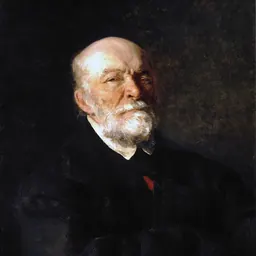
Portrait: Wikimedia Commons · author & licence
Page generated 2026-09-27 05:02 UTC