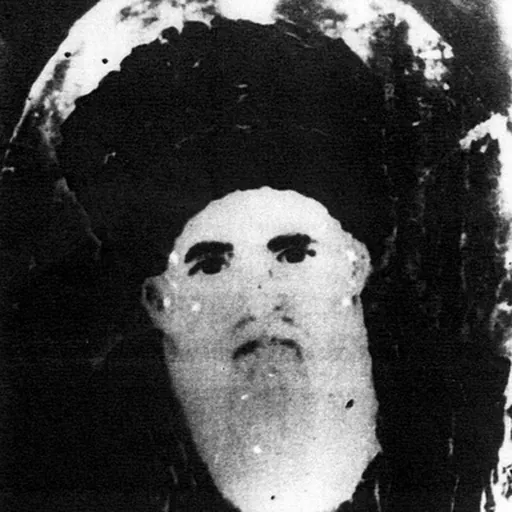
About Ali-Hajji of Akusha
Lived 1847 – 1930 (aged 82–83). Ali-Hajji of Akusha was a theologian.
Ali-Hajji of Akusha (1847 – 8 April 1930) was a North Caucasian religious, military and political leader during the Russian Civil War. He was a shaykh al-Islām and chairman of the Security Council of the Northern Caucasus and Dagestan, a resistance group against the Armed Forces of South Russia during the . Amidst the 1921–1928 Soviet anti-religious campaign he organised a group of religious leaders, forming a de facto parallel government in the Dargin District during the mid-1920s.
Born into the family of a muezzin, Ali-Hajji studied under several leading theologians in mid-19th century Dagestan, becoming a member of the ulama in his native village. Following the Russian Revolution he became a supporter of the Bolsheviks, believing that they would allow sharia in the North Caucasus. After the Soviet government adopted a policy of state atheism following the Civil War, Ali-Hajji went from a supporter to an opponent of Soviet rule, leading protests and organising a non-government system of Islamic education in the Dargin District. His family was arrested in 1928 on charges of organising an anti-government group, and he died in 1930. He was rehabilitated in 1989.
Early life and career Ali was born in 1847 in the village of Akusha, then under the Akusha-Dargo Union. His father was a muezzin at Akusha's congregational mosque, and Ali was first educated by his father before later studying at a local madrasa. After completing his madrasa studies, Ali was the student of some of the most well-known theologists in Dagestan at the time, including tariqa sheikh , and .
Ali considered leaving Dagestan to further his religious studies, but as-Suguri successfully convinced him to remain in the region, urging him to achieve renown in his homeland. He studied sharia and became qadi of Akusha's congregational mosque in 1890. The circumstances of Ali's assumption of the role are disputed; historian A. A. Isayev has said that Ali succeeded qadi Gadzhilaali after the latter retired while declaring the former as his successor. Another version has claimed that Ali took on the role due to Gadzhilaali's death. By this time, he had undertaken the hajj.
As an ʿālim Ali-Hajji had a reputation for honesty. Local legend in Akusha claims that he refused wealth from a Derbent merchant as a reward for ensuring that the properties of the merchant's family were distributed according to sharia. According to the legend, he refused to take a , or type of pasture, from the merchant and handed over the reward to the local population. Ali-Hajji's son also claimed that he refused to permit a local chieftain to undertake the hajj upon discovering he had taken bribes.
Ali-Hajji was also critical of the government of the Russian Empire, expressing support for the 1913–1914 Dagestan movement. He was sentenced to three years' imprisonment for his criticism of the Russian government, promotion of Islam and condemnation of non-Muslims. Despite this, he partook in a 1914 ceremony greeting Emperor Nicholas II in Derbent as he travelled to observe the Caucasus campaign of World War I.
Russian Revolution and Civil War
As the Russian Revolution unfolded, Ali-Hajji began to wade into Dagestan's emerging political culture. Ali-Hajji subsequently expressed his faith in the Bolsheviks to his followers, writing on 20 May 1918, "The Bolsheviks are not against us living according to sharia and promise to return the weapons they took away by mistake. If they were to encroach on Islam, I would be the first to call the entire people to war." Dahadayev again demonstrated a conciliatory stance after becoming chairman of the Dagestan Military Revolutionary Committee, promising that the committee would establish sharia courts. , a Bolshevik leader, would admit in 1927 that the promises made to Ali-Hajji were lies, saying, "We had to lie more than once, just to tear the masses away from the influence of bourgeois ideology. It was necessary to reconcile the incompatible, the 20th century and sharia."
White Russian invasion and resistance
The Armed Forces of South Russia in May 1919, bringing an end to the Mountainous Republic of the Northern Caucasus. As the invasion was under way, Prime Minister Pshemakho Kotsev fled to the Dargin District, where he met Ali-Hajji. At Kotsev's urging, Ali-Hajji met with former rival Uzun-Hajji, and the two began plans for an insurgency against the White movement.
At first, the White-appointed Governor of Dagestan, , attempted to bargain with Ali-Hajji, promising that he would be allowed to retain the title of shaykh al-Islām if he defected to the Whites. After he refused, Khalilov deprived him of his title and accused him of deviating from Islam. Ali-Hajji's forces were bolstered by a select few Bolsheviks who had chosen to stay behind and fight rather than fleeing to Baku, namely Korkmasov.
On 19 October 1919 the Security Council of the Northern Caucasus and Dagestan was established as a body to coordinate insurgent activities. Ali-Hajji was appointed the council's chairman. The council received support from the Dagestan Regional Committee of the Russian Communist Party (Bolshevik), He was a pan-Caucasianist and pan-Islamist, seeking the creation of a single state among the Muslims of the North Caucasus.
Don’t just read it —
keep it.
Full-length biographies made to live with: read them, listen on the way to work, watch them tonight.
- E-book
- Audio
- Video
Instant download · yours to keep · every purchase keeps this site free
Important facts
People in Ali-Hajji of Akusha's life
Named in this biography and alive at the same time
Related people
Same field, nearest in time
Contemporaries
People whose lives overlapped Ali-Hajji of Akusha's

Frequently asked questions
Who was Ali-Hajji of Akusha?
North Caucasian religious, military and political leader (1847–1930)
When was Ali-Hajji of Akusha born?
Ali-Hajji of Akusha was born in 1847 in Akusha.
When did Ali-Hajji of Akusha die?
Ali-Hajji of Akusha died on 8 April 1930.
What was Ali-Hajji of Akusha's occupation?
Ali-Hajji of Akusha was a theologian.
Sources & further reading
· Wikipedia: Ali-Hajji of Akusha
· DBpedia: Ali-Hajji of Akusha
Cite this page
APA: Biography.guide. (2026). Ali-Hajji of Akusha. https://biography.guide/ali-hajji-of-akusha/
MLA: "Ali-Hajji of Akusha." Biography.guide, https://biography.guide/ali-hajji-of-akusha/.
Chicago: "Ali-Hajji of Akusha." Biography.guide. https://biography.guide/ali-hajji-of-akusha/.
Data last updated: 2026-09-27 · Spot an error? Report a correction.
Portrait: Wikimedia Commons · author & licence
Page generated 2026-10-04 12:07 UTC