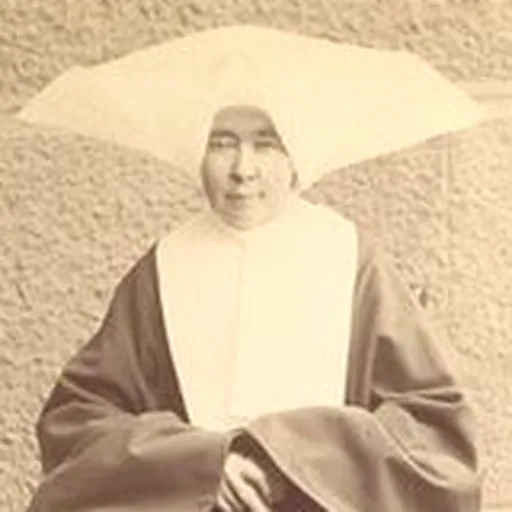
About Ursula Mattingly
Lived 1808 – 1874 (aged 65–66). Ursula Mattingly was an American nurse.
Sister Ursula Mattingly, SC (23 October 1808 – 1874) was a Roman Catholic religious sister, nurse, and hospital administrator. A member of the Daughters of Charity of Saint Vincent de Paul, she is best remembered for her role as foundress of Sisters of Charity Hospital in Buffalo, New York. She has been called "one of the most successful and experienced hospital nurses in the country" and "one of God's trouble shooters".
Biography
Early life and career Honora Mattingly was born in Maryland on 23 October 1808. She entered the Sisters of Charity of St. Joseph (now known as the Daughters of Charity of Saint Vincent de Paul) on 10 October 1830. When she was clothed with the habit, she took the religious name Ursula. Her early assignments included the Baltimore Infirmary, the Philadelphia Almshouse, the Maryland Hospital for the Insane, and multiple orphanages. She served in Philadelphia during the cholera epidemic of 1832, and then at the orphan asylum at St. James in Brooklyn, after which she returned to Emmitsburg in 1846.
Founding Sisters of Charity Hospital In 1847, John Timon, CM, the first Bishop of the Diocese of Buffalo saw the lack of an organized healthcare system in the City of Buffalo, and the additional issue of a Protestant-dominated medical field. He traveled to Baltimore in March 1848, seeking a religious order to administer the new hospital, and decided on the Sisters of Charity, based in Emmitsburg, Maryland, because they were founded by St. Elizabeth Ann Seton, the first American saint, and because they had much prior experience working with Protestants. arrived in Buffalo. which they outfitted with 100 beds and living quarters for themselves.
Their first patients were five sailors from the harbor who had cholera. Sister Ursula's willingness to take a chance on new therapies resulted in an astounding recovery of 80 of the 134 cholera patients admitted to the small center.
Protestant dissent
Very little attention at first was given to the hospital originally, with The Buffalo Morning Express reporting the news simply by writing: "The city is well received in having a hospital for its own." But, issues arose, and the presence of the nuns was especially inflammatory among the Protestant populace. In a 2009 New York History Review article titled, "John Timon — Buffalo's First Bishop: His Forgotten Struggle to Assimilate Catholics in Western New York," Paul E. Lubienecki wrote:
In antebellum America religious communities of women often absorbed the brunt of anti-Catholic prejudice. Religious orders of women, who lived and worked in a peculiar all female community, created and maintained schools, orphanages and hospitals. They also wore strange and distinctive clothing and became the object of Protestant derision. American sisters had to cope with gender, religious and ethnic bigotry while working in a patriarchal society that limited any power they might have. Rumors of evil practices and women held in convents against their will were circulated. Protestant ministers preached from their pulpit against Catholics and particularly against nuns. Sisters were often insulted or pelted in the street. Protestants, especially males, may have felt more threatened by the nuns as they perceived them to be in the process of "feminizing" the Catholic Church and usurping power. Historically, caring for the sick was perceived to be a "religious calling" not a profession. As Catholic women's religious orders began healthcare work in antebellum America, the role of women in nursing and hospital administration was gaining recognition as a profession and women were becoming empowered to take on non-traditional roles. The letter was written by Reverend Lord under his admitted pseudonym "Constituents". The inflammatory message resulted in a series of letters from both the Diocese of Buffalo and "Constituents", all published by The Buffalo Morning Express, a Whig Party-dominated and strongly anti-Catholic publication. Lord then published the statements of two former patients, who testified that Sister Ursula improperly treated non-Catholic patients, was not "properly trained in the medicines," and was a foreigner. One, named Michael Murphy, swore out an affidavit on 1 March 1850. He reported that Reverend Lord offered him clothes and enough money to travel to Canada, where he was relocating, if he would tell the "emigrant agent office" that he was treated poorly by the Sisters of Charity. ) for the hospital expansion and construction of an orphanage. The funding was independent of any State Legislature decision, and was provided in exchange for the hospital providing care for impoverished foreigners. For this service, the hospital also received annual per capita payments from 1851 to 1860 from the State Commissioners of Immigration.
Later life Sister Ursula was reassigned from Sisters of Charity Hospital in 1855, after seven years at its helm. She died on April 6, 1874, at the age of 66 in Baltimore.
Don’t just read it —
keep it.
Full-length biographies made to live with: read them, listen on the way to work, watch them tonight.
- E-book
- Audio
- Video
Instant download · yours to keep · every purchase keeps this site free
Important facts
People in Ursula Mattingly's life
Named in this biography and alive at the same time

Related people
Same field, nearest in time





Contemporaries
People whose lives overlapped Ursula Mattingly's





Frequently asked questions
Who was Ursula Mattingly?
Roman Catholic religious sister and nurse
When was Ursula Mattingly born?
Ursula Mattingly was born on 23 October 1808 in Maryland.
When did Ursula Mattingly die?
Ursula Mattingly died in 1874.
What was Ursula Mattingly's occupation?
Ursula Mattingly was a nurse.
What nationality was Ursula Mattingly?
Ursula Mattingly was American.
Sources & further reading
Cite this page
APA: Biography.guide. (2026). Ursula Mattingly. https://biography.guide/ursula-mattingly/
MLA: "Ursula Mattingly." Biography.guide, https://biography.guide/ursula-mattingly/.
Chicago: "Ursula Mattingly." Biography.guide. https://biography.guide/ursula-mattingly/.
Data last updated: 2026-09-22 · Spot an error? Report a correction.
Portrait: Wikimedia Commons · author & licence
Page generated 2026-09-27 05:03 UTC