
About Umberto Meoli
Lived 1920 – 2002 (aged 81). Umberto Meoli was an Italian economist and historian.
Umberto Meoli (26 August 1920 – 17 May 2002) was an Italian historian of economics, known as a maverick of the Italian Left who eschewed Marxism in favour of British pragmatism.
Biography
Early life Meoli was born in Padua, one of nineteen brothers; his father was a pharmacist from a small town near Benevento, and his mother was from Padua.
Education In 1940, at age 20, Meoli began his service in the Italian Army fighting in World War II, and, three years later, with the Resistance after the 1943 armistice between Italy and the Allied armed forces. As a result, Meoli was imprisoned by the Benito Mussolini Fascist government, and spent several months in the Palazzo Giusti detention center in Padua. There is no doubt that Meoli experienced such cruelty while imprisoned in Palazzo Giusti, and that this cruelty affected his thoughts.
Marriage and children In 1961 Meoli married Rachel Toulmin, an Englishwoman and lecturer at Padua University. Rachel Toulmin was the younger sister of Stephen Toulmin, a historian and philosopher of science at the University of Southern California.
Academia Meoli was briefly a Communist, and after graduating, he worked for a time in the trade unions (Camera del Lavoro) in Vicenza, but he was soon at odds with the rigid militancy of organized labor. He found his vocation in the late 1950s, when he obtained a teaching post at the University of Parma.
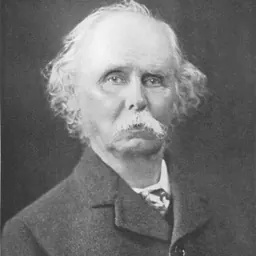
It was during his time at Camera del Lavoro that Meoli became influenced by the Canadian Harry Gordon Johnson, one of the most active and prolific economists of all time. Gordon's main research was in the area of international trade, international finance, and monetary policy. In 1961, Meoli made a special journey to the University of Manchester in England to meet Johnson. He quickly became a close friend of both Philip Andrews, A former President of the Royal Economic Society, Andrews was senior researcher at Nuffield College at the time and Elizabeth Brunner with whom Meoli shared an admiration for Alfred Marshall and a more skeptical view of John Maynard Keynes.
In 1961, Meoli published the first book in steady flow of books, in which would increasingly concentrate on the history of economic thought and ideas.
By 1970, Meoli became Professor of the History of Economic Thought at Camera del Lavoro, and shortly afterwards was invited to occupy a similar chair at the University of Venice.
Italian academic circles In addition to his chair positions, from 1992 to 1998 Umberto Meoli was president of the Italian Association for the History of Economic Thought (L'Associazione Italiana per la Storia del Pensiero Economico, AISPE).
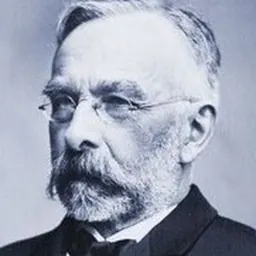
Meoli always thought of himself as a man of the Left. However, he early became convinced of the unacceptable limitations of Marxist economic theory, and his books and articles struck many of his leftist colleagues as a kind of apostasy. Meoli's writings exhibited an ever-growing respect for British pragmatism, and the economic liberalism of Adam Smith, David Ricardo, and Alfred Marshall. As an example of his unconventional approach, the figure of Gustav von Schmoller has been highlighted by authors like Francesco Traniello, who has indicated the importance that Schmoller, like Gustav von Schönberg, Adolph Wagner and Albert Schäffle, among others, gave the ethical element of the political Economy, whereas Umberto Meoli associates the figure of Schmoller to those of Lujo Brentano and Karl Bücher as the most representative authors of the development of the Economic Historiography. Eventually seen in Italian academic circles as a maverick and a great Anglophile, Meoli's leftist friends tolerated the irony, largely because Meoli would comment on their dismay with sudden eruptions of laughter.
Works Umberto Meoli, Lineamenti di storia delle idee economiche, unknown binding, UTET Libreria,
Don’t just read it —
keep it.
Full-length biographies made to live with: read them, listen on the way to work, watch them tonight.
- E-book
- Audio
- Video
Instant download · yours to keep · every purchase keeps this site free
Important facts
People in Umberto Meoli's life
Named in this biography and alive at the same time






Related people
Same field, nearest in time


Contemporaries
People whose lives overlapped Umberto Meoli's





Frequently asked questions
Who was Umberto Meoli?
Italian maverick economic historian (1920–2002)
When was Umberto Meoli born?
Umberto Meoli was born on 26 August 1920 in Padua.
When did Umberto Meoli die?
Umberto Meoli died on 17 May 2002.
What was Umberto Meoli's occupation?
Umberto Meoli was an economist and historian.
What nationality was Umberto Meoli?
Umberto Meoli was Italian.
Sources & further reading
Cite this page
APA: Biography.guide. (2026). Umberto Meoli. https://biography.guide/umberto-meoli/
MLA: "Umberto Meoli." Biography.guide, https://biography.guide/umberto-meoli/.
Chicago: "Umberto Meoli." Biography.guide. https://biography.guide/umberto-meoli/.
Data last updated: 2026-09-22 · Spot an error? Report a correction.
Page generated 2026-09-27 05:19 UTC