
About Ulysse Chevalier
Lived 1841 – 1923 (aged 82). Ulysse Chevalier was a French catholic priest, church historian, university teacher, historian and bibliographer.
Cyr Joseph Ulysse Chevalier (24 February 1841 – 27 October 1923) was a French Catholic priest, bibliographer, and historian who specialized in the European Middle Ages. He is principally remembered for his ("Repertory of historical sources on the Middle Ages") and for his critical work on the authenticity of the Shroud of Turin and the Holy House of Loreto.
Life and works
Chevalier was born in 1841 Rambouillet in the Île-de-France region, where his father was stationed as a military physician. In 1852 the family returned to its hometown in Romans-sur-Isère in southeastern France, where Chevalier pursued ecclesiastical studies and was ordained as a Catholic priest in 1867. Under the guidance of Léopold Victor Delisle, to whom he had been recommended, Chevalier launched a scholarly career focused primarily on the history of the Dauphiné.
Chevalier's historical works include studies of the cartularies of the church and of the town of Die (1868), of the abbey of Saint-André-le-Bas in Vienne (1869), of Bonnevaux Abbey (1889), and of the abbey of Saint-Chaffre at Le Monastier-sur-Gazeille (1884). Chevalier also compiled inventories of the archives of the dauphins of Viennois, and a Bibliothèque liturgique in six volumes (1893–1897), the third and fourth volumes of which constitute the Repertorium hymnologicum, containing more than 20,000 articles.
Chevalier's principal scholarly contribution is the . The first part, Bio-bibliographie (1875–1886), contains the names of all the historical personages alive between the years 1 and 1500 who are mentioned in printed books, together with precise references. The second part, Topo-bibliographie (1894–1903), contains not only the names of places mentioned in books on the history of the Middle Ages, but, in a general way, everything not included in the Bio-bibliographie.
Chevalier's work on the Shroud of Turin generated controversy within the Catholic Church during his lifetime. More recently, defenders of the Shroud's authenticity like the paleographer Emmanuel Poulle have accused Chevalier of manipulating the historical documents to make his case. Meanwhile historians skeptical of the Shroud such as Prof. Andrea Nicolotti of University of Turin have defended the rigour of Chevalier's work. Chevalier's conclusion that the Shroud of Turin was fabricated shortly before it was first exhibited in 1355 at the collegiate church of Lirey, in northeastern France, is consistent with the results of the 1988 carbon dating results, which found that the linen cloth of the Shroud had been made between the years 1260 and 1390.
Holy House of Loreto
In 1906 Chevalier published the book ("Our Lady of Loreto. Critical Study of the authenticity of the Holy House"). There Chevalier studied the history behind the pious legend according to which the house of Mary the mother of Jesus had been transported by angels from Nazareth to Tersatto (in modern Croatia) and then to Loreto in Italy, where it forms the centerpiece of the Basilica della Santa Casa. Chevalier found that no authentic documents mention that miraculous translation until 1472, 180 years after it was alleged to have taken place, and that there are no records of any comparable edifice having been venerated in Nazareth as the home of Mary.
Influence and recognition
In 1881, Chevalier became professor of archaeology at the seminary of Romans-sur-Isère in 1881. In 1887, he was appointed professor of church history at the Catholic Institute of Lyon, a post he held until 1906. He was elected to the Académie des Inscriptions et Belles-Lettres in 1912, and in 1922 he was appointed by the French government as officer of the Legion of Honour. He also received honorary doctorates from the universities of Louvain, Oxford, and Leipzig.
Within the Catholic Church, Chevalier was appointed honorary canon of the cathedrals of Valence, Lyon, Marseille, Grenoble, and Bayeux. His work on relics was notably promoted by the English Jesuit Herbert Thurston.
Don’t just read it —
keep it.
Full-length biographies made to live with: read them, listen on the way to work, watch them tonight.
- E-book
- Audio
- Video
Instant download · yours to keep · every purchase keeps this site free
Important facts
People in Ulysse Chevalier's life
Named in this biography and alive at the same time
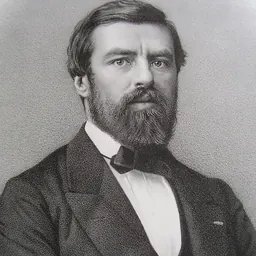
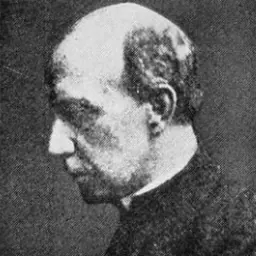
Related people
Same field, nearest in time
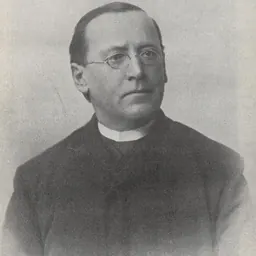
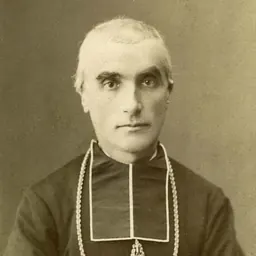

Contemporaries
People whose lives overlapped Ulysse Chevalier's


Frequently asked questions
Who was Ulysse Chevalier?
French historian (1841-1923)
When was Ulysse Chevalier born?
Ulysse Chevalier was born on 24 February 1841 in Rambouillet.
When did Ulysse Chevalier die?
Ulysse Chevalier died on 27 October 1923 in Romans-sur-Isère.
What was Ulysse Chevalier's occupation?
Ulysse Chevalier was a catholic priest, church historian, university teacher, historian and bibliographer.
What nationality was Ulysse Chevalier?
Ulysse Chevalier was French.
Sources & further reading
Cite this page
APA: Biography.guide. (2026). Ulysse Chevalier. https://biography.guide/ulysse-chevalier/
MLA: "Ulysse Chevalier." Biography.guide, https://biography.guide/ulysse-chevalier/.
Chicago: "Ulysse Chevalier." Biography.guide. https://biography.guide/ulysse-chevalier/.
Data last updated: 2026-09-20 · Spot an error? Report a correction.
Page generated 2026-09-27 05:25 UTC