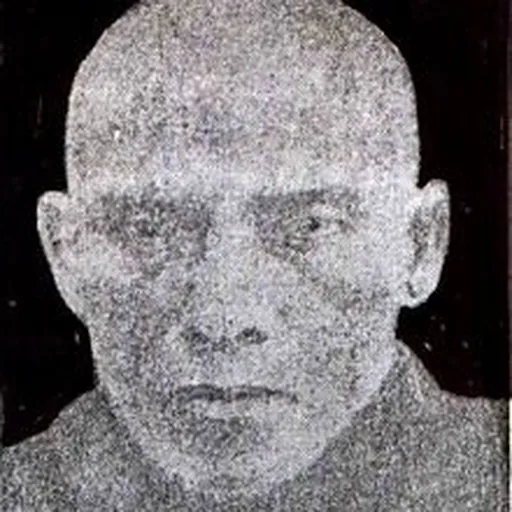
About U Wisara
Lived 1889 – 1929 (aged 40). U Wisara was a politician.
Ven. U Wisara (, , ; 24 April 1889 – 19 September 1929) was a Burmese Buddhist monk who died in prison after a 166-day hunger strike against the colonial British rule in Burma. The monk had been repeatedly imprisoned and tortured by the colonial government for "inciting sedition", and forced to wear plain clothes and abandon religious observances. His "ultimate sacrifice profoundly moved many Burmese who not concerned themselves with politics before", and galvanized the nascent independence movement. He remarried his childhood sweetheart Thay Hmyin , who gave birth to a daughter named Nwe .
Second prison stay His independence was short-lived. He promptly rejoined the political scene, and was duly arrested again for making an anti-colonialist speech at a village near Thongwa (present-day Yangon Region). He was sentenced to six years in prison for inciting sedition. In a replay of the first prison stay, U Wisara was forcibly disrobed, and the monk again went on a hunger strike on 6 April 1929. This time, in a test of wills prison officials did not relent even as the news of the strike attracted increasing attention as the strike went on. Over four months into the strike, on 17 August 1929, a few senior monks were allowed to see him in the prison. U Wisara repeated his conditions that he would take milk if he was allowed to wear the robe, and food if he was allowed to fast on Sabbath days, and that he was prepared to die for the cause. The British authorities were unmoved however. The monk died 166 days into the strike on 19 September 1929 (2nd waning of Tawthalin 1291 ME) at 8:20 in the morning. The prison officials secretly dropped off the monk's body at 3 am the next day at a monastery in Kyimyindaing (west of downtown Yangon).
Legacy Though expected for some time, the news of his death still shocked the country. There was an outpouring of public support for what he stood for. He was given a martyr's cremation and burial in the public square west of the Shwedagon Pagoda (today, People's Square and Park). He became a martyr of the independence movement.
The U Wisara Road, a major avenue in Yangon, and the U Wisara Monument in Yangon are named after him.
Don’t just read it —
keep it.
Full-length biographies made to live with: read them, listen on the way to work, watch them tonight.
- E-book
- Audio
- Video
Instant download · yours to keep · every purchase keeps this site free
Important facts
Related people
Same field, nearest in time






Contemporaries
People whose lives overlapped U Wisara's



Frequently asked questions
Who was U Wisara?
Burmese monk and activist (1889–1929)
When was U Wisara born?
U Wisara was born on 24 April 1889 in Chaung-U.
When did U Wisara die?
U Wisara died on 19 September 1929 in Yangon.
What was U Wisara's occupation?
U Wisara was a politician.
Sources & further reading
Cite this page
APA: Biography.guide. (2026). U Wisara. https://biography.guide/u-wisara/
MLA: "U Wisara." Biography.guide, https://biography.guide/u-wisara/.
Chicago: "U Wisara." Biography.guide. https://biography.guide/u-wisara/.
Data last updated: 2026-09-23 · Spot an error? Report a correction.
Portrait: Wikimedia Commons · author & licence
Page generated 2026-09-27 05:05 UTC