
Tzippora Sharett
Moshe Sharett's wife
About Tzippora Sharett
Lived 1896 – 1973 (aged 77). Tzippora Sharett was an Israeli.
Tzippora Sharett (; ; 12 August 1896 – 30 September 1973) was the wife of the second prime minister of Israel, Moshe Sharett.
She was born in Dvinsk, a city that was under the control of the Russian Empire at the time of her birth and is now Daugavpils, Latvia. In 1912, she made Aliya to Palestine with her family. While studying at the Hebrew Gymnasium, she met Moshe Sharett, one of the leaders of the Yishuv who later became the second Israeli prime minister and its first foreign minister, and in 1922 they married.
She supported her husband in all his diplomatic and political activities until his death in 1965. She died in 1973.
Early life Born Zippora Meirov in 1896 to Yehuda Meirov and Frida (née Meirovich) in Dvinsk in the Vitebsk region of the Russian Empire (now Daugavpils, Latvia) – a city that at that time almost half of its inhabitants were Jews. Her father was one of the "Lovers of Zion", and as a child she did not receive a primary education. Her younger brother is Shaul Avigur, one of the fighters of Tel Hai, one of the leaders of the Haganah, the commander of the Mossad LeAliyah Bet for most of its years, the deputy defence minister during the 1947–1949 Palestine war and the head of the Nativ organization.
She made Aliyah to Palestine in 1912 with almost no knowledge of the Hebrew language. Her family settled in Tel Aviv-Yafo, and Tzippora began her studies at the Hebrew Gymnasium. During her studies at the gymnasium, she met her future husband, Moshe Sharett. At that time he was a student, and was to become a senior diplomatic figure and the second Prime Minister of Israel. She knew Dov Hoz and Eliyahu Golomb, Sharett's best friends, and her closeness to the trio made her a partner in the political and diplomatic struggle for the establishment of the State of Israel from the dawn of her youth. This partnership is reflected in her life with Sharett, which culminated in her role as the wife of the Prime Minister of Israel.
As part of Sharett's role as head of the Jewish Agency's diplomatic department, he was often absent from the country for periods of weeks and even months, and the relationship between the two was mainly expressed the through exchange of love letters. She arrived in Tehran for the purpose of running the orphanage, called the "Jewish Child's House", together with a group of who came with the older Jewish refugees. No entry visas to Iran were issued to any other emissaries from Israel. The orphanage was run under conditions of severe shortage, especially of food, which its shortages was felt throughout Iran, and in a relentless effort to rescue more children from the hands of the priests and nuns.
On June 29, 1946, were the "Black Sabbath" events, during which her husband was arrested along with all the leaders of the Yishuv by the British Mandate authorities in Palestine and transferred to the Latrun detention camp. While detained in Latrun, Tzippora's role was to be the liaison between him and the Jewish Agency's management in Jerusalem and abroad.
In January 1947, two months after his release from detention in Latrun, Sharett travelled for a lengthy period of time to the United States as part of his position in the Jewish Agency's Diplomatic Department. He was later joined by his wife and their children, Haim and Yael.
In 1947, Sharett also added to her volunteer activities her role as a member of the board of directors of the Jerusalem Academy of Music and Dance. There, too, she tried to help as much as she could, especially in getting financial support and recognition from the establishment. She held this position from the day she was appointed until the day she died in 1973.
Spouse of the prime minister of Israel Tzippora's entry into the position of spouse of the prime minister of Israel was relatively smooth in light of her extensive experience as the wife of the head of the Jewish Agency's Political Department (1933–1948) and as the Foreign Minister's wife (1948–1954). Moreover, her predecessor in office, Paula Ben-Gurion left behind no behavioural legacy, which Tzippora could have adopted.
On January 26, 1954, her husband Moshe Sharett was elected prime minister and Tzippora began serving as the prime minister's wife. The change in her husband's status did not affect the pattern of behaviour between him and her and she remained a close partner and advisor in all his political affairs. She accompanied him to important meetings in the Knesset and Mapai Party and assisted him in writing speeches and in fact served as his support person. For example, in March 1954, Sharett was asked to deliver an obituary to Baron Edmond James de Rothschild in the Knesset plenum. The eulogy speech was written by Tzippora after Sharett failed to do so.
In parallel with her volunteer work among the new immigrants, she continued her public work for many organizations, a work that began even before she became the wife of the Prime Minister of Israel. On March 7, 1955, she organized celebrations of Purim in the Ma'abarot and villages in the Jerusalem Corridor.
Spouse of a former prime minister After her husband was forced to leave his post as prime minister, he continued to serve as foreign minister until June 1956. These months were very difficult for Moshe Sharett due to his murky and difficult relationship with David Ben-Gurion. Again he found an attentive ear in Tzippora. Despite her quiet and humble personality, Tzippora did not hesitate to voice her opinion about her husband's bitter rival, who had cut short his political career. An example of this is her reaction to Operation Kinneret, which Ben-Gurion initiated in December 1955, while she and her husband were in the United States. Upon her return to Israel, Tzippora harshly criticized Ben-Gurion's close aides, Yitzhak Navon and Teddy Kollek.
Over the months, Moshe Sharett's mood became increasingly bad, and his dependence on his wife increased. In September–November 1956, although he did not hold any official position, Moshe Sharett embarked on an official visit to Southeast Asia and the Far East on behalf of the Israeli government with the aim of establishing diplomatic relations with the various Asian countries. The journey was documented in the book dedicated to Tzippora, "to whom that through the letters to her were the chapters of this diary recorded". During his stay in Asia, Sharett repeatedly emphasized the lack of Tzippora – in his book he wrote: "Again I miss Zipporah very much, whom I thought about and her absence in all the wonderful tour I did".
The end of her days
In the years following her husband's death in 1965, Tzippora disappeared from the public eye almost completely. The only time she was seen in public after her husband's death was in 1970, when she received a medal of honor from the Jerusalem Municipality. In the following years, her health deteriorated and she died on September 30, 1973, at the age of 77 at the Tel Aviv Sourasky Medical Center in Tel Aviv. She was buried next to her husband in Trumpeldor Cemetery.
Don’t just read it —
keep it.
Full-length biographies made to live with: read them, listen on the way to work, watch them tonight.
- E-book
- Audio
- Video
Instant download · yours to keep · every purchase keeps this site free
Important facts
Family & relationships
People in Tzippora Sharett's life
Named in this biography and alive at the same time
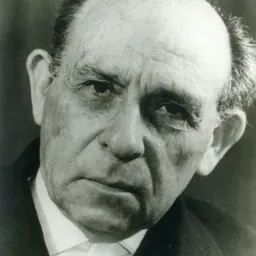

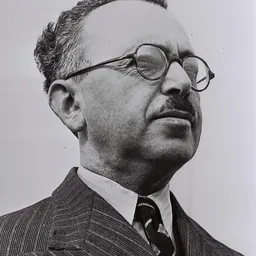
Contemporaries
People whose lives overlapped Tzippora Sharett's



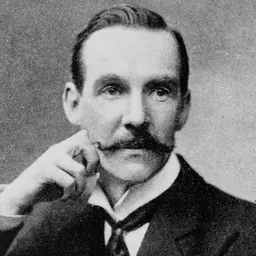


Frequently asked questions
Who was Tzippora Sharett?
Moshe Sharett's wife
When was Tzippora Sharett born?
Tzippora Sharett was born on 12 August 1896 in Daugavpils.
When did Tzippora Sharett die?
Tzippora Sharett died on 30 September 1973 in Tel Aviv Sourasky Medical Center.
What nationality was Tzippora Sharett?
Tzippora Sharett was Israeli.
Sources & further reading
Cite this page
APA: Biography.guide. (2026). Tzippora Sharett. https://biography.guide/tzippora-sharett/
MLA: "Tzippora Sharett." Biography.guide, https://biography.guide/tzippora-sharett/.
Chicago: "Tzippora Sharett." Biography.guide. https://biography.guide/tzippora-sharett/.
Data last updated: 2026-09-20 · Spot an error? Report a correction.
Page generated 2026-09-27 05:33 UTC