
About Ture Rangström
Lived 1884 – 1947 (aged 62). Ture Rangström was a Swedish conductor, composer, musicologist, music educator, music critic and singer.
Anders Johan Ture Rangström (30 November 1884 – 11 May 1947) belonged to a new generation of Swedish composers who, in the first decade of the 20th century, introduced modernism to their compositions. In addition to composing, Rangström was also a musical critic and conductor.
Biography
Rangström was born in Stockholm, where in his late teens he started to write songs. His music teacher suggested that he should "vary the harmonies a bit more, make it a bit wilder!" He followed this advice and soon gained the nickname among his colleagues of "Sturm-und-Drangström". He travelled to Berlin where he studied under Hans Pfitzner for a while in 1905–6, and also studied singing with the Wagnerian Julius Hey, with whom he later went to Munich for further studies. He founded the Swedish Society of Composers in 1918, and he was employed to promote the works of the Royal Swedish Opera from 1931 to 1936. After this he worked freelance and spent the summers on the island of Törnsholmen which he had been given by the people of Sweden who raised the money to celebrate his fiftieth birthday. Ett midsommarstycke (A midsummer piece) and En höstsång (An autumn song). Following the success of these poems, Rangström began work on his symphonies, of which there are four. The first, produced in 1914, is dedicated to the memory of Strindberg – August Strindberg in memoriam; the second, from 1919, is entitled Mitt land (My country); the third, a single moment work, from 1929, Sång under stjärnorna (Song under the stars), and the fourth from 1936, Invocatio, for orchestra and organ.
He composed three operas, entitled Kronbruden (The Crown Bride), based on a play by Strindberg, which was first performed in 1915, Medeltida (Medieval), published in 1921, and Gilgamesj, based on the Mesopotamian Epic of Gilgamesh, written during the last years of his life. The orchestration of Gilgamesj was completed by the composer John Fernström, and it was premièred in November 1952 at the Royal Swedish Opera with Erik Saedén in the title role and Herbert Sandberg conducting. Rangström also wrote almost 300 songs and orchestrated about 60 of them.
Orchestral Dithyramb, symphonic poem, 1909 (revised by Kurt Atterberg, 1948) Ett midsommarstycke, symphonic poem, 1910 En höstsång, symphonic poem, 1911 Havet sjunger, symphonic poem, 1913 Symphony no. 1 in C-sharp minor, August Strindberg in memoriam, 1914 Intermezzo drammatico, suite, 1916–18 Divertimento elegiaco, suite for string orchestra, 1918 Två melodier, clarinet and strings, 1919 Symphony no. 2 in D minor, Mitt land, 1919 Två svenska folkmelodier, 1928 Symphony no. 3 in D flat Sång under stjärnorna, 1929 Partita for violin and orchestra in B minor, 1933 Symphony no. 4 in D minor Invocatio, 1935 Ballade for piano and orchestra, 1937 Vauxhall, suite 1937 Staden spelar, divertissement, 1940
Chamber music String quartet in G minor, Ein Nachtstück in ETA Hoffmanns Manier, 1909 (rev. Edvin Kallstenius and Kurt Atterberg 1948) Suite in modo antico, violin and piano, 1912 Suite in modo barocco, violin and piano, 1920–22
Piano Fyra preludier, 1910–13 Mälarlegender, 1919 Sommarskyar, 1916–20 Improvisata, 1927 Sonatin, 1937 Spelmansvår, suite, 1943
Don’t just read it —
keep it.
Full-length biographies made to live with: read them, listen on the way to work, watch them tonight.
- E-book
- Audio
- Video
Instant download · yours to keep · every purchase keeps this site free
Important facts
People in Ture Rangström's life
Named in this biography and alive at the same time
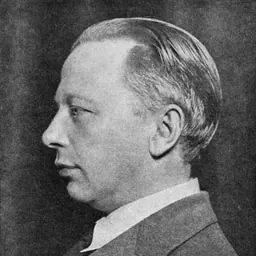

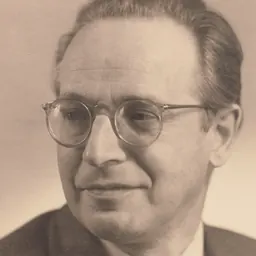


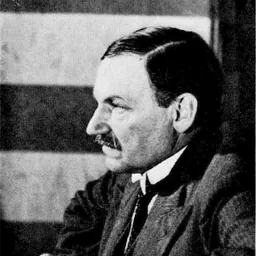

Related people
Same field, nearest in time
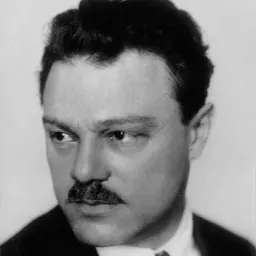
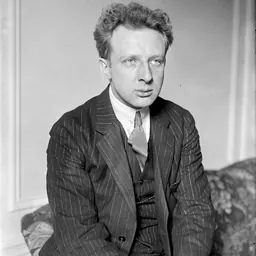
Contemporaries
People whose lives overlapped Ture Rangström's
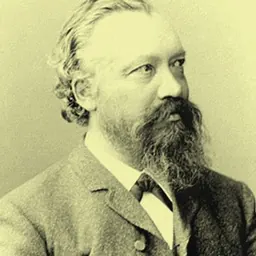
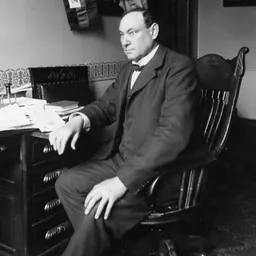
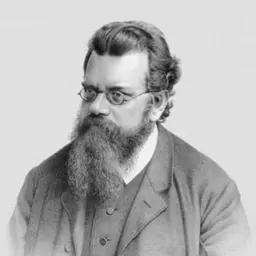

Frequently asked questions
Who was Ture Rangström?
Swedish composer (1884-1947)
When was Ture Rangström born?
Ture Rangström was born on 30 November 1884 in Stockholm, Hedvig Eleonora parish.
When did Ture Rangström die?
Ture Rangström died on 11 May 1947 in Stockholm, Högalid Parish.
What was Ture Rangström's occupation?
Ture Rangström was a conductor, composer, musicologist, music educator, music critic and singer.
What nationality was Ture Rangström?
Ture Rangström was Swedish.
Sources & further reading
Cite this page
APA: Biography.guide. (2026). Ture Rangström. https://biography.guide/ture-rangstrom/
MLA: "Ture Rangström." Biography.guide, https://biography.guide/ture-rangstrom/.
Chicago: "Ture Rangström." Biography.guide. https://biography.guide/ture-rangstrom/.
Data last updated: 2026-09-20 · Spot an error? Report a correction.
Page generated 2026-09-27 05:22 UTC