Túpac Amaru II
Leader of a large Andean uprising against the Spanish in Peru
About Túpac Amaru II
Lived 1738 – 1781 (aged 43). Túpac Amaru II was a politician, revolutionary, indigenous leader of the Americas and rebel.
The Corregidores and the exploitation of the natives Although the Spanish trusteeship labor system, or , had been abolished in 1720, a seventh of the population living in native communities as well as permanent indigenous workers at the time living in the Andean region of what is now Ecuador and Bolivia, who made up nine tenths of the population, were still pushed into forced labor for what were legally labeled as public work projects. This shift from the to the state sponsored and controlled draft labor system consolidated the indigenous labor force in the hands of the local government and not in the individual . Most natives worked under the supervision of a master either tilling soil, mining or working in textile mills. What little wage that was acquired by workers was heavily taxed and cemented Native American indebtedness to Spanish masters. The Roman Catholic Church also had a hand in extorting these natives through collections for saints, masses for the dead, domestic and parochial work on certain days, forced gifts, etc. Those not employed in forced labor were still subject to the Spanish provincial governors, or who also heavily taxed and overpriced commodities to any free natives, similarly ensuring their financial instability. The marquis's native pride coupled with his hate for the Spanish colonial system, caused him to sympathize and frequently petition for the improvement of native labor in the mills, farms and mines; even using his own wealth to help alleviate the taxes and burdens of the natives. After many of his requests for the alleviation of the native conditions fell on deaf ears, Condorcanqui decided to organize a rebellion. He began to stall on collecting reparto debts and tribute payments, for which the Tinta corregidor and governor Antonio de Arriaga threatened him with death. Condorcanqui changed his name to Túpac Amaru II and claimed he was descended from the last Inca ruler, Túpac Amaru.
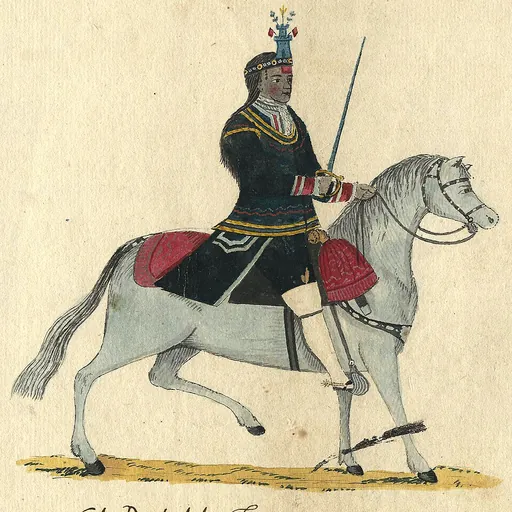
Rebellion Painting of Túpac Amaru II by an anonymous artist . Unveiled in 2015, it is the oldest image known to date of the indigenous rebel. The Rebellion of Túpac Amaru II began with the capture and killing of the Tinta Corregidor and Governor Antonio de Arriaga on November 4, 1780, after a banquet attended by both Túpac Amaru II and Governor Arriaga. The immediate cause of the rebellion lay in grievances caused by a series of modernising reforms of the colonial administration implemented by the Bourbon monarchy in Spain under Charles III of Spain (1759–1788), centralising administrative and economic control and placing heavier taxes and labour burdens on both the Native Peruvian and Creole populations. The focus of discontent was the main representative of the crown in Peru, the visitador general José Antonio Areche.
Ideologically, the rebellion was complex. At one level, it expressed simply a demand on the Spanish authorities for changes and reforms within the structure of colonial rule, often speaking in the name of the king himself, for example. At another, it envisioned an overthrow of European rule and something like a restoration of the pre-conquest Inca empire, the Tahuantinsuyo. Túpac Amaru's claim to be the legitimate descendant of the Inca suggested the possibility of an aristocratic state similar to the one envisioned in the sixteenth century by the mestizo writer, Inca Garcilaso de la Vega, who saw the Incas as sharing rule with the Spanish aristocracy. But there were also strong millenarian, proto-Jacobin and even proto-communist elements in the rebellion. In the main, the soldiers of the Tupamarista armies were poor Indian peasants, artisans and women, who saw the rebellion not so much as a question of reforms or power sharing but as an opportunity to "turn the world upside down". The restoration of the Inca Empire meant for them the possibility of an egalitarian society, based economically on the Inca communal agricultural system, the ayllu, and one without castas (racial divisions), rich and poor, or forced labour in haciendas, mines and factories, particularly the dreaded textile mills".
When Governor Arriaga left the party drunk, Túpac Amaru II and several of his allies captured him and forced him to write letters to a large number of Spaniards and kurakas. When about 200 of them gathered within the next few days, Túpac Amaru II surrounded them with approximately 4,000 natives. Claiming that he was acting under direct orders from the Spanish Crown, Amaru II gave Arriaga's slave Antonio Oblitas the privilege of executing his master. Túpac Amaru II then went on to quickly assemble an army of 6,000 natives who had abandoned their work to join the revolt. As they marched towards Cuzco, the rebels occupied the provinces of Quispicanchis, Tinta, Cotabambas, Calca, and Chumbivilcas. The rebels looted the Spaniards' houses and killed their occupants. Reflecting this, Túpac Amaru II's wife, Micaela Bastidas, commanded a battalion of insurgents and was responsible for the uprising in the San Felipe de Tungasuca region. She is also often credited as being more daring and a superior strategist than her husband. Purportedly, she once scolded her husband for his weakness and refusal to set up a surprise attack against the Spaniards in Cusco to catch the weakened city defenders off guard. Instead of listening to his wife, Túpac Amaru II lost precious time by encircling the country in hopes that he could gather more recruits for his army. By the time the insurgents had attacked the city, the Spaniards had already brought in reinforcements and were able to control and stop the uprising. This led to Túpac Amaru II, Micaela Bastidas, and several others to be captured while the rebels scattered.
During a stage of his rebellion, Túpac Amaru II was able to convince the Quechua speakers to join him. Therefore, under his command, the Quechua speakers fought alongside him with Aymara-speaking rebels from Puno on Lake Titicaca and on the Bolivian side of the lake. Unfortunately, the alliance did not last that long and this led the Aymara leader, Túpac Katari, to lead his army alone which ultimately led to his capture in October 1781. His partner and female commander, Bartola Sisa, took control after his capture and lead an astonishing number of 2,000 soldiers for several months. Soon after that in early 1782, the Spanish military defeated the rebels in Peru and Bolivia. According to modern sources, out of the 73 leaders, 32 were women, who were all executed privately. Amaru and his men marched through the countryside attempting to recruit any native to his cause, in doing so bolstering his forces. Amaru II's army was surrounded between Tinta and Sangarara and he was betrayed by two of his officers, Colonel Ventura Landaeta and Captain Francisco Cruz, which led to his capture.
Execution Amaru II was sentenced to be executed. He was forced to watch the deaths of his wife Micaela Bastidas, his eldest son Hipólito, his uncle Francisco Tupa Amaro, his brother-in-law Antonio Bastidas, and some of his captains before his own death.
On May 18, 1781, they were taken to the Plaza de Armas in Cuzco to be executed one by one. His son Hipólito first had his tongue cut out for having spoken against the Spanish, and then he was hanged. Micaela and José Gabriel were forced to witness the death of their son; Micaela was then made to climb to the platform. In front of her husband and her son Fernando, Micaela fought against her executioners until they finally subdued her and cut off her tongue. Her thin neck could not reach the winch, so they threw ties around her neck that pulled it from side to side to strangle her. They hit her with a club and finally killed her with kicks in the stomach and breasts.
The following is an extract from the official judicial death issued by the Spanish authorities which condemns Túpac Amaru II to torture and death. It was ordered that Túpac Amaru II be condemned to have his tongue cut out after watching the executions of his family and to have his hands and feet tied:
The tomb of Túpac Amaru II, located in the Plaza de Armas of Cuzco.
The dismemberment by horses failed, however, and his body was quartered manually, and it was then beheaded on the main plaza in Cuzco, in the same place his ancestor Túpac Amaru I had been beheaded. Scientists who have studied this dismemberment attempt concluded that due to the physical build and resistance of Túpac Amaru II, it would not have been possible to dismember him in that way. However, his arms and legs were dislocated, as was his pelvis.
His youngest son, 10-year-old Fernando, was not executed but was forced to witness the torture and death of his entire family and to pass under the gallows of those executed. He was later exiled to Africa on a sentence of life imprisonment. However, the ship taking him there capsized, and he ended up in Cádiz, to be imprisoned in the dungeons of the city. Viceroy Agustín de Jáuregui suggested that he should be kept in Spain, fearing that some enemy power might rescue him on the way to Africa.
Despite the execution of Túpac Amaru II and his family, the vice regal government failed to quell the rebellion, which continued under the leadership of his cousin Diego Cristóbal Túpac Amaru at the same time that it extended through Upper Peru and the Jujuy region. Likewise, disaffection of the Spanish Crown towards the Creoles became evident, especially for the Oruro Case. The lawsuit were filed against Juan José Segovia, born in Lima, and Colonel Ignacio Flores, born in Quito, who had served as president of the Real Audiencia of Charcas and as the Governor Intendant of La Plata (Chuquisaca or Charcas, currently Sucre).
Aftermath Tupac Amaru II Monument in the Comas and Independencia District, Lima.
When the revolt continued, the Spaniards executed the remainder of his family, except Fernando. Amaru's body parts were strewn across the towns loyal to him as ordered, his houses were demolished, their sites strewn with salt, his goods confiscated, his relatives declared infamous, and all documents relating to his descent burnt.
At the same time, on May 18, 1781, Incan clothing and cultural traditions, and self-identification as "Inca" were outlawed, along with other measures to convert the population to Western European Spanish culture and government until Peru's independence as a republic. However, even after the death of Amaru, Native revolts still seized much of what is today southern Peru, Bolivia and Argentina, as Native revolutionaries captured Spanish towns and beheaded many inhabitants. In one instance, a Native-American army under rebel leader Túpac Katari besieged the city of La Paz for 109 days before troops sent from Buenos Aires stepped in to relieve the city.
Consequences Although Túpac Amaru II's rebellion was not a success, it marked the first large-scale rebellion in the Spanish colonies and inspired the revolt of many Natives and Peruvians in the surrounding area. The rebellion took on important manifestations in "Upper Peru" or what is today modern Bolivia including the region South and East of Lake Titicaca. Indeed, Túpac Amaru II inspired the indigenous peoples to such an extent that even the official document wherein he is condemned to death, it is remarked that "the Indians stood firm in the place of our gunfire, despite their enormous fear of it" and that despite being captured, his followers remained steadfast in their beliefs in his immortality and heritage.
The rebellion gave indigenous Peruvians a new state of mind, being a form of indigenous nationalism that would re-emerge repeatedly and change shape over the course of the country's future. At the same time, some Peruvians had prosperous businesses and land co-owned with the Spaniards, and therefore they did not want to lose those interests in the event of a revolution. Although Túpac Amaru II's revolt was put down relatively quickly, the legacy and ideology of his revolt had echoes throughout the Andean region.
Recognition Effigy of Túpac Amaru II in the Panteón de los Próceres in Lima.
The fame of Túpac Amaru II spread to such an extent that for the indigenous rebels in the plains of Casanare in the New Granada region, he was recognized as "King of America".
Later movements invoked the name of Túpac Amaru II to obtain the support of the indigenous people, among others, Felipe Velasco Túpac Amaru Inca and Felipe Velasco Túpac Inca Yupanqui, who wanted to rise up in Huarochirí (Lima) in 1783. The rebellion of Túpac Amaru II marked the beginning of the Peruvian War of Independence in the history of Peru.
This great rebellion produced a strong influence on the Conspiracy of the Tres Antonios which came up in Chile on January 1, 1781, at the height of the insurrection. They were encouraged to act hearing the news of the advances of Túpac Amaru II in the Viceroyalty of Peru.
20th and 21st centuries In Peru, the government of General Juan Velasco Alvarado (1968–1975) welcomed the formalized effigy of Túpac Amaru II as a symbol of the Gobierno Revolucionario de la Fuerza Armada (Revolutionary Government of the Armed Forces) that he headed, to date, the only government of leftist ideology in the history of Peru. He recognized him as a national hero. In 1968, the symbol of Túpac Amaru II was carried by Peruvian education and official historiography, which was a novelty since independence. In his honor one of the main rooms of the Government Palace was named after him. That room was until then called the Francisco Pizarro room, and Pizarro's picture was replaced by that of the indigenous rebel.
Legacy In Peru During the Revolutionary Government of the Armed Forces (1968–1980), Túpac Amaru was selected by military leaders as the symbolic representation for the ideals behind the Peruvian Revolution. The Túpac Amaru Revolutionary Movement (MRTA) was a Peruvian Marxist-Leninist insurgent group, which became known worldwide for their involvement in the Japanese embassy hostage crisis.
Around the world In July 1943, Amaru II was portrayed by American actor Raymond Edward Johnson in Morton Wishengrad's radio drama, The Last Inca, the July 11 episode of Lands of the Free, a series produced by NBC's Inter-American University of The Air. The Tupamaros (also known as the National Liberation Movement) was the informal name of an urban guerilla that was active in the 1960s and early 1970s in Uruguay. The name was inspired by Tupac Amaru II and his ideals. The Venezuelan Marxist political party Tupamaro. Operation Tupac was launched by Pakistan against Indian-administered Kashmir. Chilean poet Pablo Neruda wrote a poem about Tupac Amaru II, titled "Tupac Amaru (1781)". The poem can be found in the Canto General.
In music Tupac Amaru, symphonic poem by the Venezuelan composer Alfredo del Mónaco premiered in 1977, has been performed at numerous international festivals. Tupac Amaru, symphony No. 5 by the Peruvian composer Armando Guevara Ochoa.
In 1962, the trio Los Amaru de Tinta emerged, composed of three musicians from Tinta: Genaro Chacón, Roger Cusi, and David Fuentes.
In 1968, Julián Yanque founded the Centro Folklórico Túpac Amaru deTinta (CEFOTAT), made up primarily of indigenous people from Tinta. The center's name was chosen in recognition of his admiration for the Quechua revolutionary. In 1989, the musical group Los Túpac Amarinos de Canas was formed, led by Gabriel Larota Catunta. This group is known for its revitalization of carnival traditions and the bandurria de canas (a type of Andean guitar).
The song "Águila de thunder (part II)" from the album Kamikaze by Luis Alberto Spinetta is inspired by the figure of Tupac Amaru II. The French hip-hop group Canelason released a song called "Libre", which tells the story of this revolutionary and his tragic assassination. Polish reggae music band NDK in their song Mafija mentions Tupac Amaru II's death as an example of Catholicism's cruelty. Argentinian jazz musician Gato Barbieri's Fenix album begins with a song titled "Tupac Amaru". American rapper Tupac Amaru Shakur (born Parish Lesane Crooks) was named after him. This Is Not America (featuring Ibeyi) from Residente, mentions Tupac Amaru II stating that prior to modern rapper Tupac there was already a Tupac in America (in the context that there is not an "American country" but only an American continent).
In novels In the book, Inca Gold, by Clive Cussler, one of the main villains named himself Tupac Amaru and claims to be a descendant of the real Tupac Amaru. In the beginning of the book, The Book of Human Skin, Tupac Amaru II's death is described, and a book said to be a bound in his skin plays a major role in the plot.
Don’t just read it —
keep it.
Full-length biographies made to live with: read them, listen on the way to work, watch them tonight.
- E-book
- Audio
- Video
Instant download · yours to keep · every purchase keeps this site free
Important facts
People in Túpac Amaru II's life
Named in this biography and alive at the same time

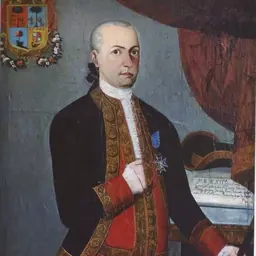
Related people
Same field, nearest in time


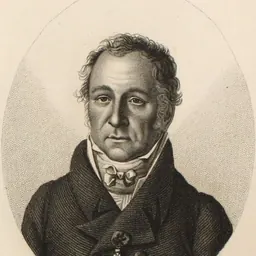

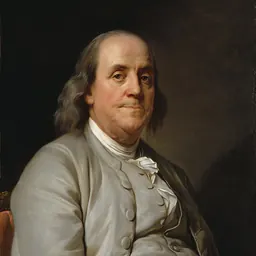
Contemporaries
People whose lives overlapped Túpac Amaru II's


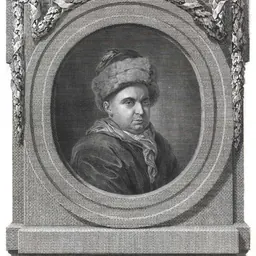



Frequently asked questions
Who was Túpac Amaru II?
leader of a large Andean uprising against the Spanish in Peru (1738-1781)
When was Túpac Amaru II born?
Túpac Amaru II was born on 10 March 1738 in Tinta.
When did Túpac Amaru II die?
Túpac Amaru II died on 18 May 1781 in Cusco.
What was Túpac Amaru II's occupation?
Túpac Amaru II was a politician, revolutionary, indigenous leader of the Americas and rebel.
What nationality was Túpac Amaru II?
Túpac Amaru II's recorded nationality: Viceroyalty of Peru.
Sources & further reading
Cite this page
APA: Biography.guide. (2026). Túpac Amaru II. https://biography.guide/tupac-amaru-ii/
MLA: "Túpac Amaru II." Biography.guide, https://biography.guide/tupac-amaru-ii/.
Chicago: "Túpac Amaru II." Biography.guide. https://biography.guide/tupac-amaru-ii/.
Data last updated: 2026-09-22 · Spot an error? Report a correction.
Portrait: Wikimedia Commons · author & licence
Page generated 2026-09-27 05:03 UTC