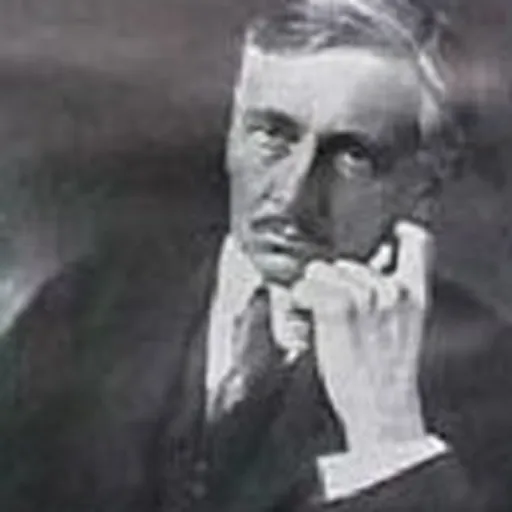
About Truby King
Lived 1858 – 1938 (aged 79). Truby King was a New Zealand surgeon, pediatrician and physician, known for Plunket Society.
Sir Frederic Truby King (1 April 1858 – 10 February 1938), generally known as Truby King, was a New Zealand health reformer and Director of Child Welfare. He is best known as the founder of the Plunket Society.
Early life King was born in New Plymouth on 1 April 1858, the son of Thomas and Mary King. His brother, Newton King, was to become a leading Taranaki businessman. Truby King was privately educated by Henry Richmond and proved to be a keen scholar. After working for a short time as a bank clerk he travelled to Edinburgh and Paris to study medicine. In 1886, he graduated with honours with a M.B., C.M, and later completed a BSc in Public Health (Edinburgh). Although his interest was in surgery it was the demonstrations of Charcot on hysteria and neurological disorders that influenced his choice of career.
Medical appointments In 1887, while still in Scotland, King was appointed resident surgeon at both the Edinburgh Royal Infirmary and Glasgow Royal Infirmary. By 1889 he was in Dunedin as Medical Superintendent at the Seacliff Lunatic Asylum and as a lecturer in mental diseases at the University of Otago. its 1917 "Save the Babies" Week had the slogan "The Race marches forward on the feet of Little Children".
King's methods to teach mothers domestic hygiene and childcare were strongly promoted through his first book on mothercare, Feeding and Care of Baby, and via a network of specially trained Karitane nurses and a widely syndicated newspaper column, Our babies, written by King's wife Isabella. Apart from nutrition, King's methods specifically emphasised regularity of feeding, sleeping and bowel movements, within a generally strict regimen supposed to build character by avoiding cuddling and other attention. He also excited controversy during his efforts to export his methods to Australia, Canada and the United Kingdom, with particular debate associated with his views on infant feeding formulas. He believed in "humanized" milk with the protein reduced to 1.4% to match breast milk, against the general paediatric consensus at the time in favour of high protein feeds.
The work of the Plunket Society was credited with lowering infant mortality in New Zealand from 88 per thousand in 1907 to 32 per thousand over the next thirty years, though it has since been argued that this was due less to its specific methods than to its general raising of awareness of childcare. invited Truby King to come to London to set up an infant welfare centre. It became the Babies of the Empire Society, later renamed the Mothercraft Training Society.
Following the First World War he was one of the British representatives at the Inter-allied Red Cross Conference and travelled through Europe for the War Victims Relief Committee.
Back in New Zealand, by 1921, King became Director of Child Welfare in the Department of Health and by 1925 also Inspector-General of Mental Hospitals. Until his retirement in 1927, he continued to develop and organise mental hospital services in New Zealand. His work was recognised by the award of a CMG in 1917 and a knighthood in 1925. In 1935, he was awarded the King George V Silver Jubilee Medal.
Personal life While training in Scotland King married Isabella (Bella) Cockburn Miller (1860–1927) in 1887. Bella supported her husband's work acting as his secretary, managing his tours, travelling to Britain, Australia and Europe with him and writing reports. The baby, named Esther Loreena, became known as Mary King. working in mothercraft and writing a book on the subject as well as poetry and a biography of Truby King.
Later years King died in Wellington on 10 February 1938. He was the first private citizen in New Zealand to be given a state funeral.
Twenty years later, he was the first New Zealander to feature on a New Zealand postage stamp. Truby King Park, in Melrose, Wellington, includes the Truby King Mausoleum.
Truby King's and Plunket's approaches gained popularity in Australia resulting in the establishment of the Australian Mothercraft Society and the Karitane Mothercraft Home in 1924 in Coogee, Sydney. A number of maternal childhood centres in the 20's, 30's, and 40's were named after Truby King such as Coburg and Dandenong (both in Melbourne). One such centre, in the Melbourne suburb of Coburg is now a heritage listed building. Karitane centres have continued to operate in Australia since 1923.
His baby care methods found favour in post-war Britain at least until the 1950s and featured, controversially, in the 2007 Channel 4 documentary series, Bringing Up Baby, which compared it with the 1960s Benjamin Spock and the 1970s Continuum concept.
Don’t just read it —
keep it.
Full-length biographies made to live with: read them, listen on the way to work, watch them tonight.
- E-book
- Audio
- Video
Instant download · yours to keep · every purchase keeps this site free
Important facts
People in Truby King's life
Named in this biography and alive at the same time


Related people
Same field, nearest in time


Contemporaries
People whose lives overlapped Truby King's



Frequently asked questions
Who was Truby King?
New Zealand health reformer (1858-1938)
When was Truby King born?
Truby King was born on 1 April 1858 in New Plymouth.
When did Truby King die?
Truby King died on 10 February 1938 in Wellington.
What was Truby King's occupation?
Truby King was a surgeon, pediatrician and physician.
What was Truby King known for?
Truby King was known for Plunket Society.
What nationality was Truby King?
Truby King was New Zealand.
Sources & further reading
Cite this page
APA: Biography.guide. (2026). Truby King. https://biography.guide/truby-king/
MLA: "Truby King." Biography.guide, https://biography.guide/truby-king/.
Chicago: "Truby King." Biography.guide. https://biography.guide/truby-king/.
Data last updated: 2026-09-22 · Spot an error? Report a correction.
Portrait: Wikimedia Commons · author & licence
Page generated 2026-09-27 05:02 UTC