
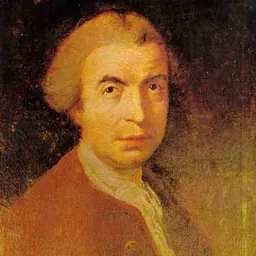
Tristram Gilman
American minister
About Tristram Gilman
Lived 1735 – 1809 (aged 73). Tristram Gilman was a congregationalist polity.
Tristram Gilman (November 24, 1735 – April 1, 1809) he graduated from Harvard College in 1757. His younger brother, Joseph (1738–1806), was a judge in Marietta, Ohio.
Shortly after taking the position, he became the original 1771 occupant of the Gilman Manse house at today's 463 Lafayette Street. John Calvin Stevens later renovated the property.
Reverend Edward Brooks, who was Gilman's classmate at Harvard, was also his predecessor at the Ledge Church. In his Catalogue of the First Church, Reverend David Shepley, the second minister of the second incarnation of the church, wrote of Gilman: "[He possesses] a vigorous physical frame, endowed with strong features in his mental constitution, studious, evangelical, ever diligent and enterprising in the duties of his calling, he soon attained uncommon ascendancy over the minds of his people, rose to eminence in the vicinity, and at his departure left his strong impress on the place blessed by his long-continued and successful labors and influence."
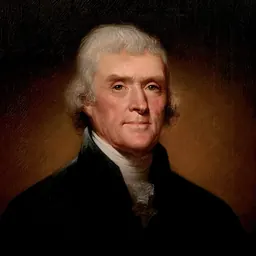
Gilman once declared in a sermon that Thomas Jefferson was the Antichrist.
The Ledge church, which was founded on November 18, 1730, was torn down in 1836, twenty-seven years after Gilman's death and sixteen years after it was abandoned by the Parish.
Personal life Gilman married Elizabeth Sayer (1747–1790), a native of Wells, Maine, around the time he began his ministry at the Old Ledge Church. He survived his wife for almost nineteen years, after her death on November 20, 1790.
Their eldest daughter, Elizabeth Gilman (1776–1851), married Francis Brown, an 1805 graduate of Dartmouth College and later its third president. Their son was Samuel Gilman Brown. Samuel's son, another Francis Brown, was a theologian.
Theodosia, another daughter, was born in 1788.
In 1789, Gilman had published The Right Education of Children Recommended by Samuel Hall Publishers in Boston.
Death Gilman died in 1809, aged 73. He is buried near the former site of his church, in the Ledge Cemetery, alongside his wife. (It is said in at least one source that his headstone rests immediately in front of the extant granite threshold of his former church, but the church was located across Gilman Road, and there are old gravestones immediately behind the granite.) His son-in-law, Francis Brown, was invited to preach before the Congregational church. Brown accepted the position of pastor, with the proviso that the church building, which had been in use for nearly eighty years, be discontinued. The second church (known as Old Sloop) was built in 1818, at the eastern corner of Main and Bridge Streets (at present-day 121 Main Street), but it was abandoned in 1868 and torn down in 1879.
Don’t just read it —
keep it.
Full-length biographies made to live with: read them, listen on the way to work, watch them tonight.
- E-book
- Audio
- Video
Instant download · yours to keep · every purchase keeps this site free
Important facts
People in Tristram Gilman's life
Named in this biography and alive at the same time


Related people
Same field, nearest in time

Contemporaries
People whose lives overlapped Tristram Gilman's




Frequently asked questions
Who was Tristram Gilman?
American minister
When was Tristram Gilman born?
Tristram Gilman was born on 24 November 1735 in Exeter, New Hampshire, Province of New Hampshire.
When did Tristram Gilman die?
Tristram Gilman died on 1 April 1809 in North Yarmouth, Maine.
What was Tristram Gilman's occupation?
Tristram Gilman was a congregationalist polity.
Sources & further reading
Cite this page
APA: Biography.guide. (2026). Tristram Gilman. https://biography.guide/tristram-gilman/
MLA: "Tristram Gilman." Biography.guide, https://biography.guide/tristram-gilman/.
Chicago: "Tristram Gilman." Biography.guide. https://biography.guide/tristram-gilman/.
Data last updated: 2026-09-22 · Spot an error? Report a correction.
Page generated 2026-09-27 05:09 UTC