
Tristão de Bragança Cunha
Indian nationalist from Goa also known as father of goan nationalism
About Tristão de Bragança Cunha
Lived 1891 – 1958 (aged 67).
Tristão de Bragança Cunha (; 2 April 1891 – 26 September 1958), better known as T. B. Cunha, was a Goan nationalist and anti-colonial activist. Referred to as the "Father of Goan nationalism", he was the organiser of the first movement to end Portuguese rule in Goa.
Early and personal life Tristão de Bragança Cunha was born on 2 April 1891 in the village Chandor in Portuguese Goa. His parents were Ligório de Cunha, a medical practitioner, and Filomena Bragança. While his mother was from Chandor, his father was from Cuelim, Cansaulim. He completed his school education in Nova Goa and then went to Pondicherry to French College for his baccalauréat and then to Paris. There he studied at the Sorbonne University and obtained a degree in electrical engineering.
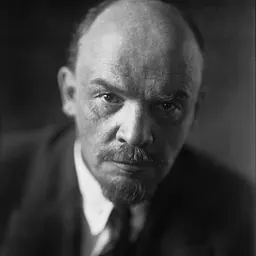
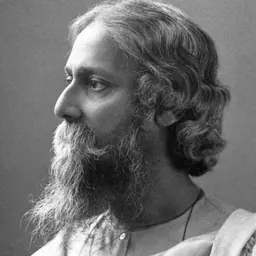
Cunha had two older brothers. The eldest brother, Vincent, was also an active nationalist. The other, Francisco, studied in London and later at the Sorbonne University in Paris. He translated the nationalistic views of Rabindranath Tagore into French and was later invited to teach at Shantiniketan. He also lived in Russia for many years, working with Russian revolutionary Vladimir Lenin.
Cunha was described as being "suited and booted, would not have food without cutlery even in public places and knew less of Konkani."
Nationalist movement
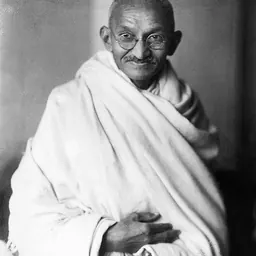
In Paris, Cunha was associated with the Anti-Imperialist League and with French dramatist Romain Rolland and his Information Bureau as part of its Pro-Indian Committee. He published a biography of Mahatma Gandhi in French, before Rolland. He also worked together with French novelist Henri Barbusse. Cunha helped publicize the Indian independence movement generally, and the case of Portuguese India in particular, in the French language newspapers, such as the L'Europe Nouvelle and Clarté. The Indian National Congress (INC) invited the GNC to its Calcutta session, offering it affiliation. However, in 1934, the INC decided to derecognize the GNC, stating that it was operating in a territory that was under alien rule. Cunha, now calling it the Comissão do Congresso de Goa (Goa Congress Committee), Bakibab Borkar, who was present at this meeting, wrote the song "Dotor bos, uthun cholunk lag" .
Philosophy Cunha believed Portugal to be a "primitive" coloniser that exploited colonies without any significant investment. While Salazar claimed that Goa was a burden on the Portuguese treasury, Cunha argued that Portugal exploited the Customs and downgraded the Indian currency, which helped Portugal with its balance of payments. Cunha further analysed Goa's separation from India at a cultural level, concluding that Goans were blindly imitating Western culture. He further argued that Christianity was used as a weapon for domination by the Portuguese. The Government of India issued a postage stamp in his honour. A prominent road in the city of Panaji is named as T. B. Cunha Road. A statue of Cunha has been installed in his ancestral village of Cuelim, Cansaulim. A school in Margao and a government higher secondary school in Panaji are also named in Cunha's honour. The campus in Panaji's Altinho which houses the Goa College of Architecture and the Goa College of Music, is named as "Dr. T. B. Cunha Educational Complex".
Unveiling ceremony of the portrait of Dr. Tristao De Braganca Cunha, at Parliament House, in New Delhi on 19 December 2011 A sports' complex in Cansaulim, Cuelim is named after him, and his portrait was unveiled in the Indian Parliament in 2011 to commemorate the golden jubilee of Goa's accession to India.
The comic book, The Life & Times of T. B. Cunha, by Nishtha Desai, was published in 2015. Illustrated by Ved Prabhudesai, Desai's comic book is based on her PhD research. Near its end, the comic book reveals that, shortly before he died, Cunha expressed "disappointment with the Indian government's actions" regarding Goa, seeing the nation's interests in the region as being an extension of colonialism; this was a departure from Cunha's lifelong belief in India being able to save a supposedly "denationalised" Goa. In his review of Desai's comic book about Cunha's life, Dale Luis Menezes classifies it as a hagiography, one that "is faithful to Cunha and his views on Goan history and, as such, reproduces many of his problematical nationalist stances ... One would have expected a lot more given that Cunha’s ideas and writings show a change over a period of time – especially since he was unhappy with the manner in which India was handling the question of Goan self-emancipation."
Don’t just read it —
keep it.
Full-length biographies made to live with: read them, listen on the way to work, watch them tonight.
- E-book
- Audio
- Video
Instant download · yours to keep · every purchase keeps this site free
Important facts
People in Tristão de Bragança Cunha's life
Named in this biography and alive at the same time


Contemporaries
People whose lives overlapped Tristão de Bragança Cunha's


Frequently asked questions
Who was Tristão de Bragança Cunha?
Indian nationalist from Goa also known as father of goan nationalism
When was Tristão de Bragança Cunha born?
Tristão de Bragança Cunha was born on 2 April 1891 in Chandor.
When did Tristão de Bragança Cunha die?
Tristão de Bragança Cunha died on 26 September 1958.
What nationality was Tristão de Bragança Cunha?
Tristão de Bragança Cunha's recorded nationality: Portuguese India.
Sources & further reading
· Wikipedia: Tristão de Bragança Cunha
Cite this page
APA: Biography.guide. (2026). Tristão de Bragança Cunha. https://biography.guide/tristao-de-braganca-cunha/
MLA: "Tristão de Bragança Cunha." Biography.guide, https://biography.guide/tristao-de-braganca-cunha/.
Chicago: "Tristão de Bragança Cunha." Biography.guide. https://biography.guide/tristao-de-braganca-cunha/.
Data last updated: 2026-09-27 · Spot an error? Report a correction.
Page generated 2026-09-27 05:16 UTC