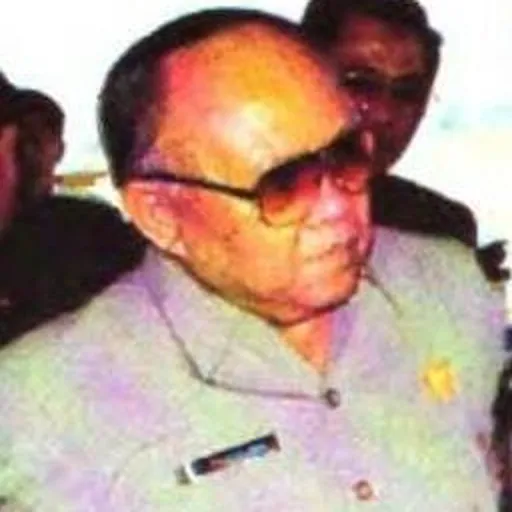
Trimarjono
Indonesian naval officer, bureaucrat
About Trimarjono
Lived 1933 – 2010 (aged 76).
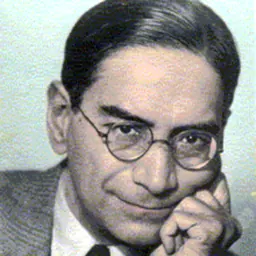
Trimarjono (14 April 19335 February 2010) was an Indonesian naval officer, bureaucrat, and politician who served in the executive and legislative branch of East Java for a long period. He was the provincial secretary from 1967 until 1985, vice governor from 1985 until 1990, and the speaker of the People's Representative Council from 1992 until 1997.
Early life Trimarjono was born in Jogorogo, Ngawi, on 14 April 1933. He completed elementary school in Ngawi in 1944 and junior high school in Probolinggo in 1947. He then moved to Madiun, where he attended the teacher education school.
Upon graduating from the teacher education school in 1950, Trimarjono worked as a teacher at a local elementary school. He resumed his education in 1953 and attended a high school in Madiun. Trimarjono finished his secondary education in 1955
Career Trimarjono joined the Indonesian Navy as an officer in the law corps after graduating from the university. He started his career as the secretary of the armed forces in the People's Representative Council. A year later, he became the personal secretary to People's Representative Council deputy speaker . an assembly which advises the government on maritime matters.
After serving for about three years in the People's Representative Council, Trimarjono returned to East Java, where he became an attorney in the local naval command in Semarang.
Provincial secretary In February 1967, Trimarjono was appointed as the acting provincial secretary of East Java. Trimarjono, who at that time held the rank of major, replaced career bureaucrat Juwono Asparin. Juwono's dismissal was protested by members of the Nahdlatul Ulama in the East Java parliament, who had supported his appointment in 1964.
Trimarjono was immediately promoted to the rank of lieutenant colonel upon his appointment. and he received a rank promotion during this time. As the second highest position—prior to the formation of the vice governor—in the provincial government, Trimarjono became the acting governor of East Java for several times. He also received the nickname Napoleon due to his physical appearance.
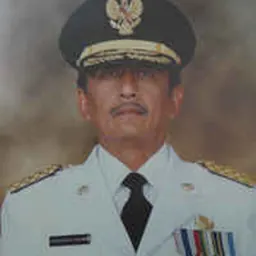
Vice governor Around 1984, the governor nominated Trimarjono as the second vice governor of East Java alongside Soeparmanto. Accordingly, he was promoted to the rank of commodore on the same year. He officially retired from the military on 12 August 1988.
As vice governor, Trimarjono led efforts to combat the widespread pollution of East Java rivers by factories. In order to ensure that the factories comply with government environment standards, he would often call factory owners to a meeting and make sudden visits to the factories. Aside from these, Trimarjono traverse through East Javanese rivers to see the backsides of the factory, where he could see whether the factories have already installed the required treatment facilities. Factories who failed to comply were announced by the local press and continuous failure would result in force closure by the government.
The companies being pressured by Trimarjono would retaliate by bribing or threatening journalists and government officials in order not to expose their names. Factory owners who were supported by powerful politicians in the central government would seek help from them in order to prevent the local government from pressuring them. Pressures could also came from inside the bureaucracy, where lower level officials refused to implement the superior's instruction. He was elected to the East Java Regional People's Representative Council (the regional parliament) from Golkar in the 1992 Indonesian legislative election and became its speaker. During his tenure, Trimarjono promoted the existence of the speakers and deputy speaker of the parliament as a "servant" rather than a boss for the parliament members. He vehemently opposed the existence of an interparliamentary cooperation body, fearing it might isolate him from the inner workings of the parliament. He proposed a "problem-based approach" by utilizing commissions inside the parliament. However, his proposal was opposed by a majority of Golkar parliament members.
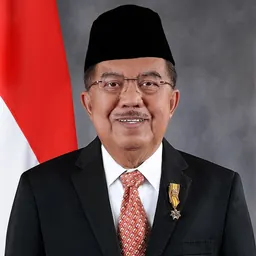
Trimarjono died at his house in Surabaya on 5 February 2010. Previously, Trimarjono had been treated repeatedly for heart complications. Vice President Jusuf Kalla, former governors Basofi Sudirman and Imam Utomo, as well as former minister and vice governor Saifullah Yusuf all paid their final respects to Trimarjono. He was interred at a public cemetery.
Don’t just read it —
keep it.
Full-length biographies made to live with: read them, listen on the way to work, watch them tonight.
- E-book
- Audio
- Video
Instant download · yours to keep · every purchase keeps this site free
Important facts
People in Trimarjono's life
Named in this biography and alive at the same time


Contemporaries
People whose lives overlapped Trimarjono's




Frequently asked questions
Who was Trimarjono?
Indonesian naval officer, bureaucrat
When was Trimarjono born?
Trimarjono was born on 14 April 1933.
When did Trimarjono die?
Trimarjono died on 5 February 2010.
Sources & further reading
Cite this page
APA: Biography.guide. (2026). Trimarjono. https://biography.guide/trimarjono/
MLA: "Trimarjono." Biography.guide, https://biography.guide/trimarjono/.
Chicago: "Trimarjono." Biography.guide. https://biography.guide/trimarjono/.
Data last updated: 2026-09-22 · Spot an error? Report a correction.
Portrait: Wikimedia Commons · author & licence
Page generated 2026-09-27 05:03 UTC