
About Toyen
Lived 1902 – 1980 (aged 78). Toyen was an Austrian, Czech and French painter, photographer, illustrator, drafter, graphic artist and manufacturer.
Toyen (born Marie Čermínová; 21 September 1902 – 9 November 1980) was a Czech painter, drafter, and illustrator and a member of the surrealist movement.
In 1923, the artist adopted the professional pseudonym Toyen. The name Toyen has been suggested to be derived from the French word 'citoyen,' meaning citizen, but it has also been proposed to be a play on the Czech expression ‘to je on’ (‘it is he’). Toyen favored this gender-neutral mononym (in Czech the family name is gendered, with women's names ending in "ová") and would speak the language in the masculine singular form. Vítězslav Nezval wrote that Toyen "refused... to use the feminine endings" when speaking in the first person.
Biography Toyen left the family home at sixteen, and it has been speculated it was due to sympathy towards anarchism.
In the early 1920s, Toyen resided in Smichov with their older sister, Zdena Svobodova, whose husband worked for the railroad. Though the artist presented themself as a lone wolf, family was located nearby and they could visit with their mother whenever they wished, though visits were scarce. In 1940, Toyen and their sister each inherited split custody of their mother’s home until Zdena’s death in 1945, then the property became divided between Toyen and the widower.
Toyen's output of over 500 illustrated books includes, for example, The Purple Land by W. H. Hudson and Charles Vildrac's L'lle rose, both from 1930.
Forced underground during the Nazi occupation and Second World War, Toyen sheltered their second artistic partner, Jindřich Heisler, a poet of Jewish descent who had joined the Czech Surrealist Group in 1938. The two permanently relocated to Paris in 1947, before the Communist takeover of Czechoslovakia in 1948, and joined the Parisian Surrealists. In Paris, Toyen worked with André Breton, Benjamin Péret and other surrealists such as Annie Le Brun. Toyen would continue to collaborate with surrealist-affiliated poets and other writers but soon ceased working for commercial publishers in Czechoslovakia.
Exploring sexuality and gender in surrealism
Toyen's artistic identity involved significant attention to gender issues and sexual politics. It has been suggested that this would have been difficult considering the surrealist movement was male-dominated and is often regarded as sexist. However, surrealism began to attract many women in the 1930s and became much more gender-balanced as time went by. Breton in particular admired Toyen and the artist was close to both Breton and his third wife, Elisa.
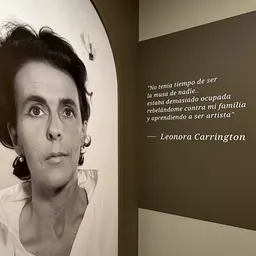
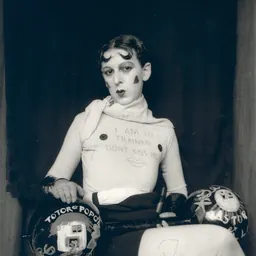
Toyen was assigned female at birth, but appears to have preferred a less-gendered identification. Some people compare Toyen with "other Surrealist women" such as Claude Cahun, Leonora Carrington, and a handful of others. Cahun examined the fluidity of gender roles, which was also true of Toyen. Toyen often dressed in masculine-style clothing and preferred masculine signifiers, The act of cross-dressing was a tool used by Toyen and woman artists at the time to overcome institutionalized and cultural sexism. By doing so, they embodied the role of the active protagonist, a role reserved traditionally for men. Toyen, along with women of the avant-garde movement such as Natalia Goncharova and Zinaida Gippius called these boundaries to light, then actively transcended them by adopting masculine attributes.
The artist often addressed gender and sexuality in humorous and fantasy-erotic illustrations. Toyen has been theorized by Malynne Sternstein as "hypersexualized."
Toyen expressed interest in lesbian sexuality along with many other forms of sexual expression, but it is unknown what the artist's personal sexual activity actually included. Toyen's two major artistic partnerships were with men, but it is not known whether these included sexual contact. According to Huebner, it is best to see Toyen as queer and not attempt to categorize the artist's sexuality or gender.
Don’t just read it —
keep it.
Full-length biographies made to live with: read them, listen on the way to work, watch them tonight.
- E-book
- Audio
- Video
Instant download · yours to keep · every purchase keeps this site free
Important facts
more
Marie Cerminova, Marie Germoniova, Maria Cerminova, Toyen (Marie Cerminová), Toyen (Marie Cerminova)Family & relationships
People in Toyen's life
Named in this biography and alive at the same time



Related people
Same field, nearest in time


Contemporaries
People whose lives overlapped Toyen's




Frequently asked questions
Who was Toyen?
Czech painter, photographer, writer and artist (1902–1980)
When was Toyen born?
Toyen was born on 21 September 1902 in Smíchov, Prague.
When did Toyen die?
Toyen died on 9 November 1980 in Paris, 7th arrondissement of Paris.
What was Toyen's occupation?
Toyen was a painter, photographer, illustrator, drafter, graphic artist and manufacturer.
What nationality was Toyen?
Toyen was Austrian, Czech and French.
Sources & further reading
Cite this page
APA: Biography.guide. (2026). Toyen. https://biography.guide/toyen/
MLA: "Toyen." Biography.guide, https://biography.guide/toyen/.
Chicago: "Toyen." Biography.guide. https://biography.guide/toyen/.
Data last updated: 2026-09-26 · Spot an error? Report a correction.
Page generated 2026-09-27 05:14 UTC