
About Toussaint-Dieudonné Sauveur
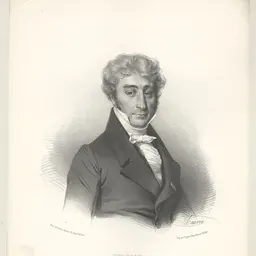
Lived 1766 – 1838 (aged 71). Toussaint-Dieudonné Sauveur was a Belgian physician and university teacher.
Toussaint-Dieudonné Sauveur (26 April 1766 - 27 January 1838) was a Belgian medical doctor and professor. After studying in Liège, Toussaint-Dieudonné Sauveur went to Paris to pursue a literary education. After graduating, he was appointed to teach at the University of Angers, where he earned a Master of Arts. Between 1789 and 1792, the French Revolution led him to study medicine in Paris; in 1793, he received a medical degree in Utrecht.
In 1808, he was appointed physician to the Lycée Impérial in Liège, which opened many doors for him, including the post of president of the medical jury for the Ourthe department.
Toussaint-Dieudonné Sauveur became a professor of medicine at the newly founded University of Liège in 1817. He also became the first rector for a one-year term. He taught several disciplines, including general pathology and the special pathology of internal diseases. He returned as rector between 1829 and 1830, but lost his position in 1835 following a reshuffling of teaching duties, probably due to his Orangism background.
Biography
Studies and practice of medicine Toussaint-Dieudonné Sauveur was born in Liège on 26 April 1766. He was the ninth child of a prominent Liège family. He completed his secondary education at the Collège de Visé, then run by the Congregation of the Oratory of Jesus and Mary Immaculate. He was subsequently offered a position at the University of Angers, where he obtained a Master of Arts degree. During his time in France, he had the opportunity to interact with numerous individuals who would later play a role in the French Revolution, including Joseph Fouché, with whom he developed a close relationship, and Maximilien de Robespierre. This did not prevent him from helping many "oratorians" during the restoration of the Bourbon dynasty in France and their exile in Belgium. between 1789 and 1792. He had to suspend his studies temporarily during the Reign of Terror. Moreover, the invasion of the Netherlands by the Austrian army led to a disruption in his family's ties and a loss of financial resources. He hurriedly left France, with difficulty, as obtaining a passport was complicated and any application was suspect. Fortunately, he received one through various contacts, thanks to Jean-Antoine Rossignol, a revolutionary militant. He promptly returned to Liège, where he was employed at the Saint-Abraham hospice. However, he was compelled to leave this position due to political considerations. No recorded deaths were among the school's 200 to 250 students aged 8 to 17 He also became the university's first rector for a one-year term. In 1817, he was also appointed president of the provincial medical commission. His dedication and expertise were further demonstrated when he served as rector again between 1829 and 1830. leaving a lasting impact on medicine and academia.
He was the first and last rector of the university before the Belgian Revolution. Toussaint-Dieudonné Sauveur was a member of the Liège Orangism. Trained in the disciplines of the Lumières, the first teachers were full of praise for King William, and their situation was much better than under the Ourthe prefects. As part of his oath, the rector swore to "do everything that depends on him, in his capacity, for the good of the State, the King, Toussaint-Dieudonné Sauveur was upset, but he remained discreet.
Despite being appointed Professor Emeritus in 1836, he retained no academic responsibilities. He died on 27 January 1838 in Liège at the age of 71.
Private life Toussaint-Dieudonné Sauveur had two sons. The eldest, Dieudonné-Jean-Joseph Sauveur (1797–1862), was also a doctor but subsequently pursued an administrative career in Brussels, ultimately becoming Inspector General of the Civil Health Service. He was also interested in paleobotany and was able to identify several fossils. Notwithstanding, he was a founding member of the in 1806. He is a progressive and eclectic scholar. One of his mottos, attributed to Ludwig Gottfried Klein (de), is "I am no more attached to ancient physicians than to modern ones; I use both indifferently when they follow the truth: an often-repeated experience is my main guide."
Don’t just read it —
keep it.
Full-length biographies made to live with: read them, listen on the way to work, watch them tonight.
- E-book
- Audio
- Video
Instant download · yours to keep · every purchase keeps this site free
Important facts
People in Toussaint-Dieudonné Sauveur's life
Named in this biography and alive at the same time

Related people
Same field, nearest in time




Contemporaries
People whose lives overlapped Toussaint-Dieudonné Sauveur's





Frequently asked questions
Who was Toussaint-Dieudonné Sauveur?
Belgian physician and professor
When was Toussaint-Dieudonné Sauveur born?
Toussaint-Dieudonné Sauveur was born on 26 April 1766 in Liège.
When did Toussaint-Dieudonné Sauveur die?
Toussaint-Dieudonné Sauveur died on 27 January 1838 in Liège.
What was Toussaint-Dieudonné Sauveur's occupation?
Toussaint-Dieudonné Sauveur was a physician and university teacher.
What nationality was Toussaint-Dieudonné Sauveur?
Toussaint-Dieudonné Sauveur was Belgian.
Sources & further reading
· Wikipedia: Toussaint-Dieudonné Sauveur
· DBpedia: Toussaint-Dieudonné Sauveur
Cite this page
APA: Biography.guide. (2026). Toussaint-Dieudonné Sauveur. https://biography.guide/toussaint-dieudonne-sauveur/
MLA: "Toussaint-Dieudonné Sauveur." Biography.guide, https://biography.guide/toussaint-dieudonne-sauveur/.
Chicago: "Toussaint-Dieudonné Sauveur." Biography.guide. https://biography.guide/toussaint-dieudonne-sauveur/.
Data last updated: 2026-09-26 · Spot an error? Report a correction.
Page generated 2026-09-27 05:14 UTC