
About Tore Linné Eriksen
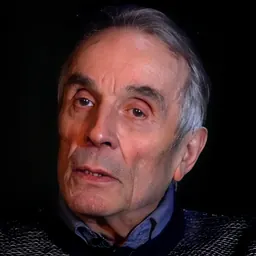
Born 1945. Tore Linné Eriksen is a Norwegian historian and political scientist.
Tore Linné Eriksen (born 2 May 1945) is a Norwegian historian. His fields of study include global history, development studies and African history, especially focusing on Southern Africa.
Early life and career Linné Eriksen hails from Kolbotn, but enrolled at the Oslo Cathedral School in 1961 to take his secondary education. Attending the same school were later academics and politicians Knut Kjeldstadli, Steinar Stjernø, Helge Rønning and Theo Koritzinsky. Here, Linné Eriksen was among the founders of Operasjon Dagsverk in 1964.
After finishing school, he briefly worked as a teacher in Northern Norway. He was later employed in the publishing house Pax forlag, founded in 1964, and made his literary debut there in 1966. He then enrolled at the University of Oslo, and was chairman of the Norwegian Students' Society in 1968. Among the radical students, Linné Eriksen was preceded and succeeded by two conservatives; Georg Apenes and Halvor Stenstadvold respectively. Originally a member of the Socialist Youth League (SUF), together with some of the later founders of the Workers' Communist Party, Linné Eriksen was excluded in 1969.
Academic career Linné Eriksen finally graduated from the University of Trondheim with a cand.philol. degree in 1974. From 1981 he was employed as a researcher at the Norwegian Institute of International Affairs. In 1997 he was hired as associate professor at Oslo University College, being promoted to professor in 2007. He is now retired, but continues his research and writing.
Notable publications include the 1974 book Underutvikling. In 1985 he published both David Livingstone and The Political Economy of Namibia. Den vanskelige bistanden followed in 1987, about development aid. In 1993 he won the Brage Prize for the school textbooks in modern history, Norge og verden fra 1850 til 1940 and Norge og verden etter 1940. He has, however, not discontinued his African studies. The 2000 Norway and National Liberation in Southern Africa was followed by a 2002 book on Nelson Mandela, which received a prize from the Norwegian Ministry of Culture. In 2007 he published the book Det første folkemordet i det tjuende århundret: Namibia 1903-1908 on the Herero and Namaqua Genocide, considered the first of many genocides in the 20th century. In 2008 he contributed to Folkemordenes svarte bok, an anthology on genocide.
In addition to the Socialist Left Party, Linné Eriksen has been involved in Nei til EU and the Norwegian Council for Africa, and has been a member of the board of the Development Fund. Linné Eriksen lives at Huseby in Oslo, with his wife Agnete Eriksen.
Don’t just read it —
keep it.
Full-length biographies made to live with: read them, listen on the way to work, watch them tonight.
- E-book
- Audio
- Video
Instant download · yours to keep · every purchase keeps this site free
Important facts
People in Tore Linné Eriksen's life
Named in this biography and alive at the same time







Related people
Same field, nearest in time

Contemporaries
People whose lives overlapped Tore Linné Eriksen's




Frequently asked questions
Who is Tore Linné Eriksen?
Norwegian historian
When was Tore Linné Eriksen born?
Tore Linné Eriksen was born on 2 May 1945 in Kolbotn.
What is Tore Linné Eriksen's occupation?
Tore Linné Eriksen is a historian and political scientist.
What nationality is Tore Linné Eriksen?
Tore Linné Eriksen is Norwegian.
Sources & further reading
· Wikipedia: Tore Linné Eriksen
Cite this page
APA: Biography.guide. (2026). Tore Linné Eriksen. https://biography.guide/tore-linne-eriksen/
MLA: "Tore Linné Eriksen." Biography.guide, https://biography.guide/tore-linne-eriksen/.
Chicago: "Tore Linné Eriksen." Biography.guide. https://biography.guide/tore-linne-eriksen/.
Data last updated: 2026-09-20 · Spot an error? Report a correction.
Page generated 2026-09-27 05:30 UTC