
Tony Richardson
English theatre and film director and producer
About Tony Richardson
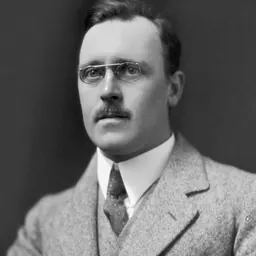
Lived 1928 – 1991 (aged 63). Tony Richardson was a British film director, screenwriter, film producer, film actor, theatre director and television producer.
Cecil Antonio Richardson (5 June 1928 – 14 November 1991) was an English theatre director and filmmaker, whose career spanned five decades. He was identified with the "angry young men" group of British directors and playwrights during the 1950s, and was later a key figure in the British New Wave filmmaking movement.
His films Look Back in Anger (1959), The Entertainer (1960), A Taste of Honey (1961), and The Loneliness of the Long Distance Runner (1962) are considered classics of kitchen sink realism. He was Head Boy at Ashville College, Harrogate and attended Wadham College, University of Oxford. His Oxford contemporaries included Rupert Murdoch, Margaret Thatcher, Kenneth Tynan, Lindsay Anderson and Gavin Lambert. He had the unprecedented distinction of being president of both the Oxford University Dramatic Society and the Experimental Theatre Club (the ETC), in addition to being the theatre critic for the university magazine Isis. Those he cast in his student productions included Shirley Williams (as Cordelia), John Schlesinger, Nigel Davenport and Robert Robinson.
Career In 1955, in his directing debut, Richardson produced Jean Giraudoux's The Apollo of Bellac for television with Denholm Elliott and Natasha Parry in the main roles. Around the same time he began to be active in Britain's Free Cinema movement, co-directing the non-fiction short Momma Don't Allow (also 1955) with Karel Reisz.
Part of the British "New Wave" of directors, he was involved in the formation of the English Stage Company, along with his close friend George Goetschius and George Devine. He directed John Osborne's play Look Back in Anger at the Royal Court Theatre, and in the same period he directed Shakespeare in Stratford-upon-Avon. Then in 1957 he directed Laurence Olivier as Archie Rice in Osborne's next play The Entertainer, again for the Royal Court.
In 1959, Richardson co-founded Woodfall Film Productions with John Osborne and producer Harry Saltzman, and, as Woodfall's debut, directed the film version of Look Back in Anger (1959), his first feature film. The Entertainer (1960), A Taste of Honey (1961), and The Loneliness of the Long Distance Runner (1962), based on the novel by Alan Sillitoe, also were produced by Woodfall.
Many of Richardson's films, such as A Taste of Honey and The Loneliness of the Long Distance Runner, were part of the acclaimed kitchen sink realism movement popular in Britain at the time, and several of his films continue to be held as cornerstones of the movement.
In 1964, Richardson received two Academy Awards (Best Director and Best Picture) for Tom Jones (1963) based on the novel by Henry Fielding. In the same year he also joined the Who Killed Kennedy? committee set up by Bertrand Russell.
His next film was The Loved One (1965), in which he worked with established stars, including John Gielgud, Rod Steiger and Robert Morse, and worked in Hollywood both on location and on the sound stage. In his autobiography, he confesses that he did not share the general admiration of Haskell Wexler, who worked on The Loved One as both director of photography and a producer.
Among stars that Richardson directed were Jeanne Moreau, Orson Welles, Rob Lowe, Milton Berle, Trevor Howard, David Hemmings, Nicol Williamson, Tom Courtenay, Lynn Redgrave, Marianne Faithfull, Richard Burton, Jodie Foster, Anthony Hopkins, Mick Jagger, Katharine Hepburn, Seth Green, Tommy Lee Jones and Judi Dench. His musical composers included Antoine Duhamel, John Addison and Shel Silverstein. His screenwriters were Jean Genet, Christopher Isherwood, Terry Southern, Marguerite Duras, Edward Bond (adapting Vladimir Nabokov) and Edward Albee. Richardson and Osborne eventually fell out during production of the film Charge of the Light Brigade (1968). The basic issue was Osborne's unwillingness to go through the rewrite process, more arduous in film than it is in the theatre. Richardson had a different version. In his autobiography (p. 195), he writes that Osborne was angry at being replaced in a small role by Laurence Harvey to whom the producers had obligations. Osborne took literary revenge by creating a fictionalised and pseudonymous Richardson – a domineering and arrogant character whom everyone hated – in his play The Hotel in Amsterdam.
Richardson's work was stylistically varied. Mademoiselle (1966) was shot noir-style on location in rural France with a static camera, monochrome film stock and no music. The Charge of the Light Brigade (1968) was part epic and part animated feature. Ned Kelly (1970) was what might be called an Aussie-western. Laughter in the Dark (1969) and A Delicate Balance (1973) were psycho-dramas. Joseph Andrews (1977), based on another novel by Henry Fielding, was a return to the mood of Tom Jones.
In 1970, Richardson was set to direct a film about Vaslav Nijinsky with a script by Edward Albee. It was to have starred Rudolf Nureyev as Nijinsky, Claude Jade as Romola and Paul Scofield as Diaghilev, but producer Harry Saltzman cancelled the project during pre-production.
In 1974, he travelled to Los Angeles to work on a script (never produced) with Sam Shepard, and took up residence there. Later that year, he began work on Mahogany (1975), starring Diana Ross, but was fired by Motown head Berry Gordy shortly after production began, owing to creative differences.
He wrote and directed the comedy-drama The Hotel New Hampshire (1984), based on John Irving's novel of the same name and starring Jodie Foster, Beau Bridges and Rob Lowe. Although it was a box-office failure, the film received a positive critical reception.
Richardson made four more major films before his death. His last, Blue Sky (1994), was not released for nearly three years after he died. Jessica Lange won a Best Actress Oscar for her performance in the film.
In 1966, Richardson is alleged to have financed the escape from Wormwood Scrubs prison of the spy and double agent George Blake.
Personal life and death Richardson was married to English actress Vanessa Redgrave from 1962 to 1967. The couple had two daughters, Natasha (1963–2009) and Joely (born 1965). Richardson then left Redgrave for French actress and singer Jeanne Moreau. In 1972, he had a relationship with Grizelda Grimond, who was a secretary for Richardson's former business partner Oscar Lewenstein and the daughter of British politician Jo Grimond. Grizelda Grimond gave birth to his daughter, Katherine Grimond, on 8 January 1973.
Richardson was bisexual. He died of complications from AIDS on 14 November 1991 at the age of 63.
Works Film Short film Year TitleDirectorWriter Notes 1955 Momma Don't Allow Co-directed with Karel Reisz 1967 Red and Blue Segment of Red, White and Zero 1990 Hills Like White Elephants Segment of Women & Men: Stories of Seduction
Feature film Year TitleDirectorWriterProducer Notes 1959 Look Back in Anger 1960 The Entertainer Saturday Night and Sunday Morning 1961 Sanctuary A Taste of Honey 1962 The Loneliness of the Long Distance Runner 1963 Tom Jones Academy Award for Best PictureAcademy Award for Best Director 1964 Girl with Green Eyes 1965 The Loved One 1966 Mademoiselle 1967 The Sailor from Gibraltar 1968 The Charge of the Light Brigade 1969 Laughter in the Dark Hamlet 1970 Ned Kelly 1973 A Delicate Balance 1974 Dead Cert 1975 Mahogany Uncredited; replaced by Berry Gordy 1977 Joseph Andrews 1982 The Border 1984 The Hotel New Hampshire 1994 Blue Sky
Television TV movies Year TitleDirectorProducer 1952 The Sound of Stillness 1954 Parliament of Science 1955 It Should Happen to a Dog Mr. Kettle and Mrs. Moon Othello 1956 The Gambler 1978 A Death in Canaan 1986 Penalty Phase 1988 Beryl Markham: A Shadow on the Sun
TV series Year TitleDirectorProducer Notes 1952 Happy and Glorious 6 episodes 1953 Wednesday Theatre Episodes "Curtain Down" and "Box for One"1955 You Know What People Are 6 episodes Appointment with Drama Episodes "The Rivals", "The Birthday Present", "Absence of Mind" and"The Apollo of Bellac" BBC Sunday-Night Theatre Episodes "Markheim", "The Makepeace Story #1: The Ruthless Destiny","The Makepeace Story #2: A New Generation" and"The Makepeace Story #3: Family Business"1956 Tales from Soho 6 episodes ITV Play of the Week Episode Look Back in Anger 1957 Theatre Night Episode The Member of the Wedding 1960 BBC Sunday-Night Play Episode A Subject of Scandal and Concern 1990 The Phantom of the Opera 2 episodes
Theatre sources: Adler; Little & McLaughlin; Richardson
Don’t just read it —
keep it.
Full-length biographies made to live with: read them, listen on the way to work, watch them tonight.
- E-book
- Audio
- Video
Instant download · yours to keep · every purchase keeps this site free
Important facts
Family & relationships
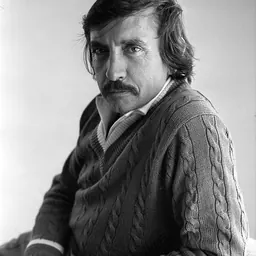
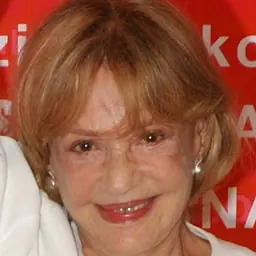
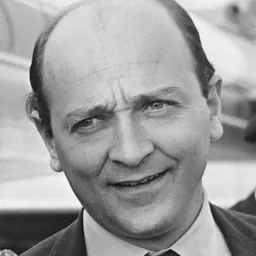
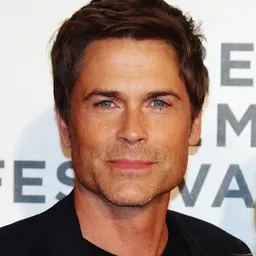
People in Tony Richardson's life
Named in this biography and alive at the same time




Related people
Same field, nearest in time


Contemporaries
People whose lives overlapped Tony Richardson's

Frequently asked questions
Who was Tony Richardson?
English theatre and film director and producer (1928-1991)
When was Tony Richardson born?
Tony Richardson was born on 5 June 1928 in Shipley.
When did Tony Richardson die?
Tony Richardson died on 14 November 1991 in Los Angeles.
What was Tony Richardson's occupation?
Tony Richardson was a film director, screenwriter, film producer, film actor, theatre director and television producer.
What nationality was Tony Richardson?
Tony Richardson was British.
Sources & further reading
Cite this page
APA: Biography.guide. (2026). Tony Richardson. https://biography.guide/tony-richardson-film-director/
MLA: "Tony Richardson." Biography.guide, https://biography.guide/tony-richardson-film-director/.
Chicago: "Tony Richardson." Biography.guide. https://biography.guide/tony-richardson-film-director/.
Data last updated: 2026-09-20 · Spot an error? Report a correction.
Page generated 2026-09-27 05:24 UTC