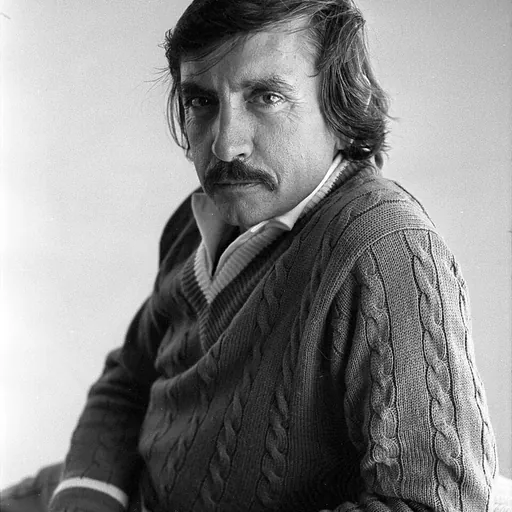
About Edward Albee
Lived 1928 – 2016 (aged 88). Edward Albee was an American playwright, writer, screenwriter, university teacher and theatre director.
Edward Franklin Albee III ( ; March 12, 1928 – September 16, 2016) was an American playwright known for works such as The Zoo Story, The Sandbox (1959), Who's Afraid of Virginia Woolf? (1962), A Delicate Balance (1966), and Three Tall Women (1994). Some critics have argued that some of his work constitutes an American variant of what Martin Esslin identified as and named the Theater of the Absurd. Three of his plays won the Pulitzer Prize for Drama and two of his other works won the Tony Award for Best Play.
His works are often considered frank examinations of the modern condition. His early works reflect a mastery and Americanization of the Theatre of the Absurd that found its peak in works by European playwrights such as Samuel Beckett, Eugène Ionesco, and Jean Genet.
His middle period comprised plays that explored the psychology of maturing, marriage and sexual relationships. Younger American playwrights, such as Paula Vogel, credit Albee's mix of theatricality and biting dialogue with helping to reinvent postwar American theatre in the early 1960s. Later in life, Albee continued to experiment in works such as The Goat, or Who Is Sylvia? (2002).
Early life Edward Albee was born in 1928. His biological father left his mother, Louise Harvey, and he was placed for adoption two weeks later and taken to Larchmont, New York, where he grew up. Albee's adoptive father, Reed A. Albee, the wealthy son of vaudeville magnate Edward Franklin Albee II, owned several theaters. His adoptive mother, Reed's second wife, Frances (Cotter), was a socialite. He later based the main character of his 1991 play Three Tall Women on his mother, with whom he had a conflicted relationship.
Albee attended the Rye Country Day School, then the Lawrenceville School in New Jersey, from which he was expelled. He enrolled at The Choate School (now Choate Rosemary Hall) in Wallingford, Connecticut, graduating in 1946. He had attracted theatre attention by having scripted and published nine poems, eleven short stories, essays, a long act play, Schism, and a 500-page novel, The Flesh of Unbelievers (Horn, 1) in 1946. His formal education continued at Trinity College in Hartford, Connecticut, where he was expelled in 1947 for skipping classes and refusing to attend compulsory chapel. In a 1994 interview, he said he left home at 18 because "[he] had to get out of that stultifying, suffocating environment."
Career
1959–1966: The Early Plays Albee moved into New York's Greenwich Village, His roommate in New York was the composer William Flanagan. Primarily in his early plays, Albee's work had various characters that challenged the image of a heterosexual marriage. Despite challenging society's views about the gay community, he did not view himself as an LGBT advocate. was first staged in Berlin in 1959 before premiering off-Broadway in 1960. His next, The Death of Bessie Smith, similarly premiered in Berlin before arriving in New York.
Albee's most iconic play, Who's Afraid of Virginia Woolf?, opened on Broadway at the Billy Rose Theatre on October 13, 1962, and closed on May 16, 1964, after five previews and 664 performances. The opening night cast featured Uta Hagen, Arthur Hill, George Grizzard and Melinda Dillon. The play won the Tony Award for Best Play in 1963 and was selected for the 1963 Pulitzer Prize by the award's drama jury, but the selection was overruled by the advisory committee, which elected not to give a drama award at all. The two members of the jury, John Mason Brown and John Gassner, subsequently resigned in protest. An Academy Award-winning film adaptation by Ernest Lehman was released in 1966 starring Elizabeth Taylor, Richard Burton, George Segal, and Sandy Dennis, and was directed by Mike Nichols. In 2013, the film was selected for preservation in the United States National Film Registry by the Library of Congress as "culturally, historically, or aesthetically significant".
1971–1987: The Middle Plays Edward Albee by Irish artist Reginald Gray (The New York Times, 1966), inspired by a photograph taken in 1962 from Bettmann/Corbis. In 1971 he wrote All Over, a two-act play originally titled Death, the second half of a projected double bill with another play called Life (which later became Seascape). The play premiered on Broadway at the Martin Beck Theatre with John Gielgud directing and starred Jessica Tandy, Madeleine Sherwood, and Colleen Dewhurst. The New York Times writer Clive Barnes wrote, "It is a lovely, poignant and deeply felt play. In no way at all is it an easy play -- this formal minuet of death, this symphony ironically celebrating death's dominion. It is not easy in its structure, a series of almost operatic arias demanding, in their precision, pin-point concentration from the audience, and it is certainly not easy in its subject matter."
In 1974 he wrote Seascape, which won the Pulitzer Prize for Drama. It debuted on Broadway with Deborah Kerr and Frank Langella. It was nominated for the Tony Award for Best Play losing to Peter Shaffer's Equus. Clive Barnes of The New York Times declared the play "a major event", adding, "As Mr. Albee has matured as a playwright, his work has become leaner, sparer and simpler. He depends on strong theatrical strokes to attract the attention of the audience, but the tone of the writing is always thoughtful, even careful, even philosophic." He compared his work alongside Samuel Beckett and Harold Pinter.
Albee continued to write plays including Listening (1976), Counting the Ways (1976) before a brief break before The Lady from Dubuque (1980) which had a short run on Broadway. He wrote the three act play The Man Who Had Three Arms (1983) which was received negatively with Frank Rich of The New York Times writing, "isn't a play - it's a temper tantrum in two acts... One of the more shocking lapses of Mr. Albee's writing is that he makes almost no attempt even to pretend that Himself is anything other than a maudlin stand-in for himself, with the disappearing arm representing an atrophied talent."
Albee's plays during the 1980s received mixed reviews with Michael Billington of The Guardian writing, "American dramatists invariably end up as victims of their own myth: in a success-crazed culture they are never forgiven for failing to live up to their own early masterpieces. But if Edward Albee has suffered the same cruel fate as Arthur Miller and Tennessee Williams, he has kept on trucking". Billington wrote of Albee's 1987 play, Marriage Play, "At the end the play achieves a metaphorical resonance by suggesting that marriage is an accumulation of meaningless habits and that "nothing has made any difference". The 2018 production received the Tony Award for Best Revival of a Play. Allison Adato of Entertainment Weekly wrote of the play, "Edward Albee's Three Tall Women, in which a nonagenarian revisits events of her life refracted through both her own dementia and the differing recollections of her younger selves, is a not-quite-memory play filled with regret, resentment, entitlement, various bodily indignities".
Georgia State University English professor Matthew Roudane divides Albee's plays into three periods: the Early Plays (1959–1966), characterized by gladiatorial confrontations, bloodied action and fight to the metaphorical death; the Middle Plays (1971–1987), when Albee lost the favor of Broadway audience and started premiering in the U.S. regional theaters and in Europe; and the Later Plays (1991–2016), received as a remarkable comeback and watched by appreciative audiences and critics the world over.
According to The New York Times, Albee was "widely considered to be the foremost American playwright of his generation." The less-than-diligent student later dedicated much of his time to promoting American university theatre. He served as a Distinguished Professor of Playwriting and held the Lyndall Finley Wortham Chair in the Performing Arts at the University of Houston. His plays are published by Dramatists Play Service and Samuel French, Inc.
Philanthropy Albee established the Edward F. Albee Foundation, Inc. in 1967, from royalties from his play Who's Afraid of Virginia Woolf?. The foundation funds the William Flanagan Memorial Creative Persons Center (named after the composer William Flanagan, but better known as "The Barn") in Montauk, New York, as a residence for writers and visual artists. The foundation's mission is "to serve writers and visual artists from all walks of life, by providing time and space in which to work without disturbance."
Personal life and death Albee was gay and stated that he first knew he was gay at age twelve and a half.
As a teen in Larchmont, Albee became a close friend of English-born Muir Weissinger Jr. and his family. Albee, along with others, referred to Florence, Muir's mother, as "Mummy". For her part, Albee's mother felt he spent too much time at the Weissinger household. Albee dated Muir's sister, Delphine, and escorted her to her coming-out party. Albee and Delphine had a "long and intense relationship" while it lasted; Albee has said they were "unofficially engaged". Albee kept in touch for a long time with Florence and Muir Weissinger.
Albee insisted that he did not want to be known as a "gay writer", saying in his acceptance speech for the 2011 Lambda Literary Foundation's Pioneer Award for Lifetime Achievement: "A writer who happens to be gay or lesbian must be able to transcend self. I am not a gay writer. I am a writer who happens to be gay." His longtime partner, Jonathan Richard Thomas, a sculptor, died on May 2, 2005, from bladder cancer. They had been partners from 1971 until Thomas's death. Albee also had a relationship of several years with playwright Terrence McNally during the 1950s. Albee died at his home in Montauk, New York on September 16, 2016, aged 88.
Albee lived in a 6,000-square-foot loft that was a former cheese warehouse in New York's Tribeca neighborhood. At the time of his death Albee held an expansive collection of fine art, utilitarian works and sculptures. Albee was especially interested in artworks created by indigenous cultures in Africa and Oceania.
Accolades and accomplishments
A member of the Dramatists Guild Council, Albee received three Pulitzer Prizes for drama—for A Delicate Balance (1967), Seascape (1975), and Three Tall Women (1994). Albee was elected a Fellow of the American Academy of Arts and Sciences in 1972. In 1985, Albee was inducted into the American Theatre Hall of Fame. In 1999, Albee received the PEN/Laura Pels Theater Award as a Master American Dramatist. He received a Special Tony Award for Lifetime Achievement (2005); In 2009, Albee received honorary degree from the Bulgarian National Academy of Theater and Film Arts (NATFA), a member of the Global Alliance of Theater Schools. In 2008, in celebration of Albee's 80th birthday, a number of his plays were mounted in distinguished off-Broadway venues, including the historic Cherry Lane Theatre where the playwright directed two of his early one-acts, The American Dream and The Sandbox.
Pulitzer Prize Year Category Project Result 1967 Pulitzer Prize for Drama A Delicate Balance 1975 Seascape 2003 The Goat, or Who Is Sylvia? Tony Awards 1963 Best Play Who's Afraid of Virginia Woolf? 1964 The Ballad of the Sad Cafe 1965 Best Author Tiny Alice 1965 Best Play 1967 A Delicate Balance 1975 Seascape 2005 Lifetime Achievement Drama Desk Award 1960 Vernon Rice Award The Zoo Story 1975 Outstanding New Play Seascape 1976 Outstanding Director of a Play Who's Afraid of Virginia Woolf? 1994 Outstanding Play Three Tall Women 2002 Outstanding New Play The Goat, or Who Is Sylvia? 2008 Special Award Grammy Award1963 Best Spoken Word Album Who's Afraid of Virginia Woolf? Best Album Notes
Honorary awards 1995: St. Louis Literary Award from the Saint Louis University Library Associates 1996: National Medal of Arts 2003 Fitzgerald Award Award for Achievement in American Literature award 2005: Academy of Achievement's Golden Plate Award 2011: Edward MacDowell Medal for Lifetime Achievement 2011: Pioneer Award for Lifetime Achievement, Lambda Literary Foundation 2013: Chicago Tribune Literary Prize 2015: America Award in Literature
Works Plays Works written or adapted by Albee:
Stage Adaptations
Opera libretti Bartleby (adapted from the short story by Herman Melville) (1961) The Ice Age (1963, uncompleted)
Essays Stretching My Mind: Essays 1960–2005 (Avalon Publishing, 2005). .
Don’t just read it —
keep it.
Full-length biographies made to live with: read them, listen on the way to work, watch them tonight.
- E-book
- Audio
- Video
Instant download · yours to keep · every purchase keeps this site free
Important facts
People in Edward Albee's life
Named in this biography and alive at the same time



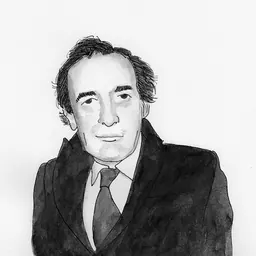

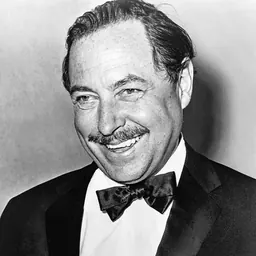


Related people
Same field, nearest in time
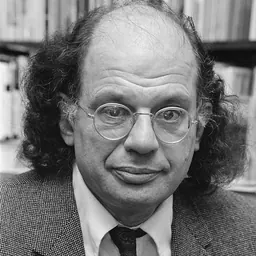

Contemporaries
People whose lives overlapped Edward Albee's


Frequently asked questions
Who was Edward Albee?
American playwright (1928–2016)
When was Edward Albee born?
Edward Albee was born on 12 March 1928 in Washington, D.C..
When did Edward Albee die?
Edward Albee died on 16 September 2016 in Montauk.
What was Edward Albee's occupation?
Edward Albee was a playwright, writer, screenwriter, university teacher and theatre director.
What nationality was Edward Albee?
Edward Albee was American.
Sources & further reading
Cite this page
APA: Biography.guide. (2026). Edward Albee. https://biography.guide/edward-albee/
MLA: "Edward Albee." Biography.guide, https://biography.guide/edward-albee/.
Chicago: "Edward Albee." Biography.guide. https://biography.guide/edward-albee/.
Data last updated: 2026-09-23 · Spot an error? Report a correction.
Portrait: Wikimedia Commons · author & licence
Page generated 2026-09-27 05:07 UTC