
Tony Hinkle
American football, basketball, baseball player and coach, college athletics administrator
About Tony Hinkle
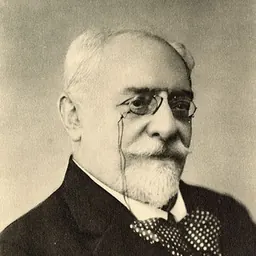
Lived 1899 – 1992 (aged 92). Tony Hinkle was an American baseball player, basketball coach, athletics competitor and american football player.
Paul D. "Tony" Hinkle (December 19, 1899 – September 22, 1992) was an American football, basketball, and baseball player, coach, and college athletic administrator. He attended the University of Chicago, where he won varsity letters in three sports. Hinkle captained the Chicago Maroons basketball team for two seasons and was twice selected as an All-American, in 1919 and 1920. After graduating from the University of Chicago, Hinkle moved on to Butler University as a coach. There, over the course of nearly 50 years, he served as the head football coach (1926, 1935–1941, 1946–1969), head basketball coach (1926–1942, 1945–1970), and head baseball coach (1921–1928, 1933–1941, 1946–1970). Hinkle was inducted into the Naismith Memorial Basketball Hall of Fame as a contributor in 1965. Butler's home basketball arena was renamed as Hinkle Fieldhouse in the coach's honor in 1966.
Early life and playing career Hinkle was born in Logansport, Indiana, to Edgar Clayton and Winnie (Ray) Hinkle. He graduated in 1917 from Calumet High School in Chicago, Illinois, and attended the University of Chicago from 1917 to 1921. As a player at Chicago, he lettered three times in basketball, was twice All-Big Ten, twice team captain, named to the Helms All-America team in 1919 and 1920, and was a member of the Big Ten Conference championship team in 1919–20 that lost the national championship to Penn.
Coaching career Hinkle joined Butler University in 1921 when it was still at the Irvington campus; the university bought Fairview Park in 1922 and moved the campus there in 1928. At Butler, Hinkle served as a teacher, coach and athletic administrator for nearly half a century. Although he coached football, basketball, and baseball, he was primarily known as a basketball coach. His teams were fearless, gaining a reputation as "Big Ten killers". In 1929, the Butler Bulldogs basketball team he led to a 17–2 record was crowned national champion; in 1924. He had been the assistant coach when they won the National AAU Tournament and received similar honors. Overall, his basketball teams scored 560 victories versus 392 defeats, and he tallied more than 1,000 victories in all sports.
Hinkle was instrumental in ending the rule providing for a jump ball after every basket and in the introduction of the three-second rule.
Basketballs were generally brown until Hinkle introduced the orange basketball in the late 1950s. He also came up with the "Hinkle System" offense strategy, based on a complex system of motion, passes, picks and screens; it was adopted by many of the over 200 high school and college coaches trained by Hinkle.
Hinkle was president of the National Association of Basketball Coaches from 1954 to 1955, and served on their board. He won the NABC's top award in 1962 for contributions to the betterment of the game of basketball. He was named chairman of the Rules Committee of the National Basketball Committee of the U.S. and Canada. Hinkle was inducted into the Naismith Memorial Basketball Hall of Fame in 1965, the Indiana Basketball Hall of Fame in 1964, and the Indiana Football Hall of Fame in 1974.
Hinkle's legacy is remembered on the Butler campus with Hinkle Fieldhouse, longtime site of Indiana's state high school championships and featured in the film Hoosiers. The fieldhouse, originally named Butler Fieldhouse, was the largest basketball arena in the United States for decades. It was renamed as Hinkle Fieldhouse in 1966. Hinkle coached 41 seasons of basketball at Butler, ending in 1970, and remained with Butler University until his death in 1992.
Hinkle is buried alongside his wife, Jane Murdock Stewart Hinkle (1907–1959) at Crown Hill Cemetery in Indianapolis.
Head coaching record Football
Basketball
Don’t just read it —
keep it.
Full-length biographies made to live with: read them, listen on the way to work, watch them tonight.
- E-book
- Audio
- Video
Instant download · yours to keep · every purchase keeps this site free
Important facts
Related people
Same field, nearest in time


Contemporaries
People whose lives overlapped Tony Hinkle's




Frequently asked questions
Who was Tony Hinkle?
American football, basketball, baseball player and coach, college athletics administrator (1899–1992)
When was Tony Hinkle born?
Tony Hinkle was born on 19 December 1899 in Logansport.
When did Tony Hinkle die?
Tony Hinkle died on 22 September 1992 in Indianapolis.
What was Tony Hinkle's occupation?
Tony Hinkle was a baseball player, basketball coach, athletics competitor and american football player.
What nationality was Tony Hinkle?
Tony Hinkle was American.
Sources & further reading
Cite this page
APA: Biography.guide. (2026). Tony Hinkle. https://biography.guide/tony-hinkle/
MLA: "Tony Hinkle." Biography.guide, https://biography.guide/tony-hinkle/.
Chicago: "Tony Hinkle." Biography.guide. https://biography.guide/tony-hinkle/.
Data last updated: 2026-09-20 · Spot an error? Report a correction.
Page generated 2026-09-27 05:12 UTC