
About Ton That Dinh
Lived 1926 – 2013 (aged 87). Ton That Dinh was a Vietnamese politician.
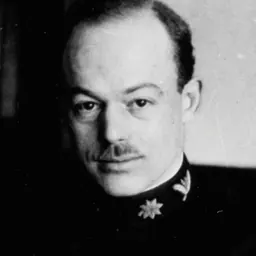
Lieutenant General Tôn Thất Đính (, ; November 20, 1926 – November 21, 2013 ) was an officer who served in the Army of the Republic of Vietnam (ARVN). He is best known as one of the key figures in the November 1963 coup that led to the arrest and assassination of Ngô Đình Diệm, the first president of the Republic of Vietnam, commonly known as South Vietnam.
A favourite of the ruling Ngô family, Đính received rapid promotions ahead of officers who were regarded as more capable. He converted to Roman Catholicism to curry favour with Diệm and headed the military wing of the Cần Lao party, a secret Catholic organization that maintained the Ngôs' grip on power. At the age of 32, Đính became the youngest ever ARVN general and the commander of the II Corps, but he was regarded as a dangerous, egotistical, and impetuous figure with a weakness for alcohol and partying.
In 1962, Đính, whom Diệm regarded as one of his most loyal officers, was appointed commander of the III Corps, which oversaw the region surrounding the capital, Saigon, making him important to the prospects of any coup. In late 1963, as Diệm became increasingly unpopular, Đính's colleagues recruited him into a coup plot by playing on his ego and pitting him against Diệm. Diệm and his brother and chief advisor Ngô Đình Nhu were aware of the plot but did not know of Đính's involvement. Nhu planned a fake coup of his own in an attempt to trap his opponents and strengthen the family's regime. Đính was placed in charge of the fake coup and sabotaged it. On November 1, the rebels' actual coup proceeded, and the Ngô brothers were deposed and executed.
After the coup, Đính became one of the 12 members of the Military Revolutionary Council (MRC), but this lasted only three months before a coup by General Nguyễn Khánh. Đính and his colleagues were put under house arrest by Khánh and falsely accused of promoting a neutralist plot. The subsequent military trial collapsed. The generals were convicted of "lax morality", but were eventually allowed to resume their military service, albeit in meaningless desk jobs. Following Khánh's exile by another group of generals, Đính was appointed to command the I Corps in 1966 and ordered to put down the Buddhist Uprising, but Prime Minister Nguyễn Cao Kỳ disapproved of his conciliatory policies. Kỳ launched a successful surprise attack against Đính, who fled, but was later captured and briefly imprisoned by Kỳ. After his release, Đính worked in the media and was elected to the Senate in 1967. He served in the upper house until the fall of Saigon in April 1975, when he fled Vietnam.
Early years Đính was born in the central highlands resort town of Da Lat on November 20, 1926, As a captain, he was made the commanding officer of the VNA's Mobile Task Force (GM 2) in Ninh Giang in northern Vietnam. After graduating at the top of a Military Staff Training Course in Hanoi, he was promoted to the rank of major and put in command of the forces in Duyên Hải, in the northern coastal province of Thái Bình, as a battalion commander.
Diệm deposed head of state Bảo Đại in a fraudulent referendum in 1955 and proclaimed himself president of the newly created Republic of Vietnam, commonly known as South Vietnam. The VNA thus became the Army of the Republic of Vietnam (ARVN). Born into a nominally Buddhist family, Đính had converted to Catholicism in the hope of advancing his career. The change in religion was widely perceived as a factor in his rapid promotion over more capable officers. A devout member of the Catholic minority, Diệm dedicated the country to the Virgin Mary and heavily disenfranchised and disadvantaged the Buddhist majority.
Đính once described himself as "fearless and arrogant" and Diệm's adopted son; the president was a lifelong bachelor. In August 1957, he was appointed commander of the 1st Division based in Huế, the old imperial capital and Cần's base. Đính served there for one year, until he became a one-star general and received a wider-reaching command in August 1958, Đính's favour among the Ngô family saw him appointed in 1958 to head the military wing of the Cần Lao, the secret organisation of Vietnamese Catholics loyal to the Ngô family that maintained the family's grip on power. and the Central Intelligence Agency labelled him a "basic opportunist". He was known for always wearing a paratrooper's uniform with a red beret at a steep angle, and being accompanied by a tall, uncommunicative Cambodian bodyguard. Senior Australian Army officer Ted Serong, who worked with Đính, called him "a young punk with a gun – and dangerous".
Xá Lợi Pagoda
In August 1958, Đính was made the commander of the II Corps, which oversaw the Central Highlands region, mainly inhabited by indigenous tribes. He was based in the mountainous town of Pleiku and oversaw the surrounding region and the lowlands to the north of the capital of Saigon. This put him in control of the 5th, 22nd, and 23rd Divisions, one-third of the divisions in the country. and said to Ngô Đình Nhu – one of Diệm's younger brothers and his chief adviser – that "the Americans have put an army at my back". Đính wrote to Diệm to complain that his units were being weakened by the policy of promoting officers for political reasons, despite having been a beneficiary himself of this non-merit-based policy. Saigon's largest. The raids involved the deployment of the 5th Division into the capital. Although the execution of the raids – which left hundreds dead – was primarily the responsibility of Colonel Lê Quang Tung, the special forces head, Đính privately took responsibility, In the aftermath of the raids, Foreign Minister Vũ Văn Mẫu resigned in protest, shaved his head like a monk, and sought to leave on a pilgrimage to India; Nhu ordered Đính to jail him. At the urging of another general, Đính put Mẫu under house arrest instead.
During this period, Đính told a dinner guest that he had the pleasure of dining with a great national hero. When the guest asked Đính where the hero was, Đính said "it is me" and claimed to have defeated the Americans. Đính's ego had been played upon by the Ngô brothers, who had themselves reiterated this point and paid him a large cash bonus after the pagoda raids. In the heady times after the attacks, Đính had a "somewhat incoherent" debate with his American advisor, claiming "he [Đính] was without doubt the greatest general officer in the ARVN, the saviour of Saigon [...] and soon he would be the top military man in the country." In a press conference after the raids, Đính claimed to have saved South Vietnam from Buddhists, communists and "foreign adventurers", a euphemism for the United States.
Defection and coup
Embarrassed by the events at the press conference, Đính returned to the officers' mess at the Joint General Staff (JGS) headquarters. The other generals told him that the people were dissatisfied with Diệm's cabinet, that Vietnam needed dynamic young officers in politics, and that their presence would reverse the declining morale in the ARVN. As Đính spent most of October in the capital plotting instead of inspecting the countryside, the VC began systematically dismantling the strategic hamlets. Nhu then decided to outwit the generals with a counterplot. The generals heard of this and decided to counteract him. The other generals were still suspicious of Đính, fearing he would betray them. Having discovered that Nhu was trying to use him to trap them and unsure of his true loyalties, they promised to make him interior minister and offered other rewards if he helped to overthrow the Ngô brothers. Exhorting them to join the coup, Có stated that all the generals were in the plot except the strong loyalist Huỳnh Văn Cao and that Đính would soon join. Nhu opposed this and stated that he wanted to keep Có alive to catch the plotters and tried to use Đính to this end. to plan a fake coup against the government. One objective was to trick dissidents into joining the false uprising so that they could be identified and eliminated. Another aim of the public relations stunt was to give a false impression of the strength of the regime. Tung would then announce the formation of a "revolutionary government" consisting of opposition activists who had not consented to joining the new administration, while Diệm and Nhu would pretend to be on the run. A fake "counter-coup" was to follow, whereupon Tung's special forces, having left Saigon on the pretext of fighting communists, as well as Đính's regulars, would triumphantly re-enter Saigon to reaffirm the Diệm regime. Nhu would then exploit the scare to round up dissidents.
Đính was put in charge of the fake coup and was allowed the additional control of the 7th Division based in Mỹ Tho, which was previously assigned to Diệm loyalist Cao, who commanded the IV Corps in the Mekong Delta. The reassignment of the 7th Division gave Đính and his III Corps complete encirclement of Saigon and would prevent Cao from storming the capital to save Diệm, as he had done during the coup attempt in 1960.
Nhu and Tung, however, were unaware that Đính was part of the real coup plot. Đính told Tung that the fake coup needed to employ an overwhelming amount of force. He said that tanks were required "because armour is dangerous". In an attempt to outwit Tung, Đính claimed fresh troops were needed, opining, "If we move reserves into the city, the Americans will be angry. They'll complain that we're not fighting the war. So we must camouflage our plan by sending the special forces out to the country. That will deceive them." When Diệm and Nhu were shot dead by the arresting officers against the orders of the generals, Đính claimed he "couldn't sleep that night". He boasted to the media that he and his troops were responsible for seizing broadcasting studios, the police headquarters, Tân Sơn Nhứt Air Base, and the release of hundreds of political prisoners such as monks and students. He also claimed that he led the successful siege on Gia Long Palace, although the 5th Division of Colonel Nguyễn Văn Thiệu had actually carried it out.
Đính saved the life of Colonel Cao Văn Viên, the commander of the Airborne Brigade, who was a Diệm loyalist. Viên's fate had been discussed during the planning phase. Đính, who played mahjong with Viên's wife, convinced Minh to spare the paratroop commander, saying that Viên would not oppose the coup. Viên was allowed to return to his command a month later, and later became the chief of JGS for eight years.
Post-Diệm Following the coup, a Military Revolutionary Council (MRC) was formed, comprising 12 generals, including Đính, each of whom had equal voting power. They appointed a cabinet mainly consisting of civilians led by Prime Minister Nguyễn Ngọc Thơ, who had been the titular Vice President under Diệm. Đính was initially made interior minister, but Thơ was said to have personally opposed the appointment. However, tension persisted as Thơ's civilian government was plagued by infighting. According to Thơ's assistant, Nguyễn Ngọc Huy, the presence of Đôn and Đính in both the civilian cabinet and the MRC paralysed the governance process. Đính and Đôn were subordinate to Thơ in the civilian government, but as members of the MRC, they were superior to him. When Thơ gave a cabinet order with which the generals disagreed, they went to the MRC and gave a counter-order. Đính and the new national police chief, General Xuân, were accused of arresting people en masse, before releasing them in return for bribes and pledges of loyalty. The junta performed indecisively and was heavily criticised, especially Minh, who was viewed as being too apathetic towards his country's situation. During the MRC's tenure, South Vietnam suffered more and more losses to the Vietcong.
Policies Đính was reported to have celebrated his new positions by making conspicuous appearances at Saigon nightclubs and dancing, having lifted Madame Nhu's ban on such activities. He reportedly kissed the bar dancers and ordered champagne for all present. Đính's brash behaviour caused public relations problems for the junta. In interviews with The Washington Post and The New York Times, he claimed that he took a leading role in the coup because "we would have lost the war under Diệm" and said that he participated "not for personal ambition, but for the population, the people and to get rid of Nhu". He claimed to have been the "specialist ... [who] gave the orders in only thirty minutes", keeping the plans "all in his head".
Đính and the leading generals in the MRC also had a secret plan to end the communist insurgency, which claimed to be independent of the government of North Vietnam. They claimed that most of them were first and foremost southern nationalists opposed to foreign military intervention and U.S. involvement and support of Diệm. The generals agreed with this viewpoint and thought that an agreement to end the war within South Vietnam was possible. The government also rebuffed American proposals to bomb North Vietnam on the grounds that such actions would cede the moral high ground, which they claimed on the basis of fighting in a purely defensive manner. However, the plans to bring the VC into the mainstream were never implemented to any degree before the government was deposed.
During his time on the MRC, Đính persistently raised eyebrows with his volatile behaviour. The Americans and his colleagues found him difficult to control. General Paul Harkins, head of the US military presence in Vietnam, advised Đính to relinquish control of III Corps on the grounds that he was already serving as interior minister and that a corps needed a full-time leader, but Đính refused. As III Corps surrounded the capital, the most economically productive region in South Vietnam, it had the most scope for corruption and graft. Đính told U.S. embassy officials in December 1963 he was preparing to "accommodate himself to a neutralist solution for Vietnam". This reportedly perturbed the Americans and was interpreted as a threat not to cooperate with the anti-communist struggle if his power was wound back. and in early January 1964, Đính was relieved by General Khiệm, who had been the head of the armed forces until he was demoted after the coup against Diệm, and he set about overthrowing the MRC.
Deposal by Nguyễn Khánh
Đính's political stay was brief, as General Nguyễn Khánh, who was disgruntled at not receiving a high position after Diệm's removal, deposed the MRC with Khiệm's support on January 30, 1964, without firing a shot. Khánh used the coup to exact retribution against Generals Đôn, Đính, Xuan and Lê Văn Kim. Khánh had them arrested, claiming that they were part of a neutralist plot with the French government of President Charles de Gaulle to make a peace deal with North Vietnam that would not end communism. Khánh noted they had all served in the French-backed VNA prior to 1955, although he had as well. The generals were flown to Mỹ Khe beach, near Đà Nẵng. The generals were interrogated for five and a half hours, mostly about details of their coup against Diệm, rather than the original charge of promoting neutralism. As all of the officers were involved in Diệm's overthrow, the hearings did not reveal any new information. The court deliberated for over nine hours, and when it reconvened for the verdict, Khánh stated, "We ask that once you begin to serve again in the army, you do not take revenge on anybody". The tribunal then "congratulated" the generals but found that they were of "lax morality" and unqualified to command due to a "lack of a clear political concept". They were chastised for being "inadequately aware of their heavy responsibility" and of letting "their subordinates take advantage of their positions". Đính's quartet were allowed to remain in Đà Lạt under surveillance. When Khánh was himself deposed in 1965, he handed over dossiers proving that Đính and the other generals were innocent and that his charges were dishonest, before going into exile. Historian Robert Shaplen said that "the case ... continued to be one of Khánh's biggest embarrassments."
1966 Buddhist protests alt=Middle-aged man with side-parted black hair and moustache, in a black suit, white shirt and brown tie. To the left is a clean-shaven Asian man with black hair and a green military cap.
With Nguyễn Cao Kỳ's rise to power – head of the Republic of Vietnam Air Force – following Khánh's departure, returned to a command role in the army. Đính was transferred from his post as Director General of Military Training, and in April 1966, he was appointed to lead I Corps in northern South Vietnam. Đính was the third commander of the corps within five weeks. This upheaval came about after the dismissal of Lieutenant General Nguyễn Chánh Thi due to his sympathies towards Buddhist activists and because Kỳ viewed him as a personal threat. In response, Buddhist protesters brought the region to a standstill with anti-American and anti-war demonstrations, some of which descended into rioting. The protests were supported by groups of rebel I Corps soldiers and the mayor of Đà Nẵng, Nguyễn Văn Man, who had been appointed by Thi. These anti-Kỳ groups formed a coalition known as the Struggle Movement. Thi's replacement, General Nguyễn Văn Chuân, refused to confront the dissidents or shut them down. He was content to allow protests provided there was no insurrection.
Kỳ disapproved of Chuân's approach and replaced Chuân with Đính. Kỳ felt Đính's aggressive attitude following the Xá Lợi Pagoda raids in 1963 indicated a willingness to suppress Buddhist dissidents. Moreover, Đính was a native of central Vietnam and would have been popular with those who thought along parochial lines. On April 19, clashes erupted in Quảng Ngãi between the Buddhists and the VNQDĐ (Vietnamese Nationalist Party), which supported the continuation of the anti-communist war, prompting Đính to forcibly restrain the two groups.
Soon after, Kỳ made a surprise attack to assert government control over central Vietnam. He flew out to Đà Nẵng with his own units, At this time, Đính was pursuing a policy of reconciliation in Đà Nẵng and negotiation with the dissident I Corps units and making contact with the Struggle Movement. Kỳ decided to attack and sent his forces to overrun Đính's headquarters on May 15, forcing the latter to abandon his post and flee to the headquarters of U.S. General Lewis Walt. Fearing Kỳ's forces would kill him, Đính asked Walt for help and was flown to Huế, where the pro-Thi and pro-Buddhist elements were still in control. Đính was then formally replaced by General Cao. Walt's assistance to Đính provoked a reaction from General William Westmoreland, the commander of U.S. forces in Vietnam. Walt and Westmoreland were often in conflict, and the latter responded to his subordinate's evacuation of Đính by imploring Kỳ to attack Huế. Kỳ eventually quelled the rebellion and briefly jailed Đính, who claimed he was incarcerated for refusing to back up Kỳ's account of the conflict with the Buddhists.
Senate career Đính left the army and, upon the nominal restoration of civilian rule, won election to the newly created Senate in 1967, as part of the Hoa Sen (Lotus) ticket. while also serving as head of the Vietnamese Publishers Association.
Fall of Saigon On April 29, a day before the fall of Saigon, Đính left for the US, initially settling in Virginia, before relocating to Garden Grove and then Westminster, in the Little Saigon area of Orange County, California. In 1998, his memoirs 20 Năm Binh Nghiệp – Hồi Ký của Tôn Thất Đính (Vietnamese: 20 Years in the Military – The Memoirs of Tôn Thất Đính) were published, but they were not launched for another 15 years until June 2013 at an event in Santa Ana that commemorated the 50th anniversary of the self-immolation of Thích Quảng Đức during the Buddhist crisis. Đính gave the keynote address at the event, which was organised and attended by several senior members of the Vietnamese American Buddhist sangha.
He died at Kindred Hospital Santa Ana on November 21, 2013, where he had been treated for several weeks, and his funeral was conducted in accordance with Buddhist tradition.
Don’t just read it —
keep it.
Full-length biographies made to live with: read them, listen on the way to work, watch them tonight.
- E-book
- Audio
- Video
Instant download · yours to keep · every purchase keeps this site free
Important facts
People in Ton That Dinh's life
Named in this biography and alive at the same time





Related people
Same field, nearest in time





Contemporaries
People whose lives overlapped Ton That Dinh's


Frequently asked questions
Who was Ton That Dinh?
South Vietnamese commander
When was Ton That Dinh born?
Ton That Dinh was born on 20 November 1926 in French Annam.
When did Ton That Dinh die?
Ton That Dinh died on 21 November 2013 in Santa Ana.
What was Ton That Dinh's occupation?
Ton That Dinh was a politician.
What nationality was Ton That Dinh?
Ton That Dinh was Vietnamese.
Sources & further reading
Cite this page
APA: Biography.guide. (2026). Ton That Dinh. https://biography.guide/ton-that-dinh-politician/
MLA: "Ton That Dinh." Biography.guide, https://biography.guide/ton-that-dinh-politician/.
Chicago: "Ton That Dinh." Biography.guide. https://biography.guide/ton-that-dinh-politician/.
Data last updated: 2026-09-20 · Spot an error? Report a correction.
Page generated 2026-09-27 04:58 UTC