
About Tom Taylor
Lived 1817 – 1880 (aged 62). Tom Taylor was a British playwright, literary critic, journalist, writer and critic.
Tom Taylor (19 October 1817 – 12 July 1880) was an English dramatist, critic, biographer, public servant, and editor of Punch magazine. Taylor had a brief academic career, holding the professorship of English literature and language at University College, London in the 1840s, after which he practised law and became a civil servant. At the same time he became a journalist, most prominently as a contributor to, and eventually editor of, Punch, a humour magazine.
In addition to these vocations, Taylor began a theatre career and became best known as a playwright, with up to 100 plays staged during his career. Many were adaptations of French plays, but these and his original works cover a range from farce to melodrama. Most fell into neglect after Taylor's death, but Our American Cousin (1858), which achieved great success in the 19th century, remains famous as the piece that was being performed in the presence of Abraham Lincoln when he was assassinated in 1865.
Life and career
Early years Taylor was born into a newly wealthy family at Bishopwearmouth, a suburb of Sunderland, in north-east England. He was the second son of Thomas Taylor (1769–1843) and his wife, Maria Josephina, née Arnold (1784–1858). His father had begun as a labourer on a small farm in Cumberland and had risen to become co-owner of a flourishing brewery in Durham. He was elected a fellow of the college in 1842 and received his MA degree the following year. Taylor was called to the bar of the Middle Temple in November 1846. He resigned his university post, and practised on the northern legal circuit until he was appointed assistant secretary of the Board of Health in 1850. On the reconstruction of the board in 1854 he was made secretary, and on its abolition in 1858 his services were transferred to a department of the Home Office, retiring on a pension in 1876. Between 1844 and 1846, the Lyceum Theatre staged at least seven of his plays, including extravanzas written with Albert Smith or Charles Kenney, and his first major success, the 1846 farce To Parents and Guardians. The Morning Post said of that piece, "The writing is admirable throughout – neat, natural and epigrammatic". It was as a dramatist that Taylor made the most impression – his biographer in the Dictionary of National Biography (DNB) wrote that in writing plays Taylor found his true vocation. In thirty-five years he wrote more than seventy plays for the principal London theatres.
Like his colleague W. S. Gilbert, Taylor believed that plays should be readable as well as actable; he followed Gilbert in having copies of his plays printed for public sale. Both authors did so at some risk, because it made matters easy for American pirates of their works in the days before international copyright protection. Taylor wrote, "I have no wish to screen myself from literary criticism behind the plea that my plays were meant to be acted. It seems to me that every drama submitted to the judgment of audiences should be prepared to encounter that of readers".
Many of Taylor's plays were extremely popular,
Personal life Howes records that Taylor was described as "of middle height, bearded [with] a pugilistic jaw and eyes which glittered like steel". Known for his remarkable energy, he was a keen swimmer and rower, who rose daily at five or six and wrote for three hours before taking an hour's brisk walk from his house in Wandsworth to his Whitehall office.
Terry's frequent stage partner, Henry Irving said that Taylor was an exception to the general rule that it was helpful, even though not essential, for a dramatist to be an actor to understand the techniques of stagecraft: "There is no dramatic author who more thoroughly understands his business".
In 1855 Taylor married the composer, musician and artist Laura Wilson Barker (1819–1905). She contributed music to at least one of his plays, an overture and entr'acte to Joan of Arc (1871), and harmonisations to his translation Ballads and Songs of Brittany (1865). There were two children: the artist John Wycliffe Taylor (1859–1925) and Laura Lucy Arnold Taylor (1863–1940). Taylor and his family lived at 84 Lavender Sweep, Battersea, where they held Sunday musical soirees. Celebrities who attended included Lewis Carroll, Charles Dickens, Henry Irving, Charles Reade, Alfred Tennyson, Ellen Terry and William Makepeace Thackeray.
Taylor died suddenly at his home in 1880 at the age of 62 and is buried in Brompton Cemetery.
Selected bibliography
Valentine and Orson, 1844 Whittington and his Cat, 1844 Cinderella, 1844 A Trip to Kissingen, 1844 To Parents and Guardians, 1845 Diogenes and his Lantern, 1849 The Vicar of Wakefield, 1850 The Philosopher's Stone, 1850 Prince Dorus, 1850 Our Clerks, 1852 Wittikind and his Brothers, 1852 Plot and Passion, 1853 A Nice Firm, 1853 The King's Rival, 1854 Masks and Faces, 1854 To Oblige Benson, 1854 Two Loves and a Life, 1854 Still Waters Run Deep, 1855 Helping Hands, 1855 Retribution, 1856 Victims, 1857 A Sheep in Wolf's Clothing, 1857 An Unequal Match, 1857 Our American Cousin, 1858 Going to the Bad, 1858 New Men and Old Acres, 1859 A Tale of Two Cities, 1859 Barefaced Impostors, 1859 The Contested Election, 1859 Nine Points of the Law, 1859 The Overland Route, 1860 Up at the Hills, 1860 The Babes in the Wood, 1860 The Ticket-of-leave Man, 1863 Sense and Sensation, 1864 Henry Dunbar, 1865 The Sister's Penance, 1866 The Fool's Revenge, 1869 Mary Warner, 1869 The Babes in the Wood, 1870 Twixt Axe and Crown, 1870 The Hidden Hand, 1870 Joan of Arc, 1871 Arkwright’s Wife, 1873 Lady Clancarty, 1874 Anne Boleyn, 1875 Settling Day, 1877
Source: Dictionary of National Biography.
Don’t just read it —
keep it.
Full-length biographies made to live with: read them, listen on the way to work, watch them tonight.
- E-book
- Audio
- Video
Instant download · yours to keep · every purchase keeps this site free
Important facts
People in Tom Taylor's life
Named in this biography and alive at the same time
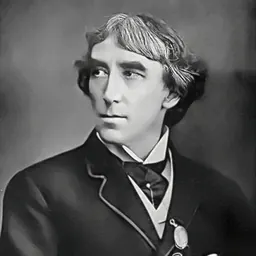

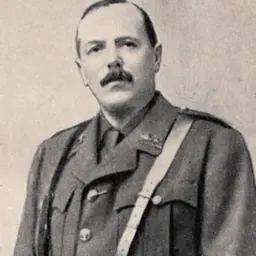

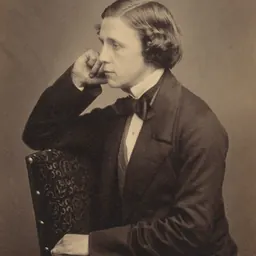

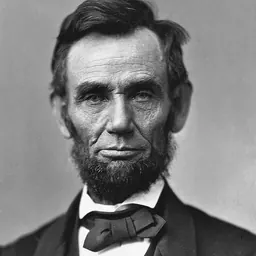
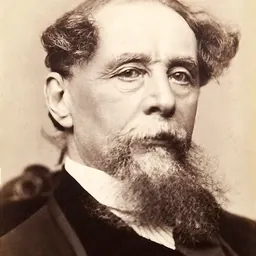
Related people
Same field, nearest in time

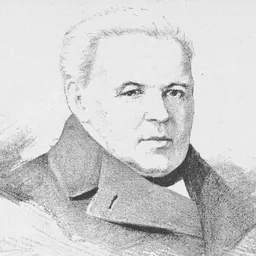
Contemporaries
People whose lives overlapped Tom Taylor's

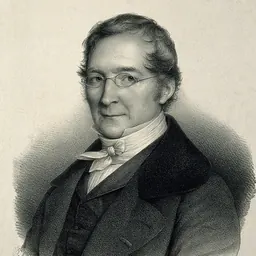

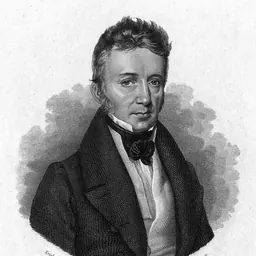
Frequently asked questions
Who was Tom Taylor?
English playwright (1817-1880)
When was Tom Taylor born?
Tom Taylor was born on 19 October 1817.
When did Tom Taylor die?
Tom Taylor died on 12 July 1880 in London.
What was Tom Taylor's occupation?
Tom Taylor was a playwright, literary critic, journalist, writer and critic.
What nationality was Tom Taylor?
Tom Taylor was British.
Sources & further reading
Cite this page
APA: Biography.guide. (2026). Tom Taylor. https://biography.guide/tom-taylor-playwright/
MLA: "Tom Taylor." Biography.guide, https://biography.guide/tom-taylor-playwright/.
Chicago: "Tom Taylor." Biography.guide. https://biography.guide/tom-taylor-playwright/.
Data last updated: 2026-09-20 · Spot an error? Report a correction.
Page generated 2026-09-27 05:31 UTC