
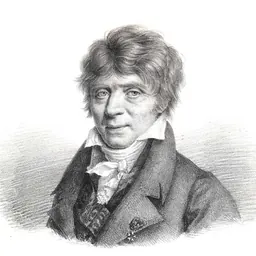
Alexander Griboyedov
Russian diplomat, playwriter, poet, and composer
About Alexander Griboyedov
Lived 1795 – 1829 (aged 34). Alexander Griboyedov was a Russian playwright, poet, diplomat, pianist, composer and writer.
Alexander Sergeyevich Griboyedov (; 15 January 179511 February 1829) was a Russian diplomat, playwright, poet, and composer. His one notable work is the 1823 verse comedy Woe from Wit. He was Russia's ambassador to Qajar Persia, where he and all the embassy staff were massacred by an angry mob in the aftermath of the ratification of the Treaty of Turkmenchay, which confirmed the cession to Russia of Persia's northern territories comprising Transcaucasia and parts of the North Caucasus. Griboyedov played a pivotal role in the ratification of the treaty. The immediate cause for the incident was Griboyedov giving refuge to Armenians who had escaped from the harems of the Persian shah and his son.
Early life Griboyedov was born in Moscow, the exact year unknown, with biographers debating whether it was in 1790 or 1795. His mother who dreamed of providing him with a career made sure Griboyedov received the best education.
He received a master's degree in philology from Moscow University, and subsequently enrolled in the doctorate program. Griboyedov was fluent in all major European languages such as French, English, German, Italian, Greek, Latin, and mastered oriental languages like Arabic, Persian and Turkish. According to Pushkin Griboyedov was one of the smartest people in Russia at the time. He obtained a commission in a hussar regiment, which he resigned in 1816. The next year, he entered the civil service. In 1818, he was appointed secretary of the Russian legation in Persia, and transferred to Georgia.
He possessed musical talent, played the piano and composed several waltzes. Only two of his waltzes survive to the present day, although it is recorded that he composed several, including vaudevilles in association with stage plays. He is best known for his literary compositions and poetic verses.
His verse comedy The Young Spouses (, Molodye Suprugi), loosely based on a French play by Auguste Creuzé de Lesser, which Griboyedov staged in Saint Petersburg in 1816, was followed by other similar works, mostly either translated or co-authored with more experienced writers of the day. Neither these nor his essays and poetry would have been long remembered but for the success of his verse comedy Woe from Wit (, Gore ot uma), a satire on Russian aristocratic society. The first edition was not published until 1833, four years after his death. Only once did he see it on the stage, when it was performed by the officers of the garrison at Yerevan. Soured by disappointment, he returned to Georgia. During the Russo-Persian War of 1826–1828, he put his linguistic expertise at the service of general Ivan Paskevich, a relative. After this, he was sent to Saint Petersburg where he worked on the Treaty of Turkmenchay negotiations. There, thinking to devote himself to literature, he started work on a romantic drama, A Georgian Night (, Gruzinskaya noch), based on Georgian legends.
Grioboyedov was regarded as a "very good musician" by the likes of Mikhail Glinka, and had routine salons at his residence which were attended by many musical luminaries of his time, although relatively minor in the contemporary decade, including Vladimir Odoevsky, Alexander Alyabyev, Mikhail Vielgorsky, and Alexey Verstovsky.
Out of work as a composer, only two compositions survive to the present, those being his two waltzes in A-flat major and E minor. He is known to have composed the musical score to the opera-vaudeville (or operetta) called "Who is a Brother, Who is a Sister, or Deception for Deception" (1824), written by the composer himself in collaboration with Pyotr Vyazemsky.
Death Monument erected in Soviet times near Gargar village, Armenia commemorating the location where Alexander Pushkin (on his way to meet his brother) stopped the carriage with Alexander Griboyedov's body being transported to Tiflis. An inscription in Russian and Armenian says: "Here A. S. Pushkin saw the body of A. S. Griboyedov". Memorial stone for A. S. Griboyedov in the Armenian St Thaddaeus Church, Tehran, Iran
Several months after his wedding to Nino, the 16-year-old daughter of his friend Prince Chavchavadze, Griboyedov was suddenly sent to Persia as Minister Plenipotentiary. In the aftermath of the Russo–Persian War of 1826–1828 and the humiliating Treaty of Turkmenchay, there was strong anti-Russian sentiment in Persia. Upon arrival in Tehran, the Order of the Lion and the Sun was conferred on him. Soon after Griboyedov's arrival, a mob stormed the Russian embassy.
The incident began when an Armenian eunuch escaped from the harem of the Persian shah, and at the same time two enslaved Armenian women escaped from the harem of the Shah's son-in-law. All three sought refuge at the Russian legation. As agreed in the Treaty of Turkmenchay, Georgians and Armenians living in Persia at that time were permitted to move to Russian-controlled Georgia and Eastern Armenia. However, the Shah demanded that Griboyedov return the three escapees. Griboyedov refused. His decision caused an uproar throughout the city and several thousand Persians encircled the Russian compound demanding their release.
Soon after, urged on by the mullahs, the mob stormed the building. A high-ranking Muslim scholar, Mirza Masih Astarabadi, issued a fatwa saying that freeing Muslim women from the claws of unbelievers is allowed.
Griboyedov and other members of his mission had prepared for a siege and sealed all the windows and doors. Armed and in full uniform, they were resolved to defend to the last drop of blood. Although small in number, the Cossack detachment assigned to protect the legation held off the mob for over an hour until finally being driven back to Griboyedov's office. There, Griboyedov and the Cossacks resisted until the mob broke through the roof of the building, and then through the ceiling, to slaughter them. The escaped eunuch and Griboyedov, who fought with his sword, were among the first to be shot to death; the fate of the two Armenian women remains unknown. Second secretary of the mission Karl Adelung and, in particular, a young doctor whose name is not known, fought hard, but soon the scene was one of butchered, decapitated corpses.
Griboyedov's body, thrown from a window, was decapitated by a kebab vendor who displayed the head on his stall. The Shah also gifted to the Tsar the Shah Diamond.
Russian sources claim that His wife had written on his tombstone in Tiflis: "Your mind and works are immortal in Russian memory, but why has my love outlived you?" Tbilisi has a theater named after A. S. Griboyedov, a monument (author - M. K. Merabishvili).
Museum The State Historical, Cultural and Natural Museum-Reserve of A. S. Griboyedov "Khmelita" in Vyazemsky District, Smolensk Oblast, Russia. In Crimea, in the Red Cave (Kizil-Koba), a gallery is named in honor of A. S. Griboyedov's stay.
Libraries Library of National Literature named after A. S. Griboyedov in Saint Petersburg. The Central Library named after A. S. Griboyedov of the Centralized Library System #2 of the Central Administrative District of Moscow. On the 100th anniversary of the founding of the library, a memorial museum was opened in it, giving A. S. Griboyedov award there.
Other Yury Tynyanov wrote the novel The Death of Vazir-Mukhtar (1928) about the last years of Griboyedov's life On April 22, 2014, in Saint Petersburg, the Grand Lodge of Russia created the Lodge of A. S. Griboyedov (No. 45 in the register of VLR). Secondary school No. 203 named after A. S. Griboyedov in St. Petersburg. Annual the Moscow City Humanitarian Conference called "Griboyedov readings" for research and design work of students. Moscow gymnasium No. 1529 named after A. S. Griboyedov. In Moscow there is a higher educational institution - Institute of International Law and Economics named after A. S. Griboyedov. Scholarship named after A. S. Griboyedov, established by the Academic Council of Lomonosov Moscow State University. The Airbus 330-243 (VQ-BBF) aircraft of Aeroflot Airlines is named after A.S. Griboyedov. In 1995, the Central Bank of Russia issued a coin (2 rubles, silver 500) from the series "Outstanding Personalities of Russia" with the image on the reverse of the portrait of A. S. Griboyedov - on the occasion of the 200th anniversary of his birth. Medal "A. S. Griboedov, 1795-1829" that was established by the Moscow City Organization of the Union of Writers of the Russian Federation and is awarded to writers, prominent philanthropists and famous publishers for their ascetic activities for the benefit of Russian culture and literature. The Soviet Union released two stamps depicting Griboyedov: 125th Death Anniversary of Alexander Griboyedov stamp (issued in 1954 ) and a stamp from the Russian Writers series (issued in 1959
Compositions
Waltzes Waltz in E minor Waltz in A-flat major
Opera 1824: Who is a Brother, Who is a Sister, or Deception for Deception (Wrote the accompanying score to the stage play by the composer and P. A. Vyazemsky)
Don’t just read it —
keep it.
Full-length biographies made to live with: read them, listen on the way to work, watch them tonight.
- E-book
- Audio
- Video
Instant download · yours to keep · every purchase keeps this site free
Important facts
Family & relationships
People in Alexander Griboyedov's life
Named in this biography and alive at the same time

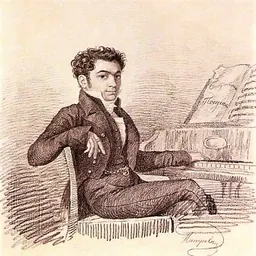
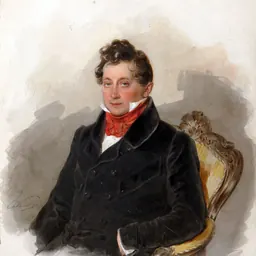
Related people
Same field, nearest in time

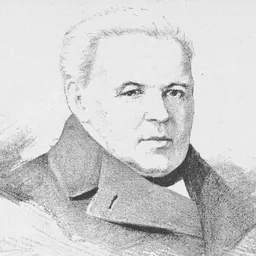
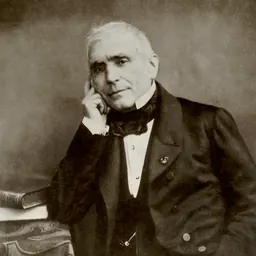

Contemporaries
People whose lives overlapped Alexander Griboyedov's




Frequently asked questions
Who was Alexander Griboyedov?
Russian diplomat, playwriter, poet, and composer (1795–1829)
When was Alexander Griboyedov born?
Alexander Griboyedov was born on 4 January 1795 in Moscow.
When did Alexander Griboyedov die?
Alexander Griboyedov died on 30 January 1829 in Tehran.
What was Alexander Griboyedov's occupation?
Alexander Griboyedov was a playwright, poet, diplomat, pianist, composer and writer.
What nationality was Alexander Griboyedov?
Alexander Griboyedov was Russian.
Sources & further reading
· Wikipedia: Alexander Griboyedov
· DBpedia: Alexander Griboyedov
Cite this page
APA: Biography.guide. (2026). Alexander Griboyedov. https://biography.guide/alexander-griboyedov/
MLA: "Alexander Griboyedov." Biography.guide, https://biography.guide/alexander-griboyedov/.
Chicago: "Alexander Griboyedov." Biography.guide. https://biography.guide/alexander-griboyedov/.
Data last updated: 2026-09-20 · Spot an error? Report a correction.
Page generated 2026-09-27 05:23 UTC