
About Tom Pritchard
Lived 1883 – 1964 (aged 81). Tom Pritchard was a Filipino restaurateur and chef.
Thomas Pritchard (July 11, 1883 – July 27, 1964) was an Afro-Caribbean restaurateur and chef who founded the Manila restaurant Tom's Dixie Kitchen in 1916.
Born on the island of Grenada in the British West Indies, Pritchard entered a three-year period of indentured servitude aboard a U.S. merchant ship to gain American citizenship in 1902. It is unclear if he ever received citizenship. In 1906, he joined the U.S. Army Transport Service as a cook for the American sailors supplying American soldiers fighting in the Philippine–American War. He entered the commercial restaurant business in 1911, soon founding Tom's Dixie Kitchen in Plaza Goiti (now Plaza Lascon). Pritchard sometimes falsely presented himself as being an African American Southerner, and the restaurant was partly advertised on that premise.
Tom's Dixie Kitchen initially featured only soul food on its menu, before expanding to also offer a wide variety of food. It also featured jazz music. The restaurant saw great success and it is credited with popularizing Southern fried chicken in the Philippines. It was frequented by many Filipinos and white Americans, and also by the American and Filipino elite. The restaurant became a hotbed of political discourse. In 1927, Pritchard expanded his business with the opening of another restaurant targeted at the elite, Tom's Oriental Grill. Pritchard regularly appeared in African American newspapers, which celebrated his success.
During World War II, the Empire of Japan invaded and occupied the Philippines; Pritchard was one of the few foreigners to avoid prolonged imprisonment and his restaurants were some of the few popular restaurants to remain open, although they were diminished. Various explanations have been put forward for why Pritchard avoided imprisonment. During the war, he smuggled food to foreigners imprisoned at Santo Tomas Internment Camp and also provided food and funds to Filipinos and the guerrilla resistance. His restaurants were destroyed during the Battle of Manila in 1945. Pritchard's wife, Mary, was a Filipino mestiza and they had three children; after the war, Pritchard's family left the Philippines, but he decided to remain. He founded more restaurants after the war, but they saw little success. Pritchard was effectively stateless after the Philippines gained its independence in 1946. The Philippine Supreme Court voted unanimously to grant him citizenship in 1948.
Early life There are no independent accounts or documents of Pritchard's life before he arrived in the Philippines. At various points, Pritchard lied or lied by omission about various aspects of his early life. As a result of his lies and acquaintances making erroneous assumptions, various details about his origin were frequently misreported. The following account of his life before arriving in the Philippines is primarily based on sworn testimony delivered before the Philippine Supreme Court in 1948. The Philippine Supreme Court found no reason to disbelieve the testimony and accepted it as truth. It was also the primary basis of a 2018 account of his life.
Thomas Pritchard was born on July 11, 1883, on the island of Grenada, then part of the British West Indies. His grandparents had probably been enslaved at sugar plantations until the Slavery Abolition Act 1833 abolished slavery in most of the British Empire. In his youth, Pritchard likely took part in the exploitation of nutmeg, which had largely supplanted sugar to become Grenada's primary cash crop. Pritchard and his family left Grenada in 1900, moving to Barbados. The Caribbean had recently been destabilized after the United States took Cuba and Puerto Rico from Spain in the Spanish–American War. The move to Barbados may have been the result of this destabilization, either because it displaced the family or because they sought greater access to the U.S., which Barbados had closer ties to. In 1902, an American merchant ship came to Bridgetown, Barbados. Pritchard signed a contract of indentured servitude to become a cook onboard it for three years, after which he would gain American citizenship.
The ship came to New York, where Pritchard said he filed paperwork signifying his intention to become an American citizen. He may have spent some time in Virginia. He then briefly came to San Francisco, the largest city on the U.S. Pacific Coast. In 1906, while in San Francisco, he joined the U.S. Army Transport Service as a civilian contractor. According to Pritchard, he left the paperwork proving his American citizenship in San Francisco and it was promptly destroyed in the 1906 San Francisco earthquake and fire. During the Philippine–American War, many Filipinos starved and many American servicemen, particularly African American servicemen, suffered from malnutrition. Pritchard served as a cook on a Transport Service vessel, feeding the sailors bringing food to the American soldiers suffering from malnutrition. Pritchard later recalled that he was aboard the USAT Sheridan when it ran aground in Hawaii in August 1906. In 1911, Pritchard ended his maritime service and settled in the Philippines.
Pritchard came to work at Clarke's Place on Escolta Street, in downtown Manila. Clarke's was a restaurant and ice cream parlor run by the American businessman Metcalfe A. Clarke and it was popular with Americans. The restaurant was home to a large oval table where many of Manila's leading businessmen met daily for coffee and lunch, discussing and debating politics. Pritchard was head chef at the restaurant. Pritchard proposed a "daily 'home-cooked' luncheon course", which gained him a loyal following. Clarke had provided the capital to found the Benguet Consolidated Mining Company, which included mortgaging his assets, including the restaurant. Clarke lost his investment and the restaurant was liquidated by the Bank of the Philippine Islands. The businessmen purchased the oval table they sat around at the liquidation sale.
Tom's Dixie Kitchen In 1916, Pritchard founded the restaurant Tom's Dixie Kitchen. The restaurant was open 24 hours a day every day. As indicated by the restaurant's name, Pritchard sometimes falsely presented himself as being African American. Some people were aware of his true origins in the Caribbean, probably because of his accent, but they came to the mistaken conclusion that he was Jamaican.
The round table that existed at Clarke's moved into Tom's Dixie Kitchen, for a time. A. V. H. Hartendorp, a Thomasite and newspaper owner, recalled that there were various round tables reserved for various groups, such as bureaucrats, legislators, businessmen, actors, and one for sportswriters and sports-fans. Pritchard also employed two African American assistants , Chester Canders and Philip McCullough, both veterans of World War I. Pritchard would later promote boxing at his restaurant, selling tickets to bouts, and he probably helped facilitate a visit to the Philippines by Joe Louis.
The restaurant expanded to take over nearly the whole block it was on, which Pritchard said occurred in 1926. In 1928, Pritchard said he had 12 cooks, 40 waiters, and 1,200 average daily customers. On May 10, 1941, for the first moment in its 25 years of operation 24 hours a day every day, Tom's Dixie Kitchen shut down. Earlier in the day, 50 waiters at the restaurant started a sitdown strike. Pritchard shut down the restaurant, which the strikers characterized as a lockout and sought an order to reopen the restaurant; Pritchard said that he shut it down because business was poor. The waiters said the strike was in protest to what they saw as abuses by C. Hendricks, the manager. Pritchard said it was because he had fired two waiters and that it was instigated by an ex-employee he had fired years prior. The restaurant popularized Southern fried chicken in the Philippines. It also served processed food originating from the United States, such as Grape-Nuts, shredded wheat, and corn flakes. The restaurant offered sugary desserts, such as pumpkin pie, chocolate éclairs, ice cream, and milk shakes. Despite being a colony of the United States, the Philippines was not under prohibition and Tom's Dixie Kitchen sold alcohol. It offered a wide variety of alcohol, such as Holland gin fizz, French rum, German goldwasser, Japanese beer, Italian wines, Australian wines, Canadian whisky, and Irish scotch.
Tom's Dixie Kitchen featured jazz music. At his dance floor, African-American dance was frequently performed to jazz. The restaurant had an orchestra. It probably contained multiple African American musicians, with some probably being trained by Pritchard's friend Walter Loving. The orchestra was also broadcast on the radio.
Clientele
Tom's Dixie Kitchen attracted a diverse clientele from a wide cross-section of colonial Filipino society. Many white Americans were attracted to the restaurant by it and Pritchard's African American-ness, which would have felt familiar to the United States in the faraway Philippines. Filipino diners, unfamiliar with and intrigued by soul food, also came to the restaurant. Pritchard advertised the restaurant as "where new comers and old timers get together", and issued targeted advertisements at disparate groups, such as American serviceman and rural Filipinos.
Tom's Dixie Kitchen also catered. He was the preferred caterer of various elite clubs, such as the Manila Jockey, It was targeted at the elite and featured a wide variety of rooms themed on Asian locales. The Filipino and Chinese mestizo elite saw themselves as more cultured than the American elite, which Pritchard reciprocated by putting an Asian-themed restaurant above his American-themed restaurant. Hartendorp recalled the restaurant as being more for private dinners and large parties. The rooms were themed around Singapore, Siam (Thailand), Java (an island in Indonesia), Turkey, the Philippine district of Cebu, and the Philippine district of Iloilo. Pritchard had furniture and various decals in the rooms imported from various countries. The restaurant also featured a "'Devil's' room" that was clad in "passionate red" and probably catered to the sex trade. One reviewer observed that the only thing Western in the restaurant was the jazz music.
The restaurant appears to have had a partially segregated workforce, with Filipino ushers and Chinese mestizo waiters. At least one incident of political violence occurred at Tom's Dixie Kitchen. In 1926, after one American patron declared his support for Filipino independence, another assaulted them into the hospital. In a December 1935 diary entry, former Governor-General Francis Burton Harrison, an advisor to President Manuel L. Quezon, wrote that Quezon said he was informed of the political goings-on because he had three agents at Tom's Dixie Kitchen. It is not clear what Pritchard did, if anything, with his influence among the American elite.
Public figures gathered at Tom's Dixie Kitchen to discuss politics in hourlong debates that were often lively. After visiting the restaurant, journalists frequently immediately returned to their offices to write articles. Filipino writer Paz Márquez-Benítez asked Pritchard's approximation of public opinion on Philippine independence and dominionhood, as he was considered well-informed about politics and in touch with diverse portions of Filipino society. In a 1934 interview with The Honolulu Advertiser, Pritchard declined to comment on the issue of Philippine independence. During Congressional hearings on independence, his restaurant was cited as an argument for the Philippines being capable of self-governance. Guy Emerson Mount called Tom's Dixie Kitchen Manila's version of Paris's Café de Flore. John F. Cragwell, an African American man visiting Manila who stayed with Pritchard, Loving, and James Henry Fitzbutler (son of William Henry Fitzbutler), wrote an article on their success in the Seattle Enterprise, and it was further syndicated to the Topeka Plaindealer. Pritchard's establishments were favorably compared to Rector's, The College Inn, and the Cotton Club, the last being one of the central locations of the Harlem Renaissance. At least 50 "American Negros" were recorded as prisoners at STIC in November 1944. Pritchard and his family avoided imprisonment. Pritchard's friends provided multiple explanations for why the Japanese released him: Hartendorp thought that it was because he was born in Jamaica (He was not.) Jamaica was also part of the British West Indies. Some people were aware of his true origins in the Caribbean, probably because of his accent, but they mistakenly assumed he was Jamaican. and Luz noted that "the Japanese were most sympathetic with American colored people because they new the racial antagonism that existed between the whites and the colored". When asked why, Pritchard said "I never knew whether or not the Ambassador told them to forget about me and I had better sense than to ask questions."
Tom's Dixie Kitchen was one of the few popular restaurants to remain open, although its menu variety and quality suffered greatly, while its prices increased dramatically. Hartendorp said that a meal at Tom's Dixie Kitchen cost 75 pesos and was a fourth as big as it was pre-war. Pritchard recalled that Japanese authorities came to his home twice to arrest him, but he was not there and they had left by the time he returned, with Pritchard saying an unknown person had called them off. however American artillery, tank power, and air power were indiscriminate and bombed large portions of the city, possibly destroying the building. Pritchard's mansion in the Santa Mesa neighborhood of Manila survived the battle.
Thomas Pritchard v. The Republic of the Philippines On July 4, 1946, the Philippines gained its independence from the United States. As a result of his application to become an American citizen, Pritchard had probably forfeited his status as a British subject under the British Nationality and Status of Aliens Act 1914. It is unclear if Pritchard immediately gained American citizenship once the criteria in his application had been met, or if he was required to do more paperwork. Regardless, Pritchard did not have the application or any proof that he had met the criteria. When Pritchard came to the Philippines, there were effectively no immigration controls and so his effective statelessness did not matter. To become a naturalized citizen of the Philippines after 1939, a person was required to show the permanent resident alien form given when a person came to the Philippines; such a form did not exist when Pritchard came to the Philippines in 1911. As a result of the Philippines gaining its independence, Pritchard's statelessness was now relevant and he effectively became an illegal alien.
On January 22, 1947, Pritchard filed a naturalization petition in the Court of First Instance in Manila. His petition faced no opposition. On August 29, 1947, after taking evidence, the court granted Pritchard's application. On September 27, 1947, the Philippine Solicitor General appealed, and the case was remanded to the Philippine Supreme Court. It is not known why the solicitor general appealed. It was one of the first cases dealing with Philippine citizenship to come before the high court after independence. Pritchard's attorney was Quintín Paredes and in the ensuing trial Pritchard delivered testimony to prove his suitability for citizenship, with three friends providing corroborating testimony: Felixberto G. Bustos, Victor Buencamino, and Arsenio Luz. Pritchard testified that his children had been educated in Philippine schools, a legal requirement. William attended San Francisco State College. Rosemary married Ralph Bradley in Berkeley, California, in 1948; the wedding was reported on by the Pittsburgh Courier, and she later moved to Massachusetts. In 1949, Pritchard visited the United States by way of a trans-Pacific cruise aboard the SS President Cleveland. During a stop in Tokyo, Pritchard wired MacArthur, then Supreme Commander for the Allied Powers supervising the rebuilding of occupied Japan, and asked to speak with him. MacArthur arranged a private car to pick up Pritchard, and Pritchard recalled that they talked about Luz, Rogers, and other friends in the Philippines.
In May 1945, Pritchard opened a new restaurant in his home, Tom's Club Cabin. On January 17, 1953, Pritchard opened a new restaurant and cocktail lounge, Tom's Log Cabin, which had the same menu as Tom's Dixie Kitchen. It was located in Pasay City, along Lourdes Street and Dewey Boulevard (now Roxas Boulevard). at the age of 81, from type 2 diabetes.
Don’t just read it —
keep it.
Full-length biographies made to live with: read them, listen on the way to work, watch them tonight.
- E-book
- Audio
- Video
Instant download · yours to keep · every purchase keeps this site free
Important facts
People in Tom Pritchard's life
Named in this biography and alive at the same time


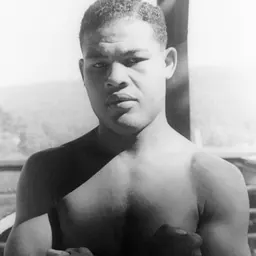
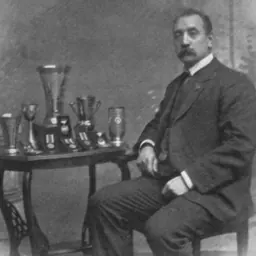
Related people
Same field, nearest in time
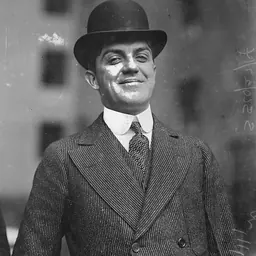


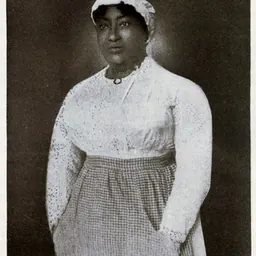

Contemporaries
People whose lives overlapped Tom Pritchard's

Frequently asked questions
Who was Tom Pritchard?
Manila-based restauranteur
When was Tom Pritchard born?
Tom Pritchard was born on 11 July 1883 in Grenada.
When did Tom Pritchard die?
Tom Pritchard died on 27 July 1964 in Manila.
What was Tom Pritchard's occupation?
Tom Pritchard was a restaurateur and chef.
What nationality was Tom Pritchard?
Tom Pritchard was Filipino.
Sources & further reading
· DBpedia: Tom Pritchard (restaurateur)
Cite this page
APA: Biography.guide. (2026). Tom Pritchard. https://biography.guide/tom-pritchard/
MLA: "Tom Pritchard." Biography.guide, https://biography.guide/tom-pritchard/.
Chicago: "Tom Pritchard." Biography.guide. https://biography.guide/tom-pritchard/.
Data last updated: 2026-09-20 · Spot an error? Report a correction.
Page generated 2026-09-27 05:34 UTC