
About Walter Loving
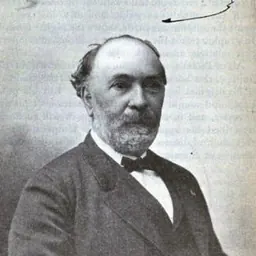
Lived 1872 – 1945 (aged 72–73). Walter Loving was an American musician.
Walter Howard Loving (December 17, 1872 – February/March 1945) was an African American soldier and musician most noted for his leadership of the Philippine Constabulary Band. The son of a former slave, Loving led the band during the 1909 U.S. presidential inaugural parade, where it formed the official musical escort to the President of the United States, the first time a band other than the U.S. Marine Band had been assigned that duty.
Loving is believed to have been the first African American to conduct a musical performance in the White House.
In addition to his long career in military music, Loving also worked with the U.S. Army's intelligence division during World War I, and, in private life, as a real estate investor in the San Francisco Bay area. Toward the end of his life he returned to the Philippines. Loving was killed in 1945 during the Battle of Manila in dramatic, though unclear, circumstances. He posthumously received the Philippines' Presidential Merit Award.
Early life and education Born outside Lovingston, Virginia, in 1872, Loving was the son of a former slave. He spent his early childhood living with his parents and an extended family of fourteen relatives. At age ten, Loving moved to Minnesota and into the home of Charles Eugene Flandrau, who employed Loving's sister Julia as a maid. He and Julia later relocated with the Flandrau family to South Dakota. Family legend claims Loving was tutored in mathematics by Theodore Roosevelt when the future president stayed at the Flandrau home in 1886. According to Loving's biographer Robert Yoder, Loving may have viewed Flandrau as a sort-of father figure. It is known that he attended elementary school with Flandrau's son, Charles Macomb Flandrau, and believed that Flandrau financed Loving's later education at the Preparatory High School for Negro Youth in Washington, DC and, subsequently, the New England Conservatory of Music.
Career
Philippine Constabulary Band In 1902 Loving was tapped to organize the Philippine Constabulary Band on the recommendation of Governor-General of the Philippines William Howard Taft, who had earlier heard Loving's 45th regimental band perform. Loving, who had learned both Spanish and Tagalog during his brief time in the Philippines, developed an instant rapport with his bandsmen. The U.S. military periodical Army and Navy Life described the band as "one of the finest of all military bands in the world," while the Pacific Coast Musical Review, opined that "the Philippine Constabulary Band is in a class by itself." Walter Loving is seated on the far right in this 1908 photograph picturing several prominent African American U.S. colonial officials in the Philippines. The Philippine Constabulary Band was the lead unit in the United States presidential inaugural parade of 1909, which saw its former patron William Howard Taft inaugurated as President of the United States. It was the first time a band other than the United States Marine Band served as the musical escort to the President of the United States. The Philippine Constabulary Band assembles prior to the 1909 U.S. presidential inaugural parade. The day after the inauguration the band was invited to perform for the president and Mrs. Taft at the White House, becoming the first band in history from outside the continental United States to perform at a White House reception. David Levering Lewis has called Loving "one of the Army's most effective wartime undercover Negro agents."
Later, Loving would be tasked with touring the United States to inspect the conditions of race relations at U.S. Army camps. His final report observed that African American soldiers were best treated and most effectively integrated into military units when white officers from the western United States and northeastern United States held command and he recommended to the Army that white officers from the southern United States not be permitted to lead units with black soldiers. Loving also attacked the Army's racial policies pertaining to non-commissioned officers, noting that,
Return to Manila and second retirement Following the end of hostilities, Loving returned to the Philippines and resumed command of the Philippine Constabulary Band for three years before retiring a second time, moving with his wife, Edith, to Oakland, California. In Oakland, Loving found success in real estate speculation. Because attitudes in Oakland at the time made African American ownership of property in some portions of the city problematic, Loving would dress in a chauffeur's uniform and drive Edith, who had a light complexion and could be mistaken for Caucasian, to view property. A third account relayed in a 1945 Associated Negro Press story says that Loving was shot in the back by retreating Japanese troops. Mortally wounded, he crawled from the Manila Hotel to the battered bandstand at Luneta Park, the site of many of the Philippine Constabulary Band's performances, and died.
In 1952, Loving was posthumously awarded the Presidential Merit Medal by the Government of the Philippines during a ceremony at Luneta during which his final composition, Beloved Philippines, was performed. Loving was also the recipient of the Distinguished Conduct Star, the second-highest military honor of the Philippines, and the United States' Philippine Campaign Medal, the latter given for his service during the Philippine–American War.
Personal life Loving married his wife, Edith, in 1916 and had one son, Walter.
During the course of his life, Loving took an interest in politics, supporting both Republican and Democratic candidates. During the 1916 United States presidential election, Loving requested his former patron, Taft, introduce him to Republican presidential candidate Charles Evans Hughes, with whose campaign he sought to volunteer. Taft, however, declined in a letter, explaining he did not feel it was appropriate for him to offer such an introduction to a political candidate (in that letter, Taft also expressed to Loving his regret that "you are no longer at the head of the Constabulary Band which was largely your creation.") Loving also campaigned for Isabella Selmes Greenway, the granddaughter of Charles Flandrau, during her 1932 congressional race in Arizona.
Don’t just read it —
keep it.
Full-length biographies made to live with: read them, listen on the way to work, watch them tonight.
- E-book
- Audio
- Video
Instant download · yours to keep · every purchase keeps this site free
Important facts
People in Walter Loving's life
Named in this biography and alive at the same time

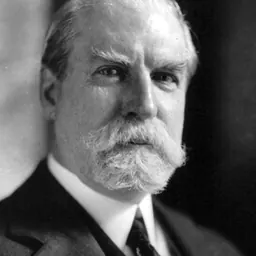

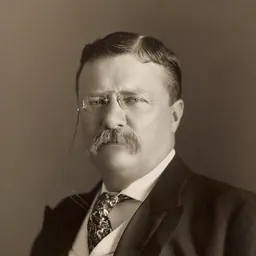

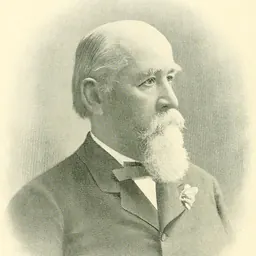
Related people
Same field, nearest in time
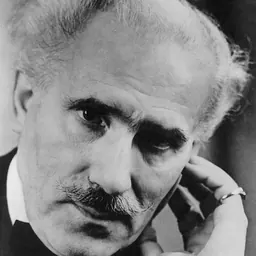



Contemporaries
People whose lives overlapped Walter Loving's

Frequently asked questions
Who was Walter Loving?
African American soldier and musician
When was Walter Loving born?
Walter Loving was born on 17 December 1872 in Lovingston.
When did Walter Loving die?
Walter Loving died in 1945 in Manila.
What was Walter Loving's occupation?
Walter Loving was a musician.
What nationality was Walter Loving?
Walter Loving was American.
Sources & further reading
Cite this page
APA: Biography.guide. (2026). Walter Loving. https://biography.guide/walter-loving/
MLA: "Walter Loving." Biography.guide, https://biography.guide/walter-loving/.
Chicago: "Walter Loving." Biography.guide. https://biography.guide/walter-loving/.
Data last updated: 2026-09-24 · Spot an error? Report a correction.
Page generated 2026-09-27 05:04 UTC