
About Tom Nairn
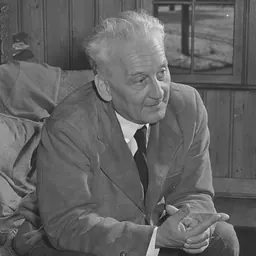
Lived 1932 – 2023 (aged 90). Tom Nairn was a British political scientist, university teacher, journalist and historian.
Thomas Cunningham Nairn (2 June 1932 – 21 January 2023) was a Scottish political theorist and academic. He was an Honorary Research Fellow in the School of Government and International Affairs at Durham University. He was known as an essayist and a supporter of Scottish independence.
Nairn was Scotland’s prominent political philosopher of modern times. His most famous book is The Break up of Britain (1977). Nairn writes that nationalism is both good and bad. He says that Scotland is different and uniquely became a modern state in the 1700s, with increased trade due to the Act of Union in 1707. By contrast, in Europe nationalism took hold with the demise of empires and the rise of nation states. Many European states used nationalism during the 1800s to deal with the uneven nature of capitalism.
Early life and career Nairn was born on 2 June 1932 in Freuchie, Fife, the son of a primary school headmaster. He attended Dunfermline High School and the Edinburgh College of Art before graduating from the University of Edinburgh with an MA in philosophy in 1956.
Nairn came to national prominence as a lecturer at Hornsey College of Art during 1968, where he became involved in a student occupation. The occupation offered a major critique of the education system at the time. After the authorities regained control, he was dismissed.
He was then absent from secure university posts for three decades. He was at the Transnational Institute, Amsterdam, from 1972 to 1976, but resigned when his efforts to steer it towards becoming a pan-European thinktank failed. which was defined as the continental European movement to anti-clericalism and Republicanism since the 1789 French Revolution.
By contrast, Nairn was long an advocate of European integration, an argument he first put forward in The Left Against Europe (1973), when leftist opinion in the UK was very much against the idea.
He was an advocate of Scottish independence as well as devolution of power to the Scottish Parliament and the Welsh Assembly and criticised the 1990s–2000s Blair Labour government for not giving those bodies enough power. While critical of Scottish elites, Nairn considered that Scotland's economic potential had been limited by the concentration of power in London in combination with what he claimed was the archaic nature of the British state.
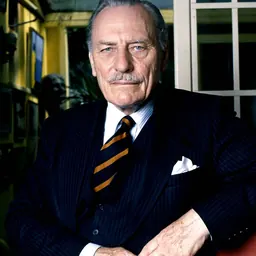
An anthology of NLR articles, The Break-Up of Britain (1977, revised 1982) is the best known of Nairn's books on the nationalism theme. It is a Marxist critique of the emergence of worldwide nationalism. Essentially, Nairn contends that imperialism from the core countries (Western Europe) amongst the peripheral nations (Africa, Asia, Australia, etc.) motivated the peripheral elites to mobilise their exploited masses. As such, they created powerful myths and stories based on local artefacts and local happenings. The peripheral intelligentsia, as he denoted them, were inspired by both romanticism and populism. In a chapter devoted to him, Enoch Powell is placed in both traditions. Nairn's ideas on nationalism were in the news during Britain's protracted Brexit negotiations from 2016, and Scotland's desire to remain in the European Union; his major works have been reprinted.
Honours In 2009, Nairn was elected a fellow of the Academy of Social Sciences in Australia.
Major works Books
Quattrocchi, A. and Nairn, T. (1968) The Beginning of the End: France, May 1968 Panther Books Students and Staff of Hornsey College of Art (1969) The Hornsey Affair, Penguin Books Nairn, T. (1973) The Left against Europe, Penguin Nairn, T. (1977) The Break-up of Britain: Crisis and Neonationalism, London: NLB (2nd ed. 1981 Verso; 3rd 2003 Common Ground Pub) (paperback released in 1981 and republished in 2021), Nairn, T. (1988) The Enchanted Glass: Britain and Its Monarchy, London: Radius (2nd ed. 1994, Vintage. 3rd ed. 2011), Nairn, T. (1992) Auld enemies: Essays from the "Nairn on Monday" column, The Scotsman, Glasgow : Common Cause Nairn, T. (1997) Faces of Nationalism: Janus Revisited, Verso (2nd ed. 2005), Quattrocchi A and Nairn, T. (1998) The Beginning of the End: France, May 1968, Verso Nairn, T. (2001) After Britain: New Labour and the Return of Scotland, Granta, Nairn, T. (2002) Pariah: Misfortunes of the British Kingdom, Verso
Nairn, T (2006) Global Nations, Verso
Nairn, T (2006) Gordon Brown: Bard of Britishness, Cardiff: Institute of Welsh Affairs
Articles and media
He wrote many articles for the London Review of Books and contributed regularly to openDemocracy as well as other publications. (Also reprinted in Break-up.) Nairn, T. (1976) Northern Ireland: Relic or Portent?, in Burnett, Ray (ed.), Calgacus No. 3, Spring 1976, pp. 36 - 50, Nairn T. (1976), review of The Radical Approach edited by Gavin Kennedy, in Question, July 1976, pp. 8 - 10 Nairn, T. (1980), Internationalism: A Critique, in The Bulletin of Scottish Politics No. 1, Autumn 1980, pp. 101 - 125 The Edinburgh lecture. Articles on OpenDemocracy.net
Don’t just read it —
keep it.
Full-length biographies made to live with: read them, listen on the way to work, watch them tonight.
- E-book
- Audio
- Video
Instant download · yours to keep · every purchase keeps this site free
Important facts
People in Tom Nairn's life
Named in this biography and alive at the same time



Related people
Same field, nearest in time




Contemporaries
People whose lives overlapped Tom Nairn's


Frequently asked questions
Who was Tom Nairn?
Scottish political theorist (1932–2023)
When was Tom Nairn born?
Tom Nairn was born on 2 June 1932 in Freuchie.
When did Tom Nairn die?
Tom Nairn died on 21 January 2023.
What was Tom Nairn's occupation?
Tom Nairn was a political scientist, university teacher, journalist and historian.
What nationality was Tom Nairn?
Tom Nairn was British.
Sources & further reading
Cite this page
APA: Biography.guide. (2026). Tom Nairn. https://biography.guide/tom-nairn/
MLA: "Tom Nairn." Biography.guide, https://biography.guide/tom-nairn/.
Chicago: "Tom Nairn." Biography.guide. https://biography.guide/tom-nairn/.
Data last updated: 2026-09-20 · Spot an error? Report a correction.
Page generated 2026-09-27 05:07 UTC