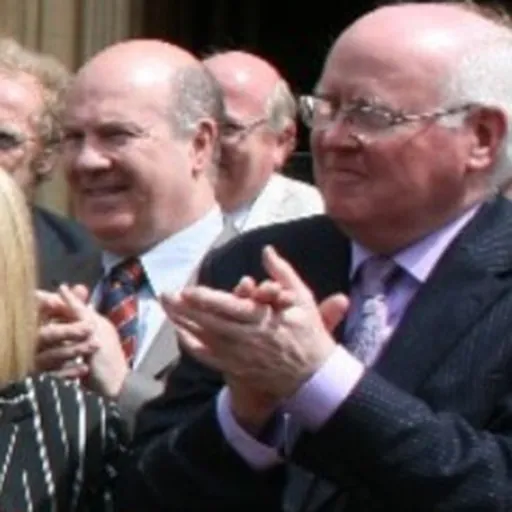
About Tom Clarke
Born 1941. Tom Clarke is a British politician.
Sir Thomas Clarke, (born 10 January 1941) is a British Labour Party politician who was a Member of Parliament (MP) from 1982 until 2015, representing Coatbridge, Chryston and Bellshill from 2005 until losing his seat to Philip Boswell of the SNP in the May 2015 general election.
Personal life Clarke was born in Coatbridge and was educated at All Saints Primary School in Airdrie and St Columba High School in Coatbridge, followed by the Scottish College of Commerce in Glasgow. His brother, Tony, later become a councillor on North Lanarkshire Council.
Clarke has long been a strong supporter of British film making and was an assistant director of the Scottish Council for Education Technology and was also the President of the British Amateur Cinematographers Central Council in 1971. He then became a deputy director of the Scottish Film Council and was the organiser of the Scottish International Amateur Film Festival in 1971.
In 1973, Clarke submitted his short film, Give Us a Goal, to the amateur section of the Cannes Film Festival. He is a member of the GMB and British Film Institute, where he also served as a Governor, as well as being the chairman of The Citizens Trust.
Career in local government Clarke's political career began at the age of 18, when he was the election agent for the Labour MP James Dempsey. Aged 22, he then served as a councillor on the Coatbridge Town Council from 1964, and he became a Justice of the Peace for the Lanark area in 1972. The Coatbridge Town Council was replaced with the Monklands District Council in 1975, where Clarke continued to serve Coatbridge. He then served as the Monklands Provost (Mayor) for three consecutive terms from 1974 until 1982.
Following the 1987 general election, Neil Kinnock appointed him Shadow Minister for Personal Social Services from 1987, in which role he served until 1992. He then became the Shadow Minister for Overseas Development in 1993. Clarke left the Shadow Cabinet in 1994 and returned in 1995 to serve as Shadow Minister for the Disabled until 1997 under the leadership of Tony Blair.
Following the 1997 general election he joined the Privy Council and served as a Minister of State at the Department for Culture, Media and Sport with responsibility for Film and Tourism. He was reportedly dismissed from the role in a major government reshuffle whilst visiting the film set of Notting Hill.
Clarke was the Treasurer of the All-Party Parliamentary Group on Overseas Development and authored the International Development (Reporting and Transparency) Act 2006, which ensures that the Secretary of State for International Development reports on what the Department for International Development spends in total on international aid and is categorised into what proportion is spent upon low-income countries, the effectiveness of current spending and the level of transparency of international aid. The Act is also used as a guide to establish the current progress upon United Nations Millennium Development Goals.
He served as the Treasurer of the All Party Group on Carers from 2005 until 2010 and was the Chair of the All-Party Group on Learning Disabilities.
Clarke served on the Administration Committee from 2008 until 2010. In the following parliament he was a member of the Standards and Privileges Committee and the Joint Committee reviewing the draft bill on Reform of the House of Lords.
In February 2013, Clarke voted against the second reading of the Marriage (Same Sex Couples) Act 2013. Subsequently, in May 2013, the MP voted against the bill's third and final reading, opposing the legalisation of same-sex marriage within England and Wales.
Honours
Clarke was appointed Commander of the Order of the British Empire (CBE) in the 1980 Birthday Honours for services to local government. He was sworn of the Privy Council of the United Kingdom on 20 May 1997.
In 2016, Clarke was awarded a Papal Knighthood and an audience with Pope Francis for his work on International Development and Disability Rights.
He was knighted in the 2021 New Year Honours for public and political service.
Footnotes
Don’t just read it —
keep it.
Full-length biographies made to live with: read them, listen on the way to work, watch them tonight.
- E-book
- Audio
- Video
Instant download · yours to keep · every purchase keeps this site free
Important facts
People in Tom Clarke's life
Named in this biography and alive at the same time

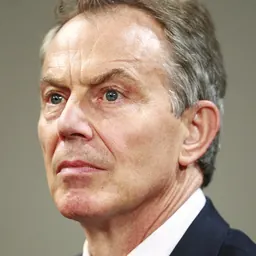

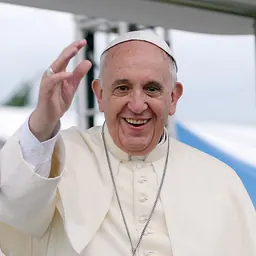


Related people
Same field, nearest in time
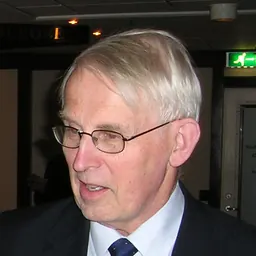




Contemporaries
People whose lives overlapped Tom Clarke's



Frequently asked questions
Who is Tom Clarke?
British politician (born 1941)
When was Tom Clarke born?
Tom Clarke was born on 10 January 1941 in Coatbridge.
What is Tom Clarke's occupation?
Tom Clarke is a politician.
What nationality is Tom Clarke?
Tom Clarke is British.
Sources & further reading
· DBpedia: Tom Clarke (politician)
Cite this page
APA: Biography.guide. (2026). Tom Clarke. https://biography.guide/tom-clarke-politician/
MLA: "Tom Clarke." Biography.guide, https://biography.guide/tom-clarke-politician/.
Chicago: "Tom Clarke." Biography.guide. https://biography.guide/tom-clarke-politician/.
Data last updated: 2026-09-20 · Spot an error? Report a correction.
Page generated 2026-09-27 05:10 UTC