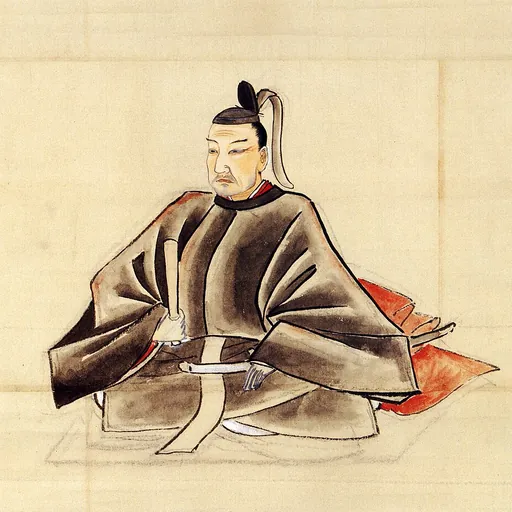
About Tokugawa Ieharu
Lived 1737 – 1786 (aged 49). Tokugawa Ieharu was a Japanese samurai.
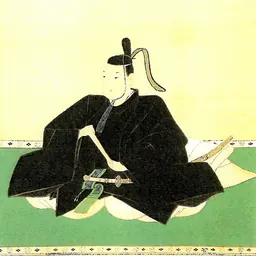
Tokugawa Ieharu ( 20 June 1737 – 17 September 1786) was the tenth shōgun of the Tokugawa shogunate of Japan, and held office from 1760 to 1786.
His childhood name was Takechiyo (竹千代).
Ieharu died in 1786. He was given the Buddhist name Shunmyoin and buried at Kan'ei-ji.
Family Father: Tokugawa Ieshige Mother: Oko no Kata (d. 1728) later Shinshin'in Wife: Iso no Miya Tomoko (1738–1771) Concubines: Omiyo no Kata Ochiho no Kata (1737–1791) later Renkoin Oshina no Kata (d. 1778) later Yoren-in Child: Chiyohime (1756–1757) by Tomoko Manjuhime (1761–1773) (born by Tomoko but after she died adopted by Ieharu's concubine, Omaki no Kata) Tokugawa Takechiyo later Tokugawa Iemoto (1762–1779) born by Ochiho no Kata Tokugawa Teijiro (1762–1763) born by Oshina no Kata Adopted: Tokugawa Ienari Tanehime (1765–1794), daughter of Tokugawa Munetake and married Tokugawa Harutomi of Kishū Domain
Events of Ieharu's reign Tenmei gannen (天明元年) or Tenmei 1 (1781): The new era name of Tenmei (meaning "Dawn") was created to mark the enthronement of Emperor Kōkaku. The previous era ended and the new one commenced in An'ei 11, on the 2nd day of the 4th month. According to Nihon Ōdai Ichiran, Ieharu was appointed Udaijin (Minister of the Right) of the Emperor's Kugyō, which was quite rare and considered a great favour. Tenmei 2 (1782): Great Tenmei Famine begins. Tenmei 2 (1782): An analysis of silver currency in China and Japan "Sin sen sen pou (Sin tchuan phou)" was presented to the emperor by Kutsuki Masatsuna (1750–1802), also known as Kutsuki Oki-no kami Minamoto-no Masatsuna, hereditary daimyō of Oki and Ōmi with holdings in Tanba and Fukuchiyama -- related note at Tenmei 7 below. Tenmei 3 (1783): Mount Asama (浅間山, Asama-yama) erupted in Shinano, one of the old provinces of Japan (Tenmei eruption). Isaac Titsingh's published account of the Asama-yama eruption (1820) was the first of its kind in the West. The volcano's devastation makes the Great Tenmei Famine even worse. Tenmei 4 (1784): Country-wide celebrations in honor of Kūkai (also known as Kōbō-Daishi, founder of Shingon Buddhism) who died 950 years earlier. Tenmei 6, on the 8th day of the 9th month (17 September 1786): Death of Tokugawa Ieharu. He is buried in Edo. – see online image of 2 adjacent pages from library collection of Kyoto University of Foreign Studies and Kyoto Junior College of Foreign Languages
Eras of Ieharu's reign The years in which Ieharu was shōgun are more specifically identified by more than one era name or nengō. boxstyle_1=background-color: #fcc; boxstyle_2=background-color: #fb9; boxstyle_3=background-color: #ffc; boxstyle_4=background-color: #bfc; boxstyle_5=background-color: #9fe; 1= 1. Tokugawa Ieharu, 10th Tokugawa Shōgun 2= 2. Tokugawa Ieshige, 9th Tokugawa Shōgun (1712-1761) 3= 3. Shinshin'in (d. 1748) 4= 4. Tokugawa Yoshimune, 8th Tokugawa Shōgun (1684-1751) 5= 5. Shintokuin (1688-1713) 6= 6. Umetani Mitsunaga (1672-1740) 7= 7. Kanroji 8= 8.Tokugawa Mitsusada, 2nd daimyō of Kishū (1627-1705) 9= 9. Jōenin (1655-1726) 10=10.Ōkubo Tadanao (d. 1726) 11=11. Ōkubo 12=12. Umetani Hidemichi (1650-1718) 13=13. Kanroji 14=14. Kanroji Katanaga (1649-1694) 15=15. Honda 16= 16. Tokugawa Yorinobu, 1st daimyō of Kishū (1602-1671) 17= 17. Nakagawa-dono 18= 19= 20= 20. Kanō Hisashi 21= 22= 22. Ōkubo Tadafuru (d. 1646) 23= 24=24. Umetani Suemichi (1615-1658) 25= 26=26. Kanroji Tsugunaga (1611-1650) 27=27. Minase 28=28. Kanroji Tsugunaga (1611-1650) 29=29. Minase 30=30. Honda Yasumasa, 3rd daimyō of Zeze (1622-1691) 31=
Don’t just read it —
keep it.
Full-length biographies made to live with: read them, listen on the way to work, watch them tonight.
- E-book
- Audio
- Video
Instant download · yours to keep · every purchase keeps this site free
Important facts
People in Tokugawa Ieharu's life
Named in this biography and alive at the same time


Related people
Same field, nearest in time


Contemporaries
People whose lives overlapped Tokugawa Ieharu's





Frequently asked questions
Who was Tokugawa Ieharu?
Japanese shogun
When was Tokugawa Ieharu born?
Tokugawa Ieharu was born on 20 June 1737 in Edo Castle.
When did Tokugawa Ieharu die?
Tokugawa Ieharu died on 17 September 1786 in Edo Castle.
What was Tokugawa Ieharu's occupation?
Tokugawa Ieharu was a samurai.
What nationality was Tokugawa Ieharu?
Tokugawa Ieharu was Japanese.
Sources & further reading
Cite this page
APA: Biography.guide. (2026). Tokugawa Ieharu. https://biography.guide/tokugawa-ieharu/
MLA: "Tokugawa Ieharu." Biography.guide, https://biography.guide/tokugawa-ieharu/.
Chicago: "Tokugawa Ieharu." Biography.guide. https://biography.guide/tokugawa-ieharu/.
Data last updated: 2026-09-20 · Spot an error? Report a correction.
Page generated 2026-09-27 05:09 UTC