
About Tobias Lear
Lived 1762 – 1816 (aged 54). Tobias Lear was an American diplomat, known for George Washington.
Tobias Lear (September 19, 1762 – October 11, 1816) was the personal secretary to President George Washington. Lear served Washington from 1784 until the former-President's death in 1799. Lear's journal details Washington's final moments and his last words: 'Tis well.
Tobias Lear also served third president Thomas Jefferson, as commercial agent to Saint-Domingue (modern-day Haiti), and as peace envoy in the Mediterranean Sea and North Africa during the First Barbary War (1801–1805) and the Second Barbary War (1815). He was responsible for negotiating a peace treaty with the Bey of Tripoli that ended the first Barbary War.
Early life President's House, Philadelphia, Pennsylvania. Lear lived and worked in Washington's presidential mansion, 1790–93. His son was born there, and his first wife died there.
Lear was born on Hunking Street in the seaport town of Portsmouth, New Hampshire, on September 19, 1762, His parents were Tobias Lear (born August 1, 1737) He was integrated into Washington's house and his post quickly evolved beyond clerk to being Washington's right-hand man, doing whatever Washington needed, such as tutoring, filling out expense reports, and writing letters. He performed all his duties well.
Lear moved with Washington to New York City in 1789, when Washington became president, and they often dined alone together during his presidency. Lear was responsible for filling out Washington's expense reports as president, which Washington had wisely chosen instead of a $25,000 salary, as they turned out to be much more. In 1795, Lear married Frances Bassett Washington, the recent widow of the President's nephew, George Augustine Washington, but Fanny died in 1796 of tuberculosis.
Controversy In the late 1790s, Lear's finances became more distraught. During this period, he continued to run unpaid errands for Washington. On one of these errands, Lear collected rent from one of Washington's tenants, but pocketed the funds. Washington found out when he questioned his tenant as to why they had not paid. Washington was furious for at least two days but Lear apologized and was quickly forgiven. Its publication is thought to have sparked a nasty correspondence of three rounds of letters between Jefferson and Washington. In conversation with friends over wine, Lear admitted the existence of the letters but subsequently denied having said such. Albin Rollins, a Mount Vernon overseer, stated to a nephew of Washington that he had seen the letters and that the second round was so strong that it made the hair on his head rise and that a duel must surely follow. The missing letters' loss brought great benefit to Thomas Jefferson, as they would have been fuel for Jefferson's political enemies. Brighton believes (without direct evidence) that Jefferson requested Lear to destroy the letters and that Jefferson rewarded Lear for their destruction for the rest of his life.
Appointments "Wellington," Malcolm Matheson house, Fox Hunt Road, Alexandria, Virginia, by Frances Benjamin Johnston, 1931. Built in the 18th century for Colonel Tobias Lear; from his death in 1818, owned by descendants of George Washington
Jefferson appointed the financially struggling Lear to the potentially lucrative assignment of American commercial agent in Saint-Domingue at the start of his term of president. During this job, Lear appointed Rollins to oversee Walnut Tree Farm. Unfortunately, Lear arrived right before Napoleon Bonaparte was about to clamp down on the slave rebellion there. In a January 17, 1802, long letter of gratitude to Jefferson, Lear predicted the long anticipated French response was still six months out. One week later, a French armada arrived at Cap-Français and captured the main port there from Toussaint L'Ouverture. Lear attempted to help the Americans during the ensuing French embargo. However, with the Louisiana Purchase looming large for Jefferson, Lear was asked not to irritate the French commanders, and after a suggestion from James Madison, who was then Secretary of State, retreated back to Virginia.
A year after returning to the U.S., in 1803, Jefferson appointed Lear, now 41, to be Consul General to the North African coast with the privilege of simultaneously conducting private business. Before preparing to depart on the USS Philadelphia to Algeria, Lear was married for the third time (to Frances Dandridge Henley). In a last-minute change, the Lears were reassigned to the USS Constitution, and the Philadelphia ended up being captured in the Mediterranean. Lear became the primary negotiator for the crew's release in 1805 with the Treaty of Tripoli that ended the First Barbary War in which he was alleged to have mishandled the resolution. The Lears stayed on in Algiers until 1812 when Lear fell out of favor with the Dey.
Upon their return, the U.S. was in the throes of the War of 1812. Consequently, they had to follow a circuitous route back to Portsmouth from their entry in Virginia. Under James Madison, he was then appointed as a secretary to the War Department and moved to a location a few blocks from the White House. While serving in this post, the British attacked and burned the city.
In 1814, Lear was elected a member of the American Antiquarian Society.
Death On October 11, 1816, Lear apparently committed suicide by shooting himself with a pistol. Although it was known that he suffered severe headaches and stints of depression, as well as being vilified by the press, the specific reasons for his suicide are unknown. It is curious that this "scrupulous record keeper" left behind neither suicide note nor will. He is buried in the Congressional Cemetery, Washington, D.C.
Don’t just read it —
keep it.
Full-length biographies made to live with: read them, listen on the way to work, watch them tonight.
- E-book
- Audio
- Video
Instant download · yours to keep · every purchase keeps this site free
Important facts
People in Tobias Lear's life
Named in this biography and alive at the same time

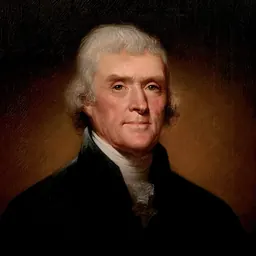
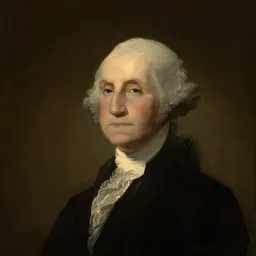
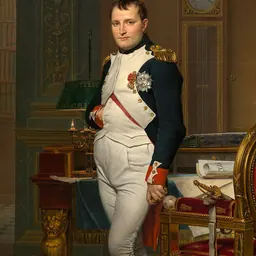

Related people
Same field, nearest in time


Contemporaries
People whose lives overlapped Tobias Lear's



Frequently asked questions
Who was Tobias Lear?
Secretary of the President of the United States (1762-1816)
When was Tobias Lear born?
Tobias Lear was born on 19 September 1762 in Portsmouth.
When did Tobias Lear die?
Tobias Lear died on 11 October 1816 in Washington, D.C..
What was Tobias Lear's occupation?
Tobias Lear was a diplomat.
What was Tobias Lear known for?
Tobias Lear was known for George Washington.
What nationality was Tobias Lear?
Tobias Lear was American.
Sources & further reading
Cite this page
APA: Biography.guide. (2026). Tobias Lear. https://biography.guide/tobias-lear/
MLA: "Tobias Lear." Biography.guide, https://biography.guide/tobias-lear/.
Chicago: "Tobias Lear." Biography.guide. https://biography.guide/tobias-lear/.
Data last updated: 2026-09-22 · Spot an error? Report a correction.
Page generated 2026-09-27 05:23 UTC