
About Tirupati Venkata Kavulu
Lived 1872 – 1919 (aged 46–47). Tirupati Venkata Kavulu was a poet.
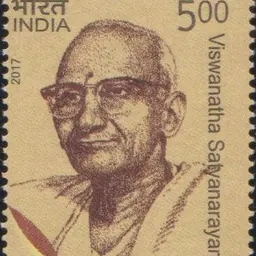
Tirupati Venkata Kavulu ( Poets Tirupati & Venkata) refers to the Telugu poet duo Divakarla Tirupati Sastry (1872–1919) and Chellapilla Venkata Sastry (1870–1950). These twin poets are acclaimed as the harbingers of modern poetry in Telugu. They have dramatised several of the Hindu epics into dramas and plays consisting of singable verses set to perfect meter. Several of their plays, especially pandavodyogavijayalu have been extremely popular with many drama clubs and audiences across Andhra Pradesh. Venkata Sastry has trained a large number of later age poets including Viswanatha Satyanarayana, Pingali Lakshmikantam and Veturi.
Awards Chellapilla Venkata Sastry was conferred Kala Prapoorna by Andhra University in 1938.
Literary works
Original compositions in Sanskrit 1. Dhatu Ratnakara Campu (1889–1893) is a campu cavya with the story of Ramayana illustrating the use of verbal forms for the roots given by Pāṇini, the Sanskrit grammarian.
2. Sringara Sringataka (1891) is a small playlet called Veedhi with predominantly erotic sentiment.
3. Kali Sahasram (1891–1894) is incomplete work (300 slokas) modelled on Lakshmi Sahasram in Sanskrit.
4. Mula Sthaneswara Stuti (1893–1894) was composed in Arya vrittas on Mulasthaneswara, local deity of Nellore.
5. Ashtkas (Kalikadi Stotra), 1889–1890
6. Suka-Rambha Samvadam (1893–1894) is an argumentation between Śuka, the sage and Rambha, the danseuse. Suka interprets Ananda, the Supreme Bliss, in terms of Vedantic Truth and Rambha interprets it in terms of erotic experience.
7. Namassivaya Stotram (1914–1915) is a devotional panegyric on Shiva.
8. Kshampanam (1914–1915)
9. Pishtapeshanam (1914–1915)
10. Salabhalabhanam (1914–1915)
Translations from Sanskrit to Telugu Devi Bhagavatamu, 1896 Siva Leelalu, 1896 Purana Gadhalu, 1896 Vrata Kathalu, 1896 Srinivasa Vilasamu, 1896–1897 Rasikanandamu, 1893–1894 Suka-Rambha Samvadamu (1893–1894) is translation into Telugu from the poets' own work of the same name in Sanskrit. Buddha Caritramu, 1899–1900 Vairagya Sataka of Appaya Dikshita, 1899–1900 Bala Ramayana of Rajasekhara, 1901–1912 Mudra Rakshasa of Vishakhadatta, 1901–1912 Mrichchakatika of Shudraka, 1901–1912 Vikramankadeva Caritra of Bilhana, 1901–1912 Candraprabha Caritra of Veera Nandi, 1901–1912 Harsha Caritra of Bana, 1901–1912
Translations from English to Telugu Stories of Rabindranath Tagore
Original works in Telugu poetry Sravananandam (1893–1897; 1897–1898) Panigrihita Lakshana Parinayamu (1897–1901) was a mythological work which describes the marriage of Krishna and Lakshana. Ela Mahatmyamu (1898–1900) was a work on the sanctity of River Ela. Jataka Carya (1899–1930) and Iteevali Carya (1930–1950) are two unique works by Venkata Sastry. It is somewhat autobiographical work based on jyotishaphala. He has recorded his life in verse form. First work described his life from 30th to 60th year and the second work almost to the end of his life. Divakarastamayamu (1920) is an elegy by Venkata Sastry on the demise of his lifelong partner, Tirupati Sastry. George V Pattabhisheka Padyalu (1912) were composed on the occasion of the coronation of King George V. Bobbili Pattabhisheka Kavyamu (1929) was a descriptive poem pertaining to the coronation of the Maharajah of Bobbili. Kameswari Satakamu (1901) Arogya Kameswari Stuti (1922) Arogya Bhaskara Stavamu (1929–1930) Mrtyunjaya Stavamu Saubhagya Kameshwari Stavamu (1938–1941) Sita Stavamu Siva Bhakti Go-Devi was work on dialogue between a cow and a tiger. Pativrata was a kavya based on a folk song wherein a young woman is married to a snake. Suseela is a work dealing with social customs like divine dispensation. Poorva Hariscandra Caritramu is a mythological work. Daiva Tantramu Satee Smriti was an elegy by Venkata Sastry on the demise of his wife. Krishna Niryanamu (1918) was an elegy on the demise of the Raja of Polavaram. Suryanarayana Stuti (1920) was composed by Tirupati Sastry when he was seriously ill before his demise. Polavaram Rajah gari Sani Mahadasa (1918) is a deprecation of someone who had brought misfortune to the Rajah of Polavaram, his benefactor. Sukha Jeevi is a panegyric describing the qualities of Edara Venkata Rao Pantulu.
Original works in Telugu drama Panditarajamu Edward Pattabhisheka Natakamu Pandava Jananamu (1901–1917) Pandava Pravasamu Pandava Rajasuyamu Pandava Udyogamu Pandava Vijayamu Pandava Aswamedhamu Anargha Naradamu Dambha Vamanamu Sukanya Prabhavatee-Pradyumnamu (1920–1922) Gajanana Vijayamu (1901–1912)
Original works in Telugu prose Bharata Veerulu Vikrama Cellapillamu Shastipoorti Satee Jatakamu
Don’t just read it —
keep it.
Full-length biographies made to live with: read them, listen on the way to work, watch them tonight.
- E-book
- Audio
- Video
Instant download · yours to keep · every purchase keeps this site free
Important facts
People in Tirupati Venkata Kavulu's life
Named in this biography and alive at the same time


Related people
Same field, nearest in time

Contemporaries
People whose lives overlapped Tirupati Venkata Kavulu's



Frequently asked questions
Who was Tirupati Venkata Kavulu?
19th century Indian poet
When was Tirupati Venkata Kavulu born?
Tirupati Venkata Kavulu was born in 1872.
When did Tirupati Venkata Kavulu die?
Tirupati Venkata Kavulu died in 1919.
What was Tirupati Venkata Kavulu's occupation?
Tirupati Venkata Kavulu was a poet.
Sources & further reading
· Wikipedia: Tirupati Venkata Kavulu
· DBpedia: Tirupati Venkata Kavulu
Cite this page
APA: Biography.guide. (2026). Tirupati Venkata Kavulu. https://biography.guide/tirupati-venkata-kavulu/
MLA: "Tirupati Venkata Kavulu." Biography.guide, https://biography.guide/tirupati-venkata-kavulu/.
Chicago: "Tirupati Venkata Kavulu." Biography.guide. https://biography.guide/tirupati-venkata-kavulu/.
Data last updated: 2026-09-20 · Spot an error? Report a correction.
Page generated 2026-09-27 05:17 UTC