
About Thurlow Lieurance
Lived 1878 – 1963 (aged 84–85). Thurlow Lieurance was an American composer, musicologist and songwriter.
Thurlow Weed Lieurance (March 21, 1878 – October 9, 1963) was an American composer, known primarily for his song "By the Waters of Minnetonka". He is frequently categorized with a number of his contemporaries, including Charles Wakefield Cadman, Arthur Nevin, Charles Sanford Skilton, Preston Ware Orem, and Arthur Farwell, as a member of the Indianist movement in American music.
Life Lieurance was born in Oskaloosa, Iowa, but his family relocated to Kansas when he was very young. Little is recorded about his early education; it is known that his father encouraged him to be a pharmacist, but that he preferred instead to follow a career in music. Upon the outbreak of the Spanish–American War he enlisted as a musician. With the cessation of hostilities, he moved to Ohio and enrolled in the College of Music of Cincinnati, studying there until his savings from military service ran out. He was able to continue studying with Herman Bellstedt, a cornetist and bandmaster under John Philip Sousa. During his time at the Cincinnati College of Music, he studied theory, orchestration, harmony and arranging. In 1900 he sang with the chorus of Castle Square Garden Opera Company to learn of opera and its production. Around 1905, Lieurance joined the Chautauqua Society, working in traveling tent schools teaching music to American Indians. The contacts he made through this position led to an interest in Indian culture; he began to try to transcribe the songs that he heard, and began to teach himself the craft of making traditional Native American flutes. At about this time polio left Lieurance disabled; though he had very little use of his legs he was quite vigorous and mobile.
Around 1909, Lieurance acquired a portable cylinder recording device from Edison Records, and carried it with him whenever he went to visit Indian performers. In October 1911 he recorded a Crow (Apsalooke) (maybe Oglala Lakota Sioux) singer, Sitting Eagle, also known as Mortimer Dreamer, then living on the Crow Reservation in Montana. From this recording he took the melody for his song "By the Waters of the Minnetonka". The performance notes from Lieurance's 1921 edition suggest:
A violin typifies the wind, if you choose, echoes the soft harmonies of the accompaniment which rocks to and fro on harp chords, between the major key and its relative minor, in and out of that singular domain musicians know as the “added Sixth” chord and its derivatives.
A typewritten note found among the composer's papers describes the legend behind the song:Moon Deer, daughter of the Moon Clan, loved Sun Deer of the Sun Clan. Tribal law forbade marriage between the two clans. It was decreed that daughters of the Moon Clan must marry into the Eagle Clan. The two lovers, in tears, ran away far to the east and north. They came to a beautiful lake called Minnetonka (Minne means water; Tonka means large and round). Their happiness was disturbed because their traditional enemies, the Chippewa, lived on the north shore of this lake. They feared to return home and be separated, and finally in desperation they decided to end it all. The legend states that they disappeared beneath the waves and were no more. The waves moaned a rhythmic sound and the pines crooned their love song.
Many moons afterwards the warriors of the Sioux drove the Chippewa north to Lake Superior. One night while they were camped on the shores of Lake Minnetonka, they heard the waters singing a weird melody and, in the moon-path on the waters, two lilies appeared and grew to the skies. The lilies were the spirits of Moon Deer and Sun Deer.
Music Apart from "By the Waters of Minnetonka", Lieurance wrote over 300 works, his first composition was entitled "A Prayer". Included in his works were a number of orchestral pieces, with titles such as Trails Southwest, The Conquistadors, and Sad Moon on Falling Leaf. Much of the rest of his output consisted of songs and works for choir, but he also composed an opera, The Drama of Yellowstone.
Notes and references
Don’t just read it —
keep it.
Full-length biographies made to live with: read them, listen on the way to work, watch them tonight.
- E-book
- Audio
- Video
Instant download · yours to keep · every purchase keeps this site free
Important facts
People in Thurlow Lieurance's life
Named in this biography and alive at the same time

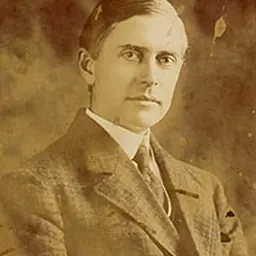
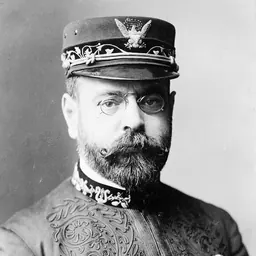

Related people
Same field, nearest in time
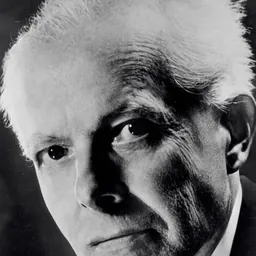


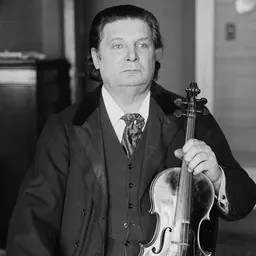

Contemporaries
People whose lives overlapped Thurlow Lieurance's

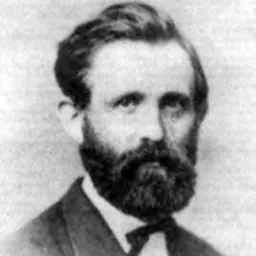
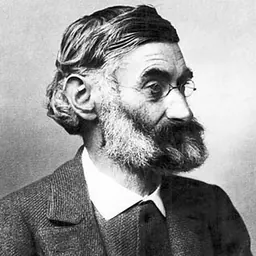

Frequently asked questions
Who was Thurlow Lieurance?
American composer (1878–1963)
When was Thurlow Lieurance born?
Thurlow Lieurance was born in 1878.
When did Thurlow Lieurance die?
Thurlow Lieurance died in 1963.
What was Thurlow Lieurance's occupation?
Thurlow Lieurance was a composer, musicologist and songwriter.
What nationality was Thurlow Lieurance?
Thurlow Lieurance was American.
Sources & further reading
· Wikipedia: Thurlow Lieurance
Cite this page
APA: Biography.guide. (2026). Thurlow Lieurance. https://biography.guide/thurlow-lieurance/
MLA: "Thurlow Lieurance." Biography.guide, https://biography.guide/thurlow-lieurance/.
Chicago: "Thurlow Lieurance." Biography.guide. https://biography.guide/thurlow-lieurance/.
Data last updated: 2026-09-20 · Spot an error? Report a correction.
Page generated 2026-09-27 05:33 UTC