
About Thompson Capper
Lived 1863 – 1915 (aged 51). Thompson Capper was a British military personnel.
Major-General Sir Thompson Capper, (20 October 1863 – 27 September 1915) was a senior British Army officer who served with distinction in the Second Boer War and was a divisional commander during the First World War. At the Battle of Loos in 1915, Capper was shot by a sniper as he reconnoitered the front line during an assault by his division on German positions. He died the next day in a casualty clearing station from wounds to both lungs; his grave is in the nearby Lillers Communal Cemetery.
Capper was an active and vigorous soldier who had been wounded just six months before his death in an accidental grenade detonation. Shortly before this wound he had been knighted by King George V for his service in command of his division during the First Battle of Ypres. Field Marshal Sir John French commented upon his death that "he was a most distinguished and capable leader and his death will be severely felt." He was also a keen military historian and his collected papers are currently stored at the Liddell Hart Centre for Military Archives at King's College London.
Early life and military career Thompson Capper was born in October 1863 to William and Sarah Capper (née Copeland). William Capper was a civil servant with the Bengal Civil Service and Sarah was the daughter of industrialist William Copeland. Thompson and his elder brother John were born in Lucknow in British India but at a young age were sent to England for their education. He was soon posted to join the 1st Battalion of his regiment, then serving in British India.
Capper's early years as a subaltern were spent employed on home service for the next decade and whilst serving as regimental adjutant was promoted to captain on 22 April 1891, before being transferred with his unit to India. It was there that Capper saw his first action, when in 1895 his battalion, the 1st East Lancashire, was attached to a force sent to the Indian-Afghan border to relieve a trapped British force in Chitral. During these operations, Capper participated in the Battle of Atbara and was with the force which fought in the culminating Battle of Omdurman. In July 1899 he succeeded Captain George Forestier-Walker as a staff captain at the War Office.
Second Boer War Later that year Capper and his regiment were again engaged in Africa, being transported to South Africa to serve in the Second Boer War. There Capper performed his duties with distinction for the next three years, being heavily engaged at the defeat of Spion Kop and participating in the relief of Ladysmith in early 1900.
Following the war's conclusion in May 1902, Capper was awarded the Distinguished Service Order (DSO) on his return home. He was also awarded the Queen's South Africa Medal with six clasps and the King's South Africa Medal with two clasps in recognition of his service during the war, and was twice mentioned in dispatches. Capper returned to the United Kingdom in the SS Dunottar Castle, which arrived at Southampton in July 1902.
Interwar years After his return, Capper, having "proved himself an effective staff officer and had gained considerable experience of independent battlefield command", was initially selected as a deputy assistant adjutant general (DAAG) on the staff of the 1st Army Corps at Aldershot, but, as an experienced staff officer, he was shortly thereafter given a post as a professor at the Staff College from December 1902 to September 1904. His arrival there "coincided with the appointment of Sir Henry Rawlinson as Commandant", both men having "served together in both Sudan and South Africa". Among Capper's fellow instructors there included Hubert Gough, Richard Haking (a fellow student from many years earlier), Launcelot Kiggell, John Du Cane, George Barrow and George Aston of the Royal Marines. He was then made a DAAG there in February 1904 and was promoted to brevet colonel on 11 December 1904. He was then transferred to the Staff College, Quetta, in India as the new college's first commandant (and which saw him promoted to substantive colonel). It has been suggested that this move was initiated by jealous colleagues at the college due to his ability as a teacher and tactician. He also amassed a prodigious collection of military literature during his research and teaching. and in 1908 he married Winifride Mary, with whom he would have one son. In February 1911, after a brief period of half-pay, and reverting to his permanent rank of colonel, Capper was transferred from India to Ireland, where he was promoted once again to temporary brigadier general and succeeded Major General Charles Monro as general officer commanding (GOC) of the 13th Infantry Brigade, part of the 5th Division. He "proved immensely successful as a trainer of troops, setting a standard to which others sought to aspire". He relinquished command of the brigade in February 1914 to Colonel Gerald Cuthbert and briefly returned to Ireland, in the aftermath of the Curragh incident, to support his friend, Brigadier General Hubert Gough, now GOC of the 3rd Cavalry Brigade. On 12 May he was promoted to major general.
First World War On 27 August, twenty three days after the British entry into World War I, he was posted to the newly formed 7th Division as its first GOC, which was sent to the Western Front.
During the opening weeks of the war, Capper busied himself with organising the new division placed under his command; the work involved in this task meant that the division was not ready for action until October.
For the next two months, the 7th Division was embroiled in bitter fighting at the First Battle of Ypres, when they were crucial in stopping the German advance but lost over 10,000 men. The Times later stated that "no one but Capper himself could, night after night, by the sheer force of his personality, have reconstituted from the shattered fragments of battalions a fighting line that could last through tomorrow".
Remaining on the front lines during the winter of 1914–1915, Capper's men held the German advance and were given some respite in early 1915 with the arrival of Territorial Force (TF) units.
It was during one of these rest periods that Capper was seriously wounded when in April 1915 he was struck in the shoulder by shrapnel from a "Jam-tin bomb" during a demonstration of improvised grenades being held behind the lines. The bullet had penetrated both lungs, and doctors gave no hope of survival.
Major-General Sir Thompson Capper died the following day, on 27 September 1915 in the casualty clearing station, at the age of 52. He was the third of nine British divisional commanders to be killed or die of wounds during the war. His division, which was soon taken over by Watts, GOC 21st Brigade, had lost over 5,200 men killed or wounded in just three days of fighting. He is also commemorated on the War Memorial in Rayne, Essex, where he spent much of his boyhood with his uncle, the Rector of Rayne, Rev W S Hemming. His collected papers were donated to King's College London in 1971, where they are still available to researchers and contain a wide selection of primary materials concerning the warfare of the early twentieth century.
Don’t just read it —
keep it.
Full-length biographies made to live with: read them, listen on the way to work, watch them tonight.
- E-book
- Audio
- Video
Instant download · yours to keep · every purchase keeps this site free
Important facts
People in Thompson Capper's life
Named in this biography and alive at the same time

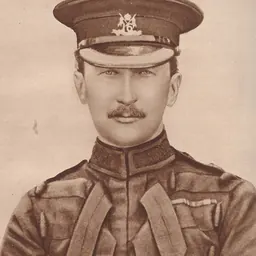
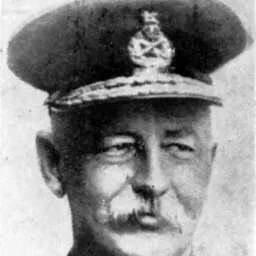



Related people
Same field, nearest in time


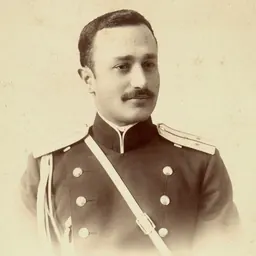

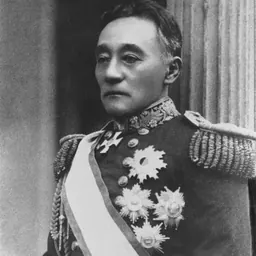
Contemporaries
People whose lives overlapped Thompson Capper's




Frequently asked questions
Who was Thompson Capper?
British First World War general (1863–1915)
When was Thompson Capper born?
Thompson Capper was born on 20 October 1863 in Lucknow.
When did Thompson Capper die?
Thompson Capper died on 27 September 1915 in Loos-en-Gohelle.
What was Thompson Capper's occupation?
Thompson Capper was a military personnel.
What nationality was Thompson Capper?
Thompson Capper was British.
Sources & further reading
Cite this page
APA: Biography.guide. (2026). Thompson Capper. https://biography.guide/thompson-capper/
MLA: "Thompson Capper." Biography.guide, https://biography.guide/thompson-capper/.
Chicago: "Thompson Capper." Biography.guide. https://biography.guide/thompson-capper/.
Data last updated: 2026-09-20 · Spot an error? Report a correction.
Page generated 2026-09-27 05:31 UTC